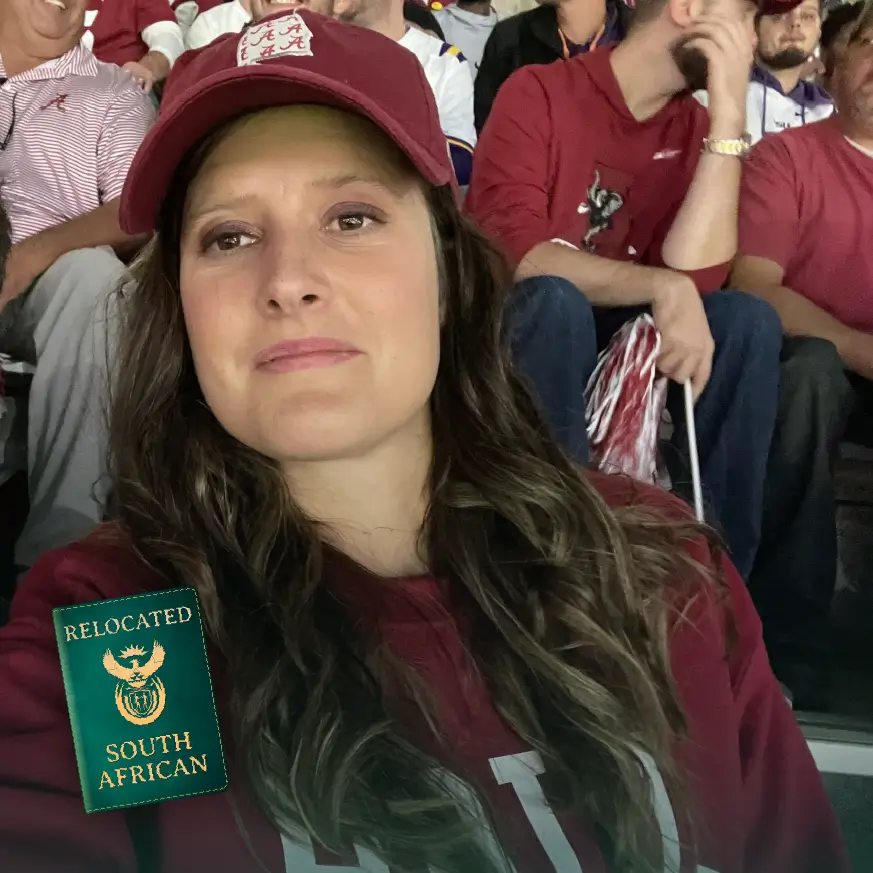
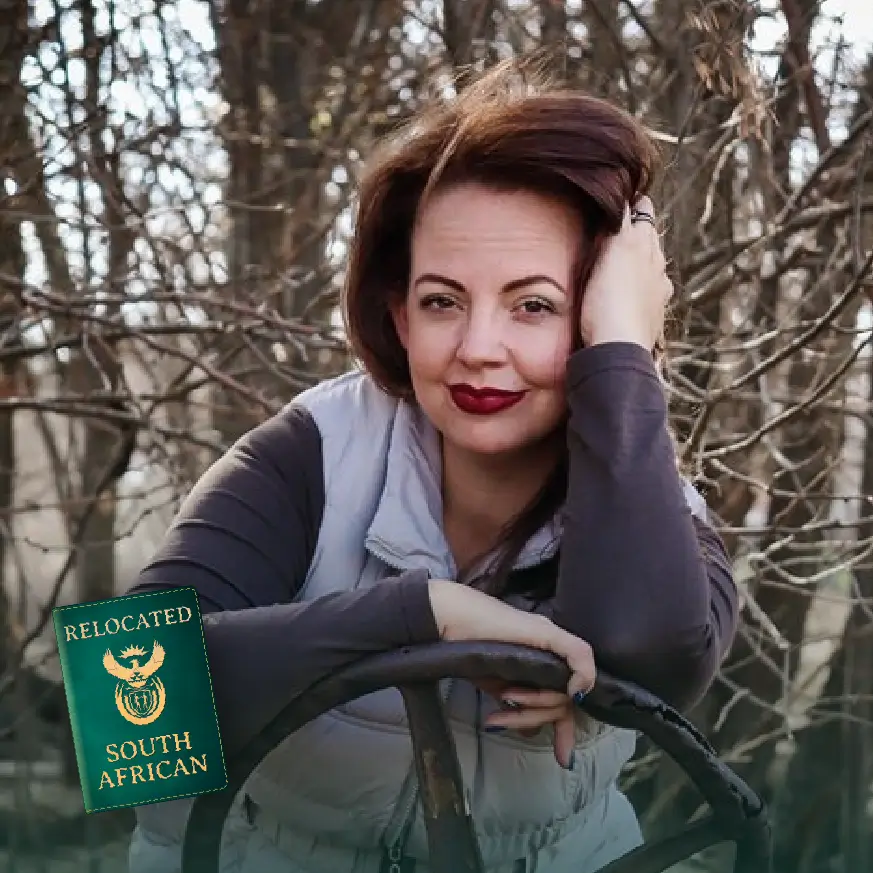
Jan Hugo: Welcome to the Relocated South African, the show for navigating immigration from South Africa for a better future. I’m your host Jan Hugo from Lagos in Portugal. Just note that we’ve recently launched our brand new website, www.therelocatedsouthafrican.com. If you want to interact with us, or comment on our discussions or even participate in an interview, please contact me on jan@therelocatedsouthafrican.com or yun at the relocatedsouthafrican.com. Also, if you like our content, why not subscribe on your favorite platform? So today I welcome from Florida in the USA wife, mother, and may I say activist for South Africans in the US. Andrea Shea. Welcome, Andrea.
Andrea Shea: Thank you so much for having me, Jan. I’ve been watching some of your episodes and I just think it’s great what you’re doing. So thank you for having me on.
Jan Hugo: Awesome. Thanks very much. Obviously, I’d love to touch on your online activities and the stuff that you do. But to start off, can you just give us a short history where you’re from, how long you’ve been in the state’s family, et cetera?
Andrea Shea: Yeah, of course. So I grew up in South Africa, as you may know, I was born in Pretoria. We were kind of all over the place. We went from Pretoria to the Eastern Cape, Graaff-Reinet, and then back to Potchefstroom, which is where my stepdad grew up. And then from there, we immigrated to the United States on something called the Diversity Visa. You may have heard of that before. It’s the green card lottery.
And my mother had applied for this. actually for 10 years before we got it and we had tried to go to Canada before but my dad or my stepdad I should say at the time was too old for the type of visa that we were trying to apply for it was something like entrepreneurs or skills visa I think so yeah that didn’t hand out so From the grace of God, I guess, you know, we were accepted into the diversity visa. I think it’s only like, don’t quote me on this, but it’s less than 100,000 people, I think, a year that they accept through that.
Then I finished my high school degree in South Africa. I actually started studying medicine in South Africa. It took me an extra year to get in there. just because of, you know, the very super strict race laws in South Africa. And then when I got here, I kind of switched gears and still kind of in the medical field. I did my biology degree, later went on to do a master’s degree in biostatistics, ended up doing research at a teaching university here. And then also did a bit of real estate, did a bit of this and that. So I’ve been all over, but right now I’m a stay at home mom. And like, like you’ve mentioned before, I do a lot of activism on X. So that’s pretty much me.
Jan Hugo: Just I have to say, you know, you’re the second person that I’ve ever met that was successful on that program. Because believe me, I applied a hundred times, but I had no luck. But there was a guy that I worked with that also got in. I don’t think he ever went, but yeah, it was a very scarce opportunity.
Andrea Shea: Incredibly scarce, I have to say. I know of one other couple. They’re also South African whom I’ve met through. We have a like a church group in the Afrikaans church that we started back in Tampa and they said, yep, they got in with the diversity visa. That’s literally only other people I’ve ever heard from that. Yeah, we’re successful with that. So yeah.
Jan Hugo: That’s incredible. And you stay at home mom and you say to me that number two is on the way.
Andrea Shea: Yeah. Number two is on the way. He’s going to be here in the end of January. So the 21st. So I’m about halfway done.
Jan Hugo: Awesome. Well, congratulations. And I wish you well. So that’s great news. And your husband, you mentioned before and he’s a he’s a pilot.
Andrea Shea: Yes, that’s correct. He’s a commercial pilot. He travels quite a bit for work. He may be gone from the house maybe three or four days every week. So it’s tough, but it pays the bills, so that’s good.
Jan Hugo: Absolutely, absolutely. Funny enough, I have two pilots. One is retired captain on BA and one is still a captain on Virgin who live in the same area and play golf, same golf club. Always very interesting, entertaining stories to listen to those guys.
Andrea Shea: especially you know with like the airlines and you you’re actually carrying passengers that can get very interesting you know people people it can be very interesting you know and enclosed spaces so yeah absolutely so you guys are based in pompano beaches is that how you pronounce it. Yeah, it’s a Pampano beach. It’s a little beach town. It’s about 30 minutes north of Miami. And there’s a bunch of little towns kind of on the coast, you know, it’s not very big.
Jan Hugo: It’s between Boca and Fort Lauderdale. Most important, it’s close to West Palm Beach.
Andrea Shea: Yes, it’s close to West Palm Beach. Exactly. Yes. No, we’ve got, we’ve got Mar-a-Lago on one side. Funnily enough, so we actually, we lived in Tampa before. So that was on the West coast. And we decided to move here because it, you know, my husband was actually commuting from there. And that’s like a three hour drive across the state. And that just wasn’t really, you know, working out for us. So we moved down here and we found there’s two like South African shops down here. you know, they sell like everything, like, you know, everything you think of like bootables and like, you know, all those little imported goodies, I just talked to them actually, they’re going to do like a catered event for me for a baby shower. So if you guys are interested in South Florida, just to let you know, there’s there’s two like Afrikaans slash South African shops down here, which is really cool.
Jan Hugo: Oh, that’s fantastic. That’s good to know. I must say, you know, that’s one thing that you find everywhere is the South Africans tend to congregate in places. And we have the same in Portugal. We have a lady that lived in Kimberley and makes the best buruvus. So we, you know, it’s kind of so good. Yeah. And you can find Omar Rusks and Savannah’s and all the South African stuff.
Andrea Shea: Lovely. Yeah. It’s so great. I mean, it’s just, you know, especially when you have like that kind of like little homesick feeling, you know, just go pop down there and get a couple of things and you will see South Africans there. And a lot of the time they want to, you know, they do like the rugby events. So you can go watch rugby there and everything.
Jan Hugo: So that’s cool. That’s awesome. Has your husband been to SA?
Andrea Shea: twice. We went, kind of we just met. And then recently we went, yeah, just for vacation. So, yeah, he’s been, he loves Cape Town and I did, I took him to the Kruger National Park. So he’s seen that, you know, so he’s at least seen like the major attractions, if you will.
Jan Hugo: Yeah, yeah, that’s good. Excellent. So maybe we should get to the, a little bit to the activism. Obviously, Jesus, when you look at it, it’s almost like it’s just getting worse every time. I don’t know. This afternoon, I saw something about the Stellenbosch HR manager. I don’t know if you’ve seen that video.
Andrea Shea: Yeah, I’ve seen that. I’ve seen that.
Jan Hugo: Yeah. It’s just shocking. It just seems to be, I don’t know what’s going on. It’s almost getting worse by the minute, you know.
Andrea Shea: Yeah, look, I mean, it definitely is. It’s kind of like that boiling frog kind of thing. And that’s why, you know, I’ve been telling people like, if you have the means and opportunity to go somewhere, especially if you have young children, you know, that’s kind of like the biggest thing you may have. enough resources to guarantee your safety, live comfortably, maybe in a safe place like Cape Town. But that’s not true for the majority of the country, as you may know. It’s getting more and more unsafe. And with all the super racist employment laws and stuff, your kids are kind of like, that’s where it’s going to be the worst. It’s going to be the worst for them, I feel like. I don’t know. I don’t know where it’s going. I mean, obviously I’m hoping. When’s the next election? It’s just 2028, I think. I don’t know. It does seem like the ANC is losing a lot of support, but you’ve got all these other little parties kind of kind of creeping in, but nothing really looks super promising. People were kind of hoping that the A would, you know, in this coalition would do a little bit better than they have been. But yeah, I’ve never seen anything that I really liked so far from them.
Jan Hugo: So who knows? I think that, you know, it’s a bit like 2017. We were also hopeful when Cyril was elected and it turned out to be a disaster. And I guess people have the same feeling about John Stearnes and it’s almost like he’s sold his soul for that minister’s job.
Andrea Shea: It does seem like that. Look, it happens here, too. People get into politics, they make grand promises, and then that paycheck hits, or they’re able to do some insider trading, and then they forget all about the whole. whatever motivated them to get into politics. It’s very common. So unfortunately, I think that’s kind of what’s going on. And having a parliamentary system, I don’t think it’s a great fit for South Africa, because it’s such a diverse country with so many different cultures of people. For us in the US, it would never work. That’s why we have a republic. We wouldn’t have 50 states. It wouldn’t work. So we have representation from every state through our electoral college. So it gives people in Kansas equal say as a giant state like California, which may be more left leaning. It’s more of a balance. I think it probably would have been a better fit for South Africa. It’s a pity that After 94, the Americans didn’t push their own system more. They ended up with a sub-British parliamentary system, which I think it’s not really ideal.
Jan Hugo: That’s not working. No, I agree. And I guess just thinking about you as a person who lived in South Africa for a long time and still, I assume there’s still family connections and so on. And living in America, you kind of are in a way uniquely qualified. I guess that Colonel Chris Wyatt, he lived in South Africa as well. So he also comments a lot. And the problem in South Africa is if you comment, You’re a racist. That card gets played every time. And it’s a very difficult situation. And I sometimes get the sense that, you know, we’ve left. So we are now regarded as the enemy. We are bad. That Lamola idiot the other day was talking again about the refugee. Sorry.
Andrea Shea: Yeah, Ronald or whatever. Ronald McDonald. Yeah. Yeah, he’s the biggest clown of I think I’ve never met such a dullard in my life. But yeah, that yeah, he’s he’s up there.
Jan Hugo: Yeah. No, absolutely. So obviously, my sense and I’m asking you this question, did you think that the interaction between Trump and Ramaphosa changed the view in the US about what’s going on in South Africa?
Andrea Shea: I think from what I know and the people I spoke to here, some contact I’ve had with the State Department is the US has been pretty clued up about what’s going on in South Africa for many years. It’s just that there wasn’t really anyone that had the will to address it. It was just kind of status quo, which happens a lot in the US where you know, it’s a little country, you know, it really doesn’t affect the US, actually, what is going on in South Africa, whether we sanction the crap out of them or not. You know, it doesn’t really change anything. I mean, we have like really big fish to fry, you know, as you know, like there’s a lot going on. So this was the first time that I think someone truly paid attention.
Now, from what I know is, you know, Secretary of State Marco Rubio, he’s been involved with a lot of South African expat groups for many years here. You know, he was a senator in Florida. So he’s been very clued up about South Africa. So I think there’s been a act of push from lower levels reaching President Trump. Obviously, you know, like Elon Musk got involved in everything too, to actually address it.
Now, in terms of like, the outcome of that meeting. Yeah, like I said, I think what’s probably going to happen, and where there’s going to be the most support in Congress because obviously to pass, you know, any kind of bill related to South Africa, you’re going to need some bilateral support. is they probably will sanction some of the politicians, but the angle they’ll go for is the Iranian angle. That’s the only thing I can see happening logically. I think the refugee program will go ahead as is. I don’t know if it would ever get codified into law, probably not. You know the response you got from some of these like super liberal people, you know, who still think that it’s like 1993 You know, how could the ANC be possibly be racist toward these Afrikaner people? You know, so something like that. I don’t know if it would ever get codified into law. So that’s why we’ve really just been pushing for as many people to you know, try and get out on this program and hope for the best, you know. But if anything, probably what would happen is they they could sanction maybe Julius Malama or whatever. But I don’t really know if that really has an effect on what’s going on in South Africa. You see this all the time with super corrupt governments. I mean, even thinking back to early 2000s, Robert Mugabe, they were all sanctioned. All they do is, if I have vacation in Switzerland, I just go somewhere else. So if it’s not a European country, they just put the money somewhere else or go somewhere else. So I don’t really know. What do you think potentially would be the effect of a sanction? Because it doesn’t seem like it really does too much.
Jan Hugo: Well, you know, it’s almost like even the threat of that is making them almost more desperate.
Andrea Shea: They’re doubling down.
Jan Hugo: Yeah, it’s exactly trying to really upset the US. I mean, if you look at this in a lady pond or calling themselves G-hardists and and, you know, this whole MTN saga, I’m hoping that that would really focus a lot of attention and from all accounts it looks like it will. I suppose there’s two sides to this thing and on the one hand it’s obviously the people who can get out on the refugee program. It’s a relatively small minority so there’s a lot of people who cannot you know and who still have to sit there and live with these racial laws and it’s it’s becoming more and more difficult. I think To be an average person, if you’ve got a lot of money and you live in your little bubbles, I had an interview with Paul Harris, who’s a billionaire and was very anti-immigration, but it’s easier when you’re living in a bubble with a billion in the bank.
Andrea Shea: 100% you’re very isolated. Like if you have some house in like the Zolza, I don’t know where, but you know, that’s where I live. Yeah. Yeah. I mean, it’s, it’s a nice neighborhood. I’m just saying, you know, it’s, no, no, but it’s true. You know, we’ll see it that much, you know, when you’re in there. Um, and then you have these like super liberal ladies posting on X or like bad things are happening in South Africa and they’re in like some spa, you know, in Cape Town. I’m like really like, Get real.
Jan Hugo: Yeah. Here’s a question. What I found is that some South Africans who have lived South Africa have become incredibly woke. It’s almost like they think they’ve seen the light now that they don’t have to go back. Is that just me?
Andrea Shea: I’m trying to think of some concrete examples. Maybe it’s a little bit different Europe versus the US. I think the most people I’m in contact with are very conservative. They’ve remained conservative. Yeah, I’m trying to think if I if I know anyone that’s gone the other the other routes.
Jan Hugo: Well, we found that they’re very quick to call you racist and to say you’ve left and you’re a racist, but they are here as well.
Andrea Shea: Yeah. Well, look, it’s, it’s that cycle of good men create good times, good times, you know, create bad men. It’s kind of like that. You forget, you forget very easily when things are super comfortable and you don’t have to deal with that stuff. And then all the, you know, wishy-washy, make you feel good inside stuff seem really great, you know, even though it doesn’t really help anybody. So I think that’s kind of maybe what’s going on with that too.
Jan Hugo: Absolutely. And from an activism point of view, I guess the other question is, you know, what is going to make a change? So, you know, if you have a long-term view versus what’s happening now. So right now, if I hear what you’re saying is your advice is if you can just go. But it’s not a good long-term solution for South Africa.
Andrea Shea: No, it’s not. To be honest with you, I don’t really have any answers. I follow quite closely like other activists like Rob Hersov and all of these people that are very much involved in politics. And I like what he’s saying about stop giving your money to these charity groups. If you have money to give, give it to like the Freedom Front Plus or someone, because you’re going to have to start basically bottom up, you know, supporting a party and, you know, I guess trying to get more support. But the other issue, as you know, in South Africa is the extreme poverty. It’s so difficult. Like, I don’t really know how you you bridge that gap, because it does seem like it’s easy for for those voters to default to, oh, you know, you’re oppressed and here, here’s like 50 Rand, you know, come and vote for us, you know, I don’t know how you address that, you know, with that extreme levels of poverty, it’s it’s real difficult to shift mindsets and without proper education. I don’t have a solution, but he says, so two of the things he mentioned is obviously don’t go the charity route because it’s just kind of masking what the ANC isn’t doing in the country. When they mentioned something else, I forgot who her name was, a very famous PhD doctor he had on one of his shows that talked about vouchers and voucher systems. That’s something we have in Florida, by the way, too. It’s actually a wonderful school vouchers we have in Florida, but you can actually do it with anything of health. You name it. So what it does is the state gives you a voucher. So it’s not money, you can just It’s not like a sasa card or whatever, but you take it. And so instead of having to rely on public schools here, it covers the tuition of a private school. So you’re making the parent, the consumer. So you are like basically it’s like pure capitalism, but it works really well. There’s a lot of these bad schools over here that have been forced to close down because people can now afford private schools. So that was another solution he gave, which I thought was pretty good.
But in terms of from the US side, Like I said, we can sanction and we have that AGOA agreement, which I guess is probably going to go away, which it doesn’t really help, unfortunately, the farmers in South Africa.
Jan Hugo: No, just today they announced a closure of part of the steel company, metal or whatever, with a bunch of jobs and motor companies. The problem is it just exacerbates the poverty and that leads to crime again because these people need to eat, so it’s just a vicious circle. I mean, the one thing that I guess that comes up in every every discussion is obviously the security issue. You know, people, most of the people on this refugee program have been exposed. Is that correct to to crime and some threat to their lives?
Andrea Shea: Yes, so the formal requirements to qualify for the refugee program does not include you have, let me put it this way, past persecution and fear of future persecution are both valid reasons to apply for this program. So you don’t have to just apply on the basis of, oh, I was in a farm attack or I was, you know, something that happened to me. I’m willing to give everybody some resources, some stuff I’ve been working on articles. There’s another professor that does, he’s an immigration lawyer that’s been talking a lot about this as well. But essentially what I’m trying to say is a lot of people that have been accepted into the program haven’t per se experience like, you know, brutal violence, if I could put it that way. So they have been accepted on the grounds of, I fear for my life because of, I mean, you already know, X, Y and Z, there’s so many things you can mention. I mean, for instance, you know, the skill, the board chant that’s the Supreme Court of South Africa has essentially decided that it’s not hate speech, you know, it can be sung. Julius Malema himself calling for his members to slip the throat of whiteness. We talked about Ronald Lamola who used to be I guess, was it the housing minister he at that point he said something along the lines of. that they can’t guarantee the safety of minority South Africans if they don’t willingly give up their land. So these things all count toward a valid fear of future persecution. So according to the United States government, that is a valid reason to apply for the program as well.
Jan Hugo: And in this process of people applying for the program, there seems to be a lot of fake news as well out there and people spreading rumors that this is stopping or that’s not going to happen or the government stopping Kenyans working on the program. What is your sense of that?
Andrea Shea: So I can tell you one thing is, you know, when the program started, it was pretty chaotic. There was a 60 day pause on aid money from the US government for a refugee program in general, because, you know, there’s been a lot of illegal immigration and stuff into the US. So it was a little bit of a rocky start, but the program hasn’t stopped. the Kenyon Group is called CWS, and they are a government contractor. So they would be your initial point of contact. And so all they do is the initial screening. They’re just going to ask you a bunch of questions about, you know, are you a minority, et cetera? And what is your basis for applying for the program? And then you do a little bit more of an in-depth interview with them and you get passed on to actual state department workers at the embassy. So they’re the one contractor. There’s another smaller group that it seems like they are going to be doing some contract work for the US government too. But in terms of did the program stop? No, the program’s going. It’s just it was been kind of like a slow start, but it seems like there’s about two flights a month that’s going out to the US now. So picking up pace slowly. So yeah, don’t believe any of the online rumors. But I will say if you are looking for pretty up-to-date information about the program, Colonel Chris Wyatt, he gives great updates. And the other person I mentioned before is Professor G. He’s got a YouTube channel as well. I mean, we can drop the links for those. So if you’re interested in the program, I will, I can definitely share that with you guys.
Jan Hugo: Yeah, that’ll be great. Thank you. And I’ve also, there’s a couple of, quite a lot of people who are very active on TikTok. I spoke to one of them, Zelda Botha, who lives in Austin. She’s been there for 30 years. She was in ordained minister and she’s clearly taken up the task of feeding information on TikTok as an example.
Andrea Shea: Yeah. No, there’s definitely people all over the place, but for the most accurate information, I will say you can follow the U S embassy in South Africa’s website. They have all the information on there. So if you’re not sure, like if, you know, even if I said it or Chris said it or whoever said it and, and you don’t really know if you should trust it, just go ahead and go to that website. It’s, you know, that’s the official page. So I’d always just confirm on there. So yeah.
Jan Hugo: Okay, and is there a finite number on how many refugees they will allow?
Andrea Shea: Yeah, so there is. I don’t know total, but there is a cap on the amount of refugees the US allows, I guess, every year. Now, I can’t really tell you for certain what it is, but it’s less than 100,000, I think. per year. I don’t know if they’ll change the rules because it’s like an in-program refugee or whatever. But according to Chris and everybody else, it does seem like it’s not unlimited. So besides the fact that, like I said, they haven’t really been processing people that quickly, hopefully next year, it’ll be quicker and more people would be able to come in.
Jan Hugo: Okay. And in terms of your advice to people who are thinking about it, what would you say to them?
Andrea Shea: There’s a couple things I would say, if you have children, I would strongly suggest you apply for it. Just as we talked about this before, try and get them a future. I’ve had a lot of people that have contacted me saying, well, you know, I’m very comfortable in South Africa. I have. You know, I have a lot of savings and all of that. Now that becomes more tricky. You know, what do I do? Because like, do I want to go to the U S and start over? I mean, you, you’re probably like aware of like what you need to do to start over in a new country. It’s like you have some as the government here is going to assist you for three months with housing and with a little stipend and some medical insurance. But after a while, you know, it becomes like, okay, I know I need to do something. So. consider that, but then also weigh that up against how we were saying the trajectory of South Africa is not looking too great. So what do I do? Do I roll the dice and see if things go better? you know so that’s something to consider. The other thing is if you want to apply for the program is the main thing is to have a valid passport that’s probably the one thing that you know is kind of like a requirement I think they could probably work with you if you don’t but most of the time they’re going to ask you for your passport you’re a little yellow green passport. Yes, have that one ready. Pets are another consideration. Right now there is no assistance from the US government to relocate pets. You can do that in your own capacity. I know of a couple that has done it recently that went over on the refugee program. So what they did is they left their pets with friends and there’s a bunch of companies that do pet relocation. So they just shipped the little doggy over. So that’s something else.
Jan Hugo: And work was obviously, you know, a lot of people frown upon doing some menial jobs. And that ladies elder said, you know, at times they held down three jobs, you know, and people you have to put yourself out there. I guess that’s very true in America.
Andrea Shea: 100%. I mean, some people are obviously very lucky they are in industries that are desired. You know, for instance, like the medical industry, I don’t think you’re kind of a problem finding a job. But sometimes you may end up doing something that you don’t plan on doing, or it’s going to take you some time to get the dream job you want to do. So, you know, be willing to do some other things. I do a lot of like, on my ex channel, I do a lot of tips on getting your resume ready and what type of jobs are hot in the US. We have AI these days. What I always recommend people do is look at your industry. Let’s say you want to be an engineer. go look at what are the top states for the type of engineering you want to do, and then weigh up your earning potential versus the cost of living. Here in Florida, it’s super expensive, but if you went to Kansas or Mississippi, it’s a lot cheaper to live there, but maybe there’s not as many opportunities for what you want to do. That’s something you want to look at.
Then you can even use GROC to make a budget for you like hey this is the type of lifestyle I want to do I want to live in the house like this I have three kids and it’ll work out a little budget for you and kind of like you know pin like how much you would have to make and is that possible in that state so that’s probably something kind of important for people to look at to.
Jan Hugo: I mean, other thing, you may know that I had a chat to Kirsten Alcro, who’s got emigrate to USA, that website where she gives visa assistance. Would you say to people, maybe you should consider both options? Because, I mean, that is a complex web of requirements to apply for a specific visa or skills visa or whatever.
Andrea Shea: Honestly, I don’t know a lot about how difficult it is to get a work visa. I know some people that have been on work visas here. And it does seem like a pretty involved process. If it was me in that position, I would probably first try the refugee program. And if that doesn’t work out, I would go visa route. It’s a lot longer. If you get a work visa, it’s not guaranteed that you’ll be able to renew it every year and I don’t know when you get to apply for like getting a green card I think it’s like 10 or 12 years or something whereas if you did get accepted on the refugee program it’s one year and you get your green card and then five years total you’ll be a U.S. citizen so okay I became a citizen in 2018 so when we got here without diversity visa. So we already started with the green card. So it only took five years. So then we became US citizens.
So Yeah, I mean, I think people have it in their head that, oh, you know, you’re a refugee. There’s kind of like a stigma behind it. But I will say that no one I’ve known that has gone over on the program has been stigmatized. Like they were able to find jobs. You’re able to work immediately. You’re not like you’re on asylum. So it’s nothing like that. But yeah, I can’t tell people not to do that. If they feel like, okay, there’s definitely an industry that is like a top potential to get a work visa and you’d rather do that, go for it. I’m just telling you, it definitely takes longer and there’s not really a guarantee that it’ll lead to like a permanent residency status, if that makes sense.
Jan Hugo: Yeah, makes a lot of sense. That is really very interesting, this whole stigma thing, because I think the mainstream media in South Africa, no names, no factual, but they would love to stigmatize the whole refugee thing, you know, you’re a Trump supporter and et cetera, et cetera. So they try and make people look bad, which is clearly not the case when they arrive in the US. And I think it’s important for people to know that.
Andrea Shea: 100%, the interactions that I’ve had with people that have come over with the refugee program have said that the Americans have been nothing but very kind and friendly to them. And don’t listen to the media here either, you know, like the CNNs and whatever. That’s not like normal America, you know, that’s not what you’ll find like in little towns. and places here. So yeah, there’s no shame in it. I think people should just take the opportunity and try. I mean, the worst they can say is no, right? So you try it and you see what happens. So that would be my advice. I would go for that first. And then if that doesn’t work, you can try work visa. You can always apply for the diversity visa. Like I said, it’s also kind of like super rare. And there’s no assistance from the government, by the way, for a diversity visa. You’re going to come over on your own dime like no assistance with rent or any of that stuff. So just a little caveat on that type of visa.
Jan Hugo: Maybe we’ll get to the end. For people considering what is the kind of waiting time that you’re experiencing now or hearing about?
Andrea Shea: So it’s kind of difficult to tell. So the executive order was signed back in February. And like I said, they weren’t really set up. It’s only now that we know CWS is the contractor. And so I don’t know when you would get contacted. But I know that people that have been contacted, it took them about two months to go through the whole process. So from the time they were, hey, we got your statement of interest to, OK, where do you want to go?
Jan Hugo: It was about two months. Oh, OK. Well, that’s good to know. Obviously, people would be anxious about that. The one maybe last question is there’s very little actual publicity of talking to people who are on the program. Here and there you’ve seen guys making videos, but I would assume that the US government is frowning upon that, trying to keep kind of, I wouldn’t say led on it, but trying to keep the publicity to a minimum.
Andrea Shea: I think so. I actually honestly think they made a mistake by doing that whole press thing where they had those first people come over. We were all obviously super excited to see them there. However, it’s put a lot of pressure on those refugees. I have literally gotten calls from news agencies that I’ve never heard of that said, hey, do you have so and so’s number that came over on the program. And I’m like, guys, don’t talk to people because you are going to like, you know, get. And by people that don’t like you, you know, so like I was explaining like the media people like stay away from them. It does seem like the dust has kind of settled and people kind of forgot about it, which is good to me. I think so. So yeah, I mean, if I was you, if I was somebody in South Africa that are, you know, considering the program, I would actually tell no one. I wouldn’t tell anyone that you applied. And then I wouldn’t even tell anyone that you got accepted. Of course, close family, that’s different, you know, but don’t, you know, make yourself a target. Don’t, you know, when you go to home affairs, don’t be like, Hey, I want a passport because I want to go over on the refugee program. Like I wouldn’t do that. That’s just kind of like general tips I would give. You know, you can become an activist like me once you’re once you’re in the States, you know, then no problem. So but yeah.
Jan Hugo: I think the important thing is that people must stop judging. I think there’s so much judgment going on and I’ve said it in my last episode that in my own case I’m filled with, I have two feelings. One is one of grief because my family is separated and the kids don’t see each other and the grandkids and so on. And then there’s this other feeling of absolute rage for what’s going on in South Africa and forcing people. My daughter had to leave. She’s a highly qualified CFA, but because she was working in the pensions industry, it was a disaster. Oh, she’s got a fantastic job in Ireland and it’s lost to South Africa. And that’s the problem is, you know, everyone has his own reason for leaving. A lot of people that I talk to have been involved in crime and at crime. Others have gone back, you know, for people that didn’t work out. So I always say, and maybe this is a closing thought in terms of the people that do come over there and find it hard is don’t look over your shoulder and give it a chance, you know.
Andrea Shea: 100%. I think that’s the one thing I try and tell people over and over, you know, on YouTube and whatever is that if you go somewhere, really try and become, you know, a citizen of that country, like become involved, you know, if you’re religious, join a church, if you are into sports, you know, start watching football in here. That’s what I did. I liked rugby, I still like rugby, but I started watching college football and I met friends at the college I went to and that’s really big in the US. The more immersed you are in a culture and you become more part of it and then that also buffers feelings of loneliness and depression on your side and you’ll find the transition becomes a lot easier. So I would like try and become a part of something, you know, wherever you go. Like if you’re in Europe, I don’t know, just find a group of people that you, you know, some kind of hobby you’re, you like and just go out and do stuff, you know, that’s kind of what I would say. So most people that go back, there’s that feeling of nostalgia, which I don’t blame. Like I said, for my side, no judgment. Like if you, you know, if it is very traumatic, to go to a different country and start a new life. It’s not easy. So if you want to go back and whatever, I have a lot of sympathy for you. I’m just saying like what I find is work for me. And that’s just, you know, kind of from my perspective, what helped me adjust to life here.
Jan Hugo: That is absolutely super advice. Thank you so much for sharing your activism and everything in the US. How can people contact you?
Andrea Shea: Thank you for having me. So I am more than willing to give you my email address. If you want to share that with people or you can send me a WhatsApp. I’m on, like I said, I’m on X. It’s Andrea underscore S P O. Okay. Like Spook enough for sons. Yes. So I don’t know why that I made it that honestly, I have no idea why I did that. But anyway, it stopped. So it’s on there.
Jan Hugo: It sounds like you’re a spy.
Andrea Shea: Yeah, I know, right? Like the ghosts, the boundary or something. Yeah. But anyway, yeah, I’m all over the place. Yeah, I don’t mind people contacting me. I, I like it’s like I said, it’s kind of like a it’s not just activism for me. It’s almost a religious thing. Like I really had it like very strong. I felt really strongly like I had to you know, kind of help people like people help me here. So I felt like, okay, it’s it’s my time to help them. So I don’t mind if you, you know, have a quick question or you want to, you know, talk your heart out about leaving South Africa, I’m always, you know, available. So you guys can reach out to me anytime.
Jan Hugo: Okay, well, we can add your email address at the end of the notes. Or if you want to give it here, we can put it on out on the weather episode, whatever’s easiest for you.
Andrea Shea: Yeah, no, that’s fine. You can put it in your notes. That’s totally fine. I think people look at that. It’s pretty easy to reach and copy off of your computer.
Jan Hugo: Okay, awesome. But as you say at Andrea, underscore Spook.
Andrea Shea: Spook, yes. On X, yes.
Jan Hugo: And Andrew’s very, very active. on X with a lot of information. It’s been a fascinating conversation. I didn’t know a lot about this program. We obviously see a lot. Thank you so much for sharing and for what you’re doing for the people. I really appreciate it.
Andrea Shea: You’re very welcome. And thank you for you. I think your podcast is also very helpful. It’s basically what I’m doing. You’re giving a lot of people’s perspective and they can make informed decisions about what route they want to take, whether it be leave or stay or it’s all out there. So that’s great.
Jan Hugo: If you enjoyed my discussion with Andrea and would like to hear more about experiences of South Africans who have left South Africa for a better future, why not subscribe on your favourite platform. If you would like to share your own story, contact us on jan@therelocatedsouthafrican.com. Until next time.