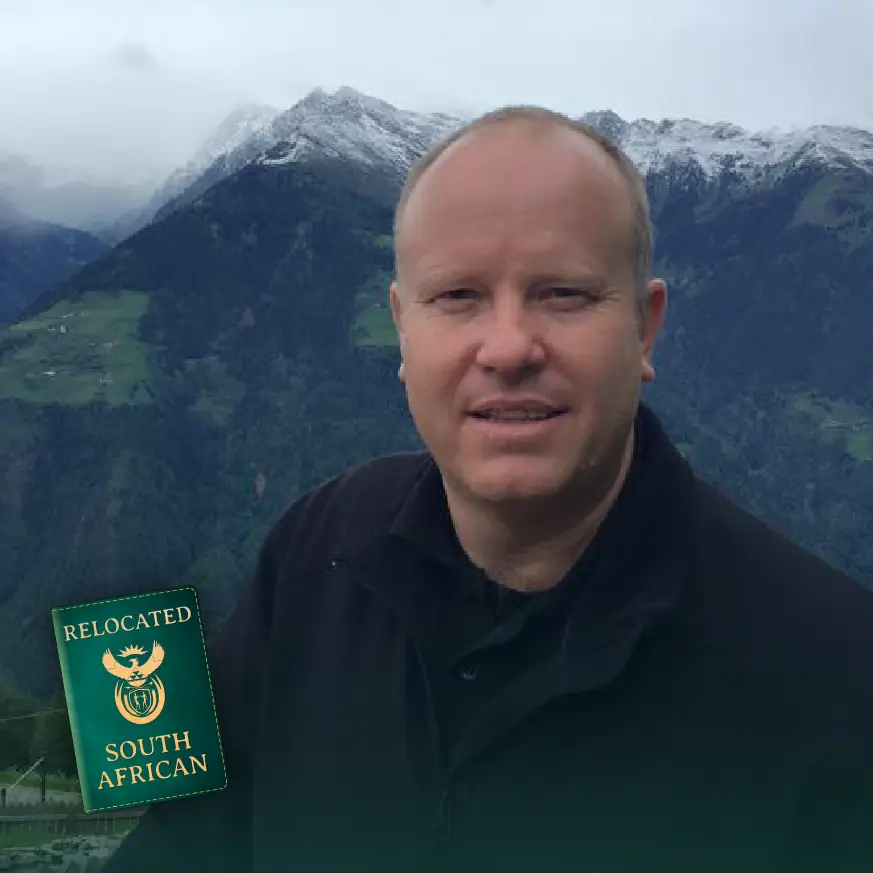
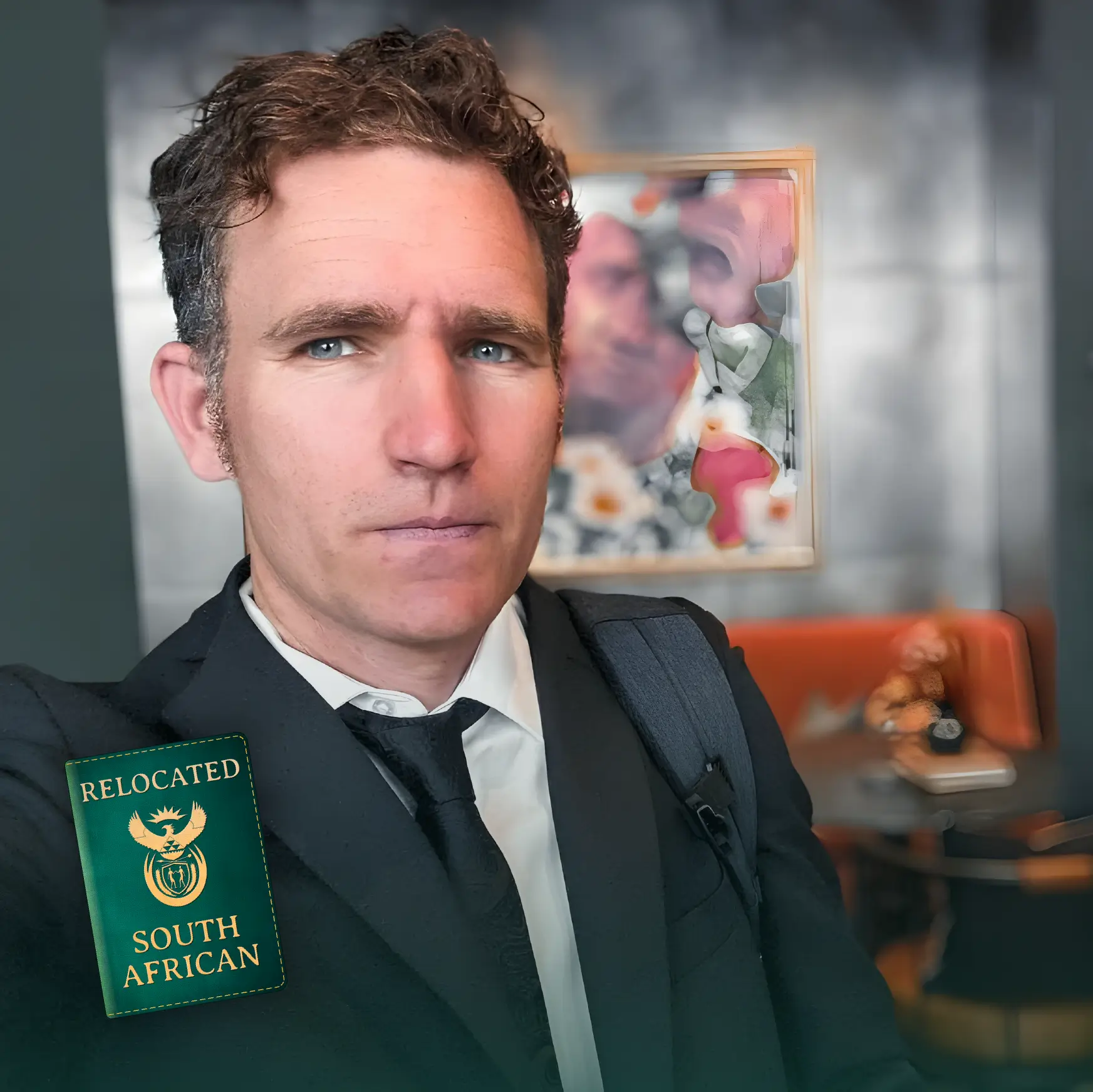
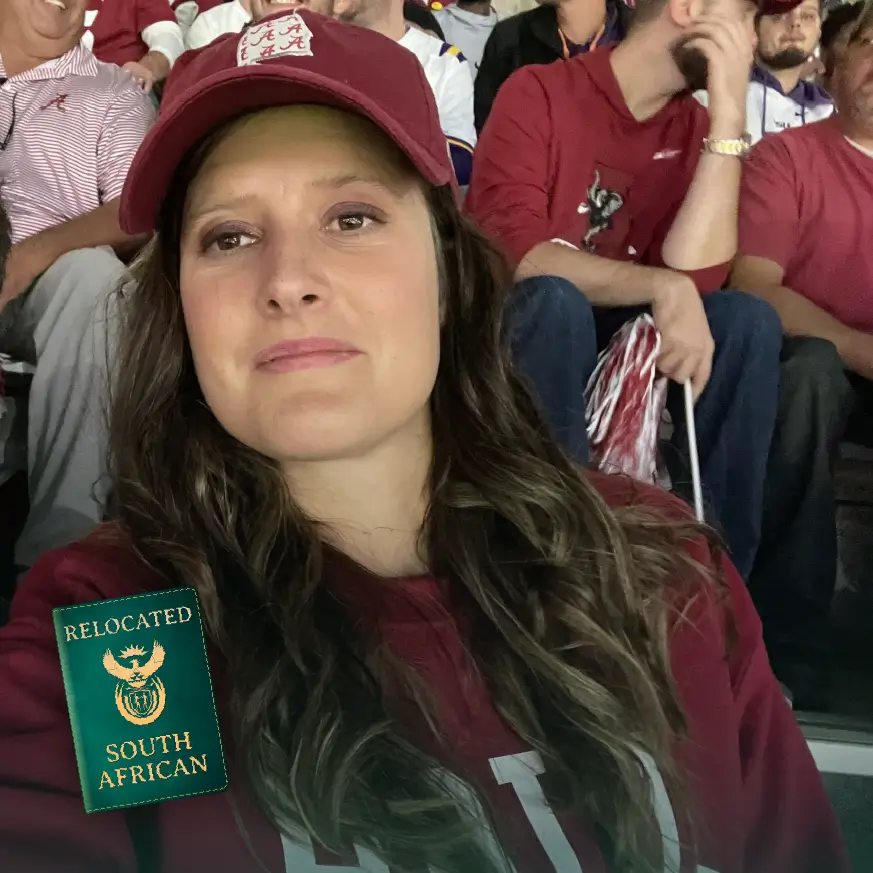
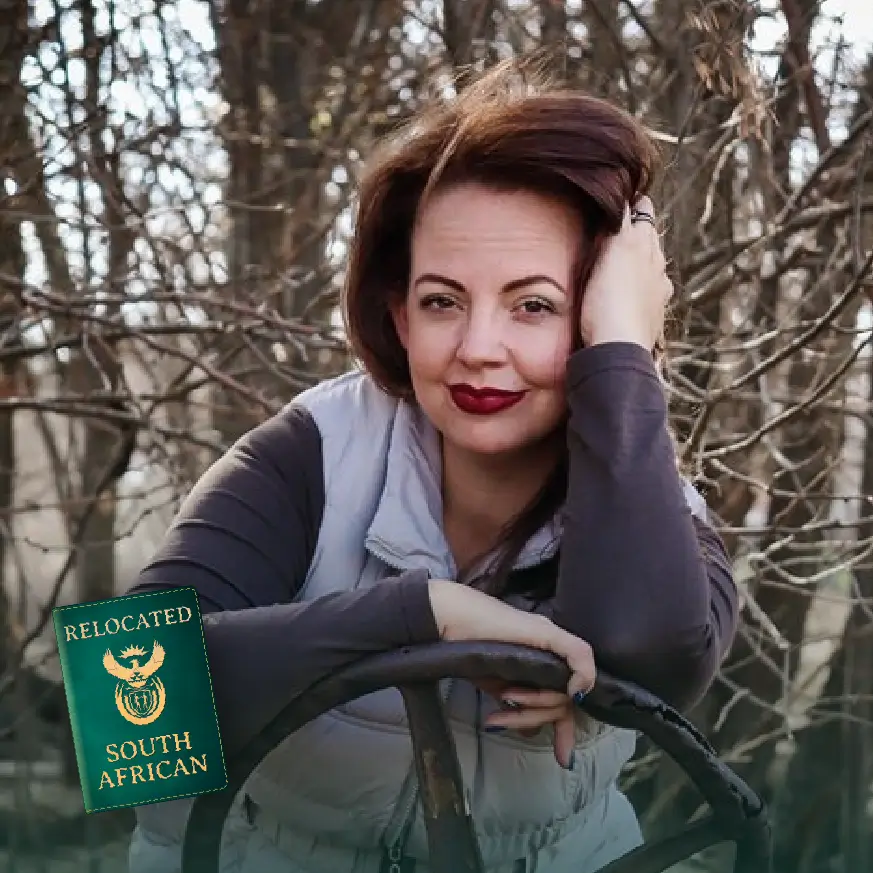
Jan Hugo: Welcome to the Relocated South African Show for Navigating Immigration from South Africa for a Better Future. I’m your host, Jan Hugo, from Lagos in Portugal. If you want to interact with us or comment on our discussions or even participate in an interview, please contact me on jan@therelocatedsouthafrican.com. Today I welcome all the way from Florida and the United States founder of emigrate2usa.co.za and mother and wife, Kirsten Halcrow. Welcome Kirsten.
Kirsten Halcrow: Thank you Jan, thanks for the opportunity.
Jan Hugo: Lovely to have you. Kirsten you want to just give us a little bit of a brief family history in South Africa where you grew up and studied etc?
Kirsten Halcrow: Sure, so born, bred, lived in Johannesburg my whole life, went to high school in Northcliffe, went to University of Johannesburg, I studied bachelor’s in psychology, went into psychometric testing, started a business, it was part of a family business which then expanded and I’m still part of that psychometric assessment company that’s a South African based business at the moment.
Jan Hugo: Okay, that’s encapsulate, is that right? Yes, that’s correct. Okay, so you’re still part of that?
Kirsten Halcrow: Yes, I still wake up early mornings and do some South African time. It’s a long day. Much to my dismay, yeah. So I’ve been with the business for the last sort of 15, 20 years.
Jan Hugo: Okay, awesome. That’s absolutely amazing. Did you live in Northcliffe, actually?
Kirsten Halcrow: Yes, I grew up in Northcliffe, moved to Honeydew area a little bit later. Not sure if you know the Eagle Canyon area we were there. Oh yeah, very well. That’s where we were before we immigrated.
Jan Hugo: Okay, we lived in Northcliffe as well. And at one stage I had a helicopter which I had in Honeydew on a farm where I had to hang it. But yeah, we lived on the hill in Northcliffe. So before then we moved to River Club with you. That was quite a few years ago, as I say. But awesome. And your kids obviously born there, went to school there and so on. We’ll get to a little bit more detail on that. So you made the move in 22, if I’m correct, after your husband received a job offer.
Kirsten Halcrow: Correct, yeah. So we were in the sort of market for an opportunity to emigrate sort of, we weren’t sure where he had an offer from Credit Suisse actually and we did a quick trip to Switzerland and I was not 100% convinced that I could deal with the complete cultural sort of differences in language. So it was a hard no to that one. And then, yeah, just after COVID he was approached by a financial services business. He’s an investment or wealth advisor and they were expanding into the US and they wanted someone who was willing and able and wanted actually to be here. And he was like, I’ll do it. with pleasure. So yeah, that’s where our opportunity came from.
Jan Hugo: Oh, wow, that is amazing. And you live, as we said, you live in in Ponte Vedra in Florida, which obviously is great from a weather perspective for a South African. Although I guess it’s a bit humid compared to Johannesburg, isn’t it, in summer?
Kirsten Halcrow: definitely a lot more humorous, a little bit more similar to sort of the KZN Durban weather, I would say, but absolutely love the warm weather. It couldn’t be somewhere where it’s cold, so we love the weather here.
Jan Hugo: Okay, that is fantastic. And can you just give us an idea? You know, when you went through the decision you said you were in the market and you got the offer, was it a fairly simple, yes, we’re going to do it? Or did you come and look at all in the States?
Kirsten Halcrow: It was a whirlwind. We went to the family out for dinner one night and took a vote. It was on a piece of paper and there were different factors you had to vote for anyway. In the end, somehow I don’t know if my husband jippo’d the scores, but… It appeared that the whole family had voted to come over. So we were all in agreement to come to the US. We didn’t do a look-and-see. We pretty much went on the word of some good friends that had sort of navigated these areas, Ponte Vedra areas that we’re in. just decided to give it a go. We pretty much sold everything and came across with two suitcases each. We sent over a cube at a later stage, which was really just some of our really sort of personal items. And other than that, we managed to find a rental by hook or by crook. I don’t know how because without a credit score, it’s very difficult to sort of get anything done here. But yeah, we found a one year rental. That’s pretty much how we got here, landed without seeing anything.
Jan Hugo: Wow, amazing. Just a question on the job opportunity that they provide some assistance with a move.
Kirsten Halcrow: Yes, so the business that sent us here, Caleo Capital, they’re a wealth advisor in South Africa and they’ve really supported us. They’ve been amazing. So they helped us with the whole visa process and everything.
Jan Hugo: Okay, because I was going to say in a lot of the discussions, I think today we launched episode 18, but if you listen to people and we’ve spoken to people all over the world. You know, you get the people who go with job opportunities and life is made relatively easy with help and then other people have to do it themselves, which is tougher and well done. I think that that does make life a heck of a lot easier. And your kids are 8, 13 and 15. Is that right?
Kirsten Halcrow: They were when we moved. So they’re now 11, 16 and 18.
Jan Hugo: Okay, awesome. And I always say they at that age, they’re kind of young enough to start afresh, but they’re kind of old enough to leave memories and friends and people behind. Was it a difficult transition for them?
Kirsten Halcrow: I think it’s been an individual journey for each of the five of us. We’ve sort of all gone through our own emotional process, as I’m sure you know. The youngest, he definitely settled the quickest and has sort of made a new life here. He’s certainly, even at the age of eight, has lots of memories. He has lots of cousins and family in South Africa, which we’re very close to them. So he does have those memories, but I must say for all the teenagers, it was and is still a little harder to sort of break ties with South Africa when you’ve kind of got to that point in life when you’ve made those connections.
Jan Hugo: Yeah, and fortunately I guess for them the language is not a problem, although in the deep south, I remember when we lived there, they said Jacksonville and Ponte Vedra was more South Georgia than North Florida. A lot of strong southern accents there. So I’m sure the kids have already picked up on the accents.
Kirsten Halcrow: We have a few personal jokes now. The older kids have not really got American accents. They’ve kind of been quite intentional about sort of not taking on an accent. The younger one, he kind of flips between the two. So he’ll walk into the house and speak in a South African accent. And then I’ll hear him in the backyard speaking with an American accent.
Jan Hugo: I think that’s so cool. I must say my two grandkids who also grew up You know, first part of their life, but they’ve been there for quite a while. They’ve become citizens this year, but they have very strong American accents, but obviously coming from an Afrikaans background, I think it’s easier to pick up an accent. The boy still speaks at 13, he still speaks Afrikaans, but the daughter at 10, she battles a bit with Afrikaans. She understands it, but she prefers to speak English, which is quite funny when the parents will speak Afrikaans at home. But I guess that’s just the environment. And one of the things I think you did mention when your website was visa hurdles and cultural adjustments, is that kind of what led to the start of Emigrate to USA?
Kirsten Halcrow: So I think it was a culmination of a number of things. Yeah, I think the whole experience just sort of being quite overwhelming, every sort of thing you hit to like, oh my gosh, we’re starting over again and it feels so like such a challenge and you have to sort of go and get a driver’s license. And then you, as I mentioned, you’re building a credit score and just I think you just don’t expect all these things so on top of we came over on an L1 visa so it was starting a sort of a whole new business from scratch so on top of starting a new business you’re trying to navigate the personal elements of immigration plus you’re trying to settle into life and set up everything is very new to you. In South Africa, your utilities work completely differently. Here you’ve got to connect to your gas, your water, your electricity, suppliers. And it’s all just so different. So it’s just navigating everything. And out of, I suppose, from that whole journey, I was like, there’s so much learning here. I must be able to help other people coming over, but just to make it a little easier. Like, if I knew a little bit of stuff before I got here, maybe it wouldn’t have been so overwhelming. And it’s kind of off the back of those experiences that I’ve sort of written blogs and that kind of thing just to make a softer landing or help people that are coming over. And the other part was actually my husband built a really great network of immigration service providers. He felt that they would be good as a network for his business and sort of providing leads for him and built relationships. So off the back of that, I kind of built all those individuals into this directory. So it’s all sort of immigration attorneys and people that help with cross-border tax, all the things that you’re navigating, moving companies, locations, all those sort of businesses are part of that ecosystem and are built into the website to help people with the process.
Jan Hugo: That’s awesome. And obviously they verified by you, which means that people can trust them because you often hear and see these people with that trust people and, you know, come short and lose money because, you know, when you leave South Africa’s daunting, a lot of people are naive about what’s waiting on the other side. So well done for that. If I may ask, when you came across, you mentioned the L1 visa and I’m not that familiar with all the visas. I know it’s been very talked about with Trump lately but did that give you the right to work? Because the reason why I asked it, I spoke to a lady in Massachusetts a couple the other day and she said the one advice that she would give is make sure that the wife can also work because her husband’s got a work visa but at the moment she doesn’t and she’s finding that pretty difficult. Were you allowed to work on the visa?
Kirsten Halcrow: Yeah, so the other one you can apply for the spouse to have work authorization. Our kids were not allowed to work. That is one thing that was a little bit challenging. I mean, in the biggest scheme of things, when I look back now, it’s not a major thing. But here, sort of kids work from an early age. They’re driving from 15, remember. So they go out and get jobs and they actually work here. So my kids did feel a little sort of that they weren’t able to sort of make themselves money where all the other kids were out working. So that was the one thing they couldn’t have work authorization. But yes, you’re right. There’s also these categories where the partner doesn’t get work authorization. I think that can be quite challenging.
Jan Hugo: I think the bottom line is if people think about emigrating to the US, they should really talk to you and go look at your website. It’s emigrate the number 2 USA.CO.ZA just to get information because it is a very daunting process and well done to you for doing that. Another question is just, you know, when I look at you and listen to what you’re saying, I guess they’re two parts to your US life. So there’s the professional part and the personal part. And I really looked at some of your comments on the personal side. And people think that, you know, it’s very similar, they speak English and so on. But it’s not, you know, you, I think you talked about your comparing Amazon and take a lot and doing your housework yourself. I think that’s a big eye opener for every South African.
Kirsten Halcrow: I would say it’s a huge cultural adjustment. There’s days when I feel we speak a different language. I don’t think we realized how much, I think most of it sort of Afrikaans slang is sort of built into our vocabulary and you don’t realize you’re talking like that until you sort of face to face with an American and you’ll have a conversation and you’ll speak and then they’ll look at you as if to say, I have no idea what words you just say, what is that? So, and it’s more common than you’ll imagine, like it is really woven into the way we speak. So, you know, we’ve made lots of South African friends. We hang around in sort of a lot of South African circles. It really does make it easier to communicate and speak, speak out English.
Jan Hugo: Absolutely. As I said, when we lived in Jacksonville in 1986, I was a young auditor and we had to go do what we called in South Africa, stock count. In America, it would be an inventory count. And I arrived and I said to the guy, I’m here to do the stock count. Do you want to count the capital stock? We don’t count capital stock. And eventually he said, but it’s inventory. And I couldn’t even say inventory. But yeah, there’s a lot of those words. And I can just imagine, but that is true. The whole thing of housework, I think COVID helped us because we left in 2020 just after COVID. So we kind of did our own work for quite a while. But you often hear that, you know, you ask people, what would they ship from South Africa? And those people in Massachusetts said the other day, undoubtedly our helper. Our helper, yeah. But you know, I find that we cope. We kind of get on with it. You just have to.
Kirsten Halcrow: It does take some getting used to. I think for me, I mean, there is, I mean, we could get someone to clean the house every sort of week or second week. The cost is just like if you, and I think it’s because I still, in my head, convert back to Rand, which three years later, I sort of stopped doing as much as I used to, but $150 to have your house cleaned team come in for two hours. And I sort of do a backward calculation like that’s two and a half thousand Rand and it just it just kind of doesn’t make sound like I’ll do it myself and I’ll spend that money on something else rather. So yeah, you get used to it.
Jan Hugo: And the whole Amazon thing, I mean, even where we are, there’s no Amazon in Portugal, but we order from across the border and literally stuff arrives the next day, you know, it’s, we’ve become so blasé about just how easy it is and I guess America’s even more so.
Kirsten Halcrow: It’s a dream. In fact, it’s a trap too. But yeah, I love Amazon. It does make things really instant. I don’t think I could live without it. And I suppose it also sort of points to the other thing about being in the US is the mail system here. is just unbelievable. You actually can’t believe how mail, I mean what we would call a postal service, the whole of the state is run on the sort of postal mail system and it just works amazingly. So yeah, I mean if you try to post something to South Africa, you don’t know if anyone’s ever going to get it.
Jan Hugo: No, it’s the same. Yeah, we had our driver’s licenses done earlier in the last year and at the right this year. But it’s the same thing. You say, can I collect it? Oh, no, that’s not a possibility. But how will you get it? No, we’ll post it. And one day you open the postbox, and there it is. So it is true. And I guess in America, it’s even more efficient. And the amazing thing is that Amazon will come and drop the parcel off at your front door, and nobody will take it, which is also something to get used to.
Kirsten Halcrow: And soon there’ll be drones dropping them off.
Jan Hugo: Yeah, exactly, exactly. I think the other thing, just again for people who may not know about the states, but the cost of healthcare, you mentioned that as well. That is astronomical, isn’t it?
Kirsten Halcrow: Yeah, I mean, maybe it’s also just from a sort of my personal experience. I do feel like perhaps we could be on a better sort of health plan, but having come in sort of in a startup and that sort of thing, we kind of were navigating it. And yeah, I just, even if we were on good healthcare, that’s, I suppose not my point. My point is like my daughter had tonsils out and it cost $25,000. for the hospital stay and I went in with her at seven o’clock in the morning and we were out by eleven o’clock and the bill was twenty five thousand so you just kind of ask yourself like does that make does that make any sense like I feel like it’s just a there’s something wrong with the system no that is horrendous I must say that is just wow that is scary and what do you do if you don’t have the money. So first of all, the health insurance will pay whatever portion they can, and then you kind of do your best to negotiate, either negotiate it or work out a payment plan.
Jan Hugo: That is unbelievable. Yeah, I must say that’s something that I think the US in particular, Europe’s bad, but we often compare our situation on an annual basis. We pay for private health, what we would have paid in South Africa, even if you convert it to Rand. which is very good and we’re very fortunate to have really good health. But all the people get and people that emigrated and all the age, that’s something that they’ve really got to take into account. So people have to have enough money. And when you talk about converting it to Rand, $25,000 is a lot of Rand. So yeah, it’s a very big issue. Move on.
Jan Hugo: You mentioned about the South Africans that you meet up with. Again, it’s a theme that cuts through every conversation I have is that people gravitate towards making friends with South Africans. I think it’s the humour, the sarcasm, the storytelling, all these things that that always come up in every conversation, because we look at off, we’ve got a lot of English friends, we play golf here next door, and we have English friends who they just don’t understand what we say sometimes, you know, and we want to back up laughing, but they have no sense of humor. But that’s a great thing as well, on the other hand, because from a perspective you guys with children, it’s difficult not to have your parents there, isn’t it? And your family, especially in tough times.
Kirsten Halcrow: Yeah, that’s probably the hardest thing is just being apart from parents and family. But yeah, you almost make family with sort of the South Africans that are around that they almost like our second family will never replace our family. But it is, you know, we do have those sort of relationships here where, you know, I mean, there was a moment, it’s one of those emotional moments where I was filling out forms for one of the kids for school and there was a part where I had to put an emergency contact and I looked at my husband and I was like, who do we put? Like, I mean, I’ve always put my mom and dad, you know, when filling out school forms. So it’s moments like that where you like your heart kind of sinks. But we have fortunately, we sort of have a community of people that we are close to and have become kind of our second family here.
Jan Hugo: I think that’s fantastic. I think one of your comments you said, don’t replace friendships, but build new ones, which I think is fantastic because that is really what it’s about. You can never replace old friendship.
Kirsten Halcrow: Yeah, the first few weeks, I think I was in a state of like, how am I going to find the friends like I had? And I think I had to come to the realization of exactly that. I’m not finding the same friends. It’s new. It’s new things. It’s new experiences. It’s new relationships. You’ve got to kind of put yourself out there. It’s not always easy at this age. Who wants to go and make new friends?
Jan Hugo: No, it’s very true. Do you find that the schools help that you meet people at the school?
Kirsten Halcrow: In our case, not so much because, you know, the kids go to school for long hours. Sport is kind of different here in that it’s not as much. It doesn’t kind of work the same as in South Africa where you sort of part of the school and part of the sports, although over time it’s sort of as they get into high school and that there’s a little bit more sort of community. But I think in our case, probably not always the best thing we’ve been very spoiled with such a big South African community that we haven’t had the need to sort of make those additional sort of connections.
Jan Hugo: Okay, that is fantastic. One of the things that we have found in a period that we’ve been abroad is that not necessarily every South African you meet will become your friend too. The fact that they are also experts doesn’t necessarily mean you have the same values. Do you find that as well?
Kirsten Halcrow: Yes, in the beginning you’re kind of so desperate just to find someone you’ve got something in common with, but over time as sort of you meet more and more people you realise exactly what you’re saying just because they’re South African doesn’t mean they’re going to be in your friendship group. So yes, over time you kind of build relationships with people that you, not only are they South African but they’re similar to you in terms of values and it’s same ages and that kind of thing. So it’s a little bit more than just being South African.
Jan Hugo: Yeah, I think that’s very useful. Sorry, I’m going to stop quoting you, but I really like the stuff that I read. I think you said that it’s both messy and magical, this whole process. And you also said what I really liked is, adaption is not weakness. It is strength in motion. I just think that says so much about this process of emigrating because you have to adapt and you mention that you have to put yourself out there. People are not going to come to you just because you’re new.
Kirsten Halcrow: Yeah, yeah, I think it’s just been this real sort of part of different emotions. And that’s like these days where you, where it’s, as I say, overwhelming, is the visa going to be extended? Will we have to go back? You know, there’s a lot in terms of sort of meeting application deadlines and requirements. And so there’s all that sort of on the one hand, but the magical side is kind of you’re in a new country, you’re learning new things, you’re seeing new places, the experience of that and also just seeing a part of yourself that’s able to sort of learn new things and appreciate new things. The adaption sort of part was where my boys were sort of rugby players in South Africa and they sort of have both sort of taken on football here and yeah I was sort of questioning have we have we abandoned our sort of roots or are we sort of being resilient and adapting new ways and I think what we’re really doing is merging the best of what’s in us from a South African perspective and also adopting some amazing things about the US I mean it’s just Everything here is always so big and celebrated and everybody is so passionate about the fact that they’re American. And in the beginning it irritated me and now I look and I’m like, you know what, they’re so proud of something that’s important to them. And I think, and now I see it as something amazing. So it’s kind of a process, all the emotions wrapped up and going through your head through the process.
Jan Hugo: I don’t agree with you. I think from the perspective of a family, you’re a family of five. I guess in the early days also you were each other’s strength because sometimes one is up and the other is down and you kind of help each other through the process and it probably brings a family closer. Is that right?
Kirsten Halcrow: Yeah, for us specifically, I feel like the first two years where we were all sort of trying to fit in and learning. And it was a really blessed time, although there were moments where I was kind of worried about my teenagers, you know, just seeing them sort of struggling through. But we managed to kind of regroup. It gave us time to spend as a family, which I don’t think we would have had if we just carried on with our life in South Africa. So we were brought very close. for a two-year period where we kind of navigates it together. And I think we’ll never forget those first two years. And they really have had a more positive than negative impact on bringing us together as a unit.
Jan Hugo: OK, that’s awesome. You guys did an RV holiday recently, is that right?
Kirsten Halcrow: Yeah, that brought us very close together. Yeah, we did, we did.
Jan Hugo: Okay, well done. No, I think that’s fantastic. Just a couple of questions more to the business side. You’ve obviously started this business quite a while ago. Can you share any really good positive stories that have come out of the business?
Kirsten Halcrow: I chat with some amazing South Africans sort of on a weekly basis all kind of just looking to find their way here. The problem with the US is there’s not that many routes to entry. It’s not a, you know, it’s not, let me just get a job and a work visa. So most of what I’m just trying to do is sort of guide the path and say, well, maybe consider this or It’s just bringing me conversations with people. I wouldn’t say that it’s like a hugely profitable entity yet. I mean, I hope over time it will become something, but it’s really a heart passion at the moment. I think in time, as sort of I build a bit of credibility, I mean, it’s only been, I think, 13 months that the website’s been live. Obviously, the whole refugee program just kickstarted traffic through the website, which has been great. But yeah, I mean, I’m just being exposed to a lot of people and having some great conversations. And, you know, I think that’s where it kind of all starts. I’ve just in the last few months also become part of a network. I’m not sure if anyone’s mentioned it or if you’ve heard of the Lekker Network. It’s a South African business network that was started up about a year. or a while ago, and it’s South Africans around the world that are sort of networking and working together. So I’m hoping to be sort of instrumental in helping South Africans that want to start businesses here and just helping them establish their entities and and just get a bit of a head start before they arrive and sort of kind of dive in head first.
Jan Hugo: Okay. Well, awesome. I’ll have a look at Lekker, but there’s a South African guy living in Australia. He was on my show early on. Guy with them was Steven Pfeiffer. He started Worcester.com. I don’t know if you’ve seen Worcester.com.
Kirsten Halcrow: I think I have seen that. Yeah.
Jan Hugo: And he’s got a South Africans living abroad group with 81,000 members on. I just put my episode on that today. And that’s got a very wide reach all over the world. So it’s probably worth chatting to them as well. So you mentioned the whole visa process. Do you think a lot of South Africans have a misconception about what it’s like to go to America or what it’s like to emigrate?
Kirsten Halcrow: I think it’s more around how to get here. I think the misunderstanding is, and it’s the whole visa process, which is sort of what I’m helping them kind of unpack. But it’s just if you look at the routes to entry, they limit it if you don’t have an investment or a family member or a business. It’s tough in that because the whole American process is you need to prove that an American can’t do the job in order to get employed and visa sponsorship here which is quite a tough ask to say I’m going to apply for a job and then but I need to prove there’s no one that’s able to do it and that’s kind of one of the misunderstandings around sort of getting work visas. The other thing is the delays I mean they’re sitting on three to four years for the visa’s being approved. So there’s such a backlog, which I mean, in three or four years, it’s a long time to wait to get a work visa.
Jan Hugo: Yeah, I’m with you. No, I mean, just your thoughts on speaking to people. I guess that’s what I’ve found with this podcast is that I’ve, you know, there’s no sponsors involved. It’s entirely my doing. And it’s really, but I just thought, you know, people on Facebook will never put their real thoughts. And that’s exactly what I’m finding Facebook and Instagram or good news stories when you talk to people and face to face and you get a sense of what it’s really like. I’ve spoken to people who have gone back to South Africa, couldn’t make it, hated it. For me it’s just been a fascinating journey in the last three months just talking to people and hopefully through this we can help other people who are thinking and so on. Funnily enough that 35% over the last three months, 35% of our listeners sign South Africa. It’s not so much, you know, obviously 65 overseas, but still a lot of people living there who want to hear about immigration. So it really is interesting. Kristin, just maybe a last couple of thoughts. Any advice that you would give to somebody now who is thinking about immigrating, that you’ve, you know, from your learnings as a family?
Kirsten Halcrow: So I think the key is that, I mean, if you’re coming over on your own as a youngster, I think it’s easier. But if you’re a family unit, I think you need to be aligned on the process and immigration. I think if you’re in a relationship and there’s one person in the relationship that doesn’t want to do it, I think you’re looking for problems because you really need to kind of be in this journey together. It’s not easy. as you said earlier, these days that one person isn’t coping and the rest sort of carry you. So yeah, it’s a family decision and you really need to be in it. The other thing that we’ve said or our sort of mantra has always been If we don’t like it, we’ll just go back. That wasn’t an option. We’re going to do this, and we’re going to give it our all. Obviously, we know that it takes time to settle, but we were kind of all in with, let’s go and make this happen. I’m not saying that if it didn’t work out, we wouldn’t go back to South Africa, but I think there’s a lot of people that come and they’re like, you know, well, I’m just going to give it a try. And, you know, when you have this sort of exit door, it just there, it just makes it easier to sort of take it when things get tough. You know, there’s days where you just think, I don’t know why I’m doing this. And it’s good that you don’t have this easy art. So we were all in committed. The other thing is that we really don’t speak down about South Africa. We went on an adventure. It was nothing to do. Sure, there’s some challenges there, but we love South Africa. We’ll go back and visit as much as we can. Yeah, and that’s kind of been our approach as a family anyway.
Jan Hugo: I think that is so useful. Now, I’ve said it in probably in every episode that the one thing that we said when we left in 2020 is we’re not looking, we’ve sold everything, we’re not looking back because we’re not going back. So if it doesn’t work and we’ve moved from France and moved five times in three years to get eventually to Portugal where now I’m done moving. That thing of having an open door behind you is a bad thing, you’ve got to say, and as you say, as a family you have to be committed. That is absolutely critical. I think the thing that sometimes makes it very difficult, and maybe it’s the same in your case, is the divide. I think at one stage you mentioned the time divide or the constant disconnection that’s caused by time, obviously over time zones, but South Africa is far. And I think from a grandparent perspective, that for me is the hardest thing is that you know, our children and our grandkids grow up in different places in the world and they don’t see their siblings and they don’t see their cousins. And that’s a sad thing about South Africa that there are so many of us abroad that have lost that. You know, maybe your children will have children in America and they’ll be grandparents to American children. But for them right now, it’s very difficult, I think. And that’s where gatvol comes into my Afrikaans vocabulary because I sometimes get gatvol for the fact that we had to move or that people had to move. I try not to talk politics, but I guess that’s one of my gatvol beefs. Because in any other thoughts, I’d like to wrap up. If you have any other thoughts.
Kirsten Halcrow: No, I mean, I think in everything, it’s a journey. It’s an adventure. You got to go, you know, kind of make the best of the adventure and try new things. And if you don’t, you can get quite down and emotional about the whole process. So it’s a glass half full approach from my perspective. And yeah, if anybody needs sort of help or wants guidance, navigating the journey, just have a look at the website. There’s a lot of sort of great resources to help anyone is looking at the USA.
Jan Hugo: Excellent, and just to confirm that website is emigrate the number 2 USA.co.za, is that correct? Emigrate with an EES. Yeah, not immigrant, immigrant. Well done. Anyway, thank you so much for sharing your journey in the US, Kirsten. Thanks for being open and really letting us getting an insight into you and your family’s journey. I really appreciate it.
Kirsten Halcrow: It’s a pleasure. Thank you for your time, Jan.
Jan Hugo: If you enjoyed my discussion with Kirsten and would like to hear more about experiences of South Africans who have left for a better future, why not subscribe on your favorite platform? If you would like to share your own story, contact us on jan@therelocatedsouthafrican.com. Until next time.