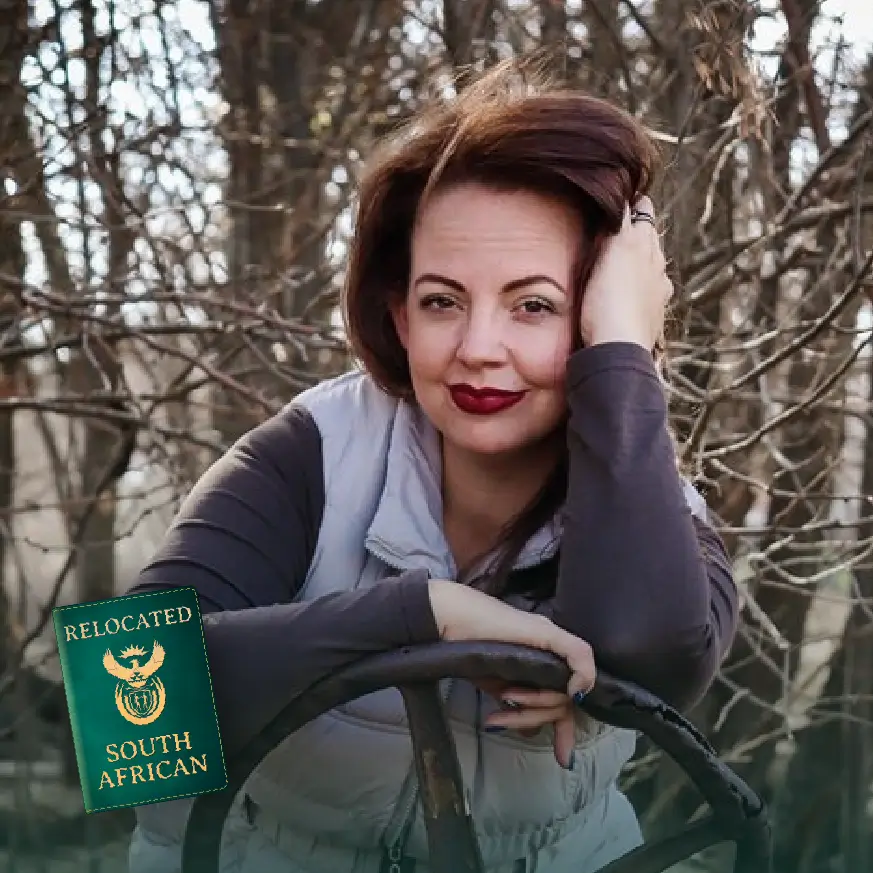
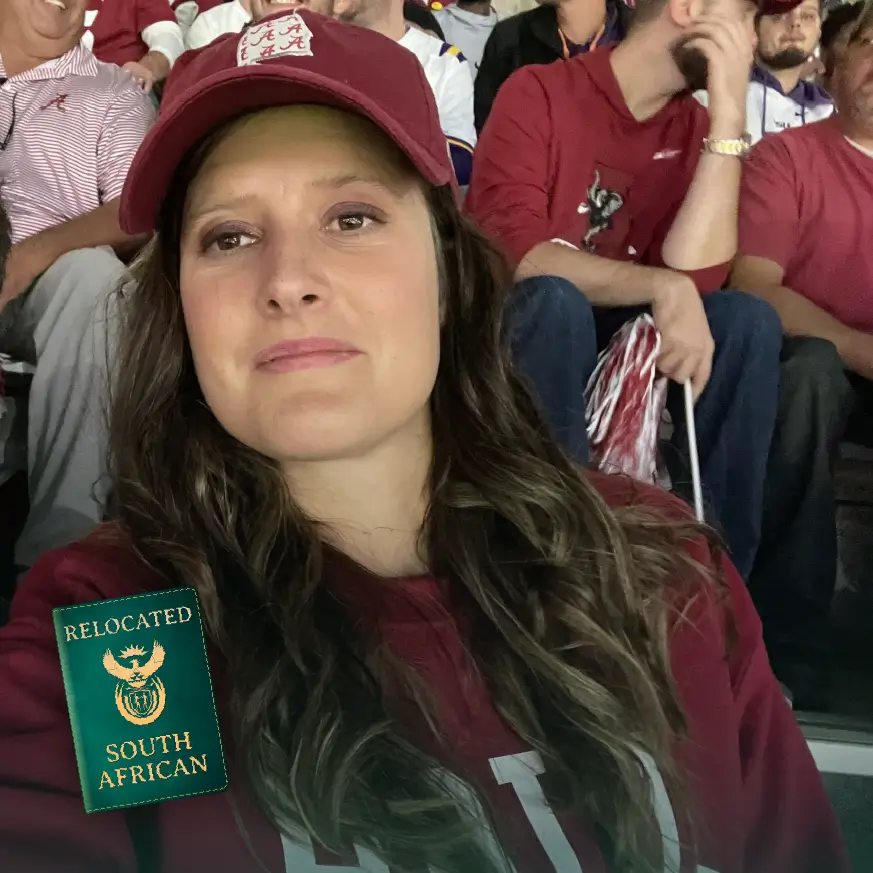
Jan Hugo: Welcome to the Relocated South African, the show for navigating immigration from South Africa for a better future. I’m your host, Jan Hugo, from Lagos in Portugal. If you want to interact with us or comment on our discussions, or even participate in an interview, please contact me on jan@therelocatedsouthafrican.com. Today, I welcome all the way from North Dakota in the United States, Sonéll Van Niekerk. Welcome, Sonéll.
Sonéll Van Niekerk: Thank you Jan, thanks for having me.
Jan Hugo: Well, we normally start with a short background, so maybe you just want to tell us where you grow up, go to school, where you’re from etc in South Africa. Just a short intro.
Sonéll Van Niekerk: Well, Jan, I was born in Newcastle, KwaZulu-Natal, in South Africa. And for a big part of my childhood, we moved around a lot. So I was in various towns and various schools. But I finished my schooling in Standerton at High School Standerton.
Jan Hugo: Can you believe, I was in Wilkenhout in Betel. Oh really, my brother was there. No way. Whoa, whoa. Yeah. That’s amazing.
Sonéll Van Niekerk: Okay, so you were in Standardton, yeah. Yeah, and then I studied beauty, eventually got married, lived in Cape Town for a short period of my life as well.
Jan Hugo: Had children and, you know, life happened. Yeah, awesome. And you’ve got two kids, aye?
Sonéll Van Niekerk: Yes.
Jan Hugo: Okay. And when did you leave South Africa?
Sonéll Van Niekerk: We left South Africa in May of 2022.
Jan Hugo: Okay. And at that time we’re living in Cape Town?
Sonéll Van Niekerk: No, we were living in Standardton.
Jan Hugo: Obviously we’re actually in Standardton at that time. Yes. Okay. Yeah. I must say a lot of those small towns, I think the last time I was in metal was probably in about 2003. and those places that had gone downwards since then, unfortunately.
Sonéll Van Niekerk: Yeah, we recently saw a video on YouTube of the dustbugs and they went through Standardton and we couldn’t believe how everything has just gone downwards over there, the roads, the town, it’s just, it’s very sad.
Jan Hugo: Okay. And your life in Standardton was pretty peaceful before you decided to leave and maybe ask the question, what prompted you to leave?
Sonéll Van Niekerk: Well, life in Sanhampton was good, except for they’ve had riots and they’ve had, you know, people doing what they do. I can say it like that. When we decided to come over, it was an opportunity for us to come over and work and live in the USA. So we prayed about it and God said, well, that’s his plan for us. And we decided to come and he really just brought us out of chaos into safety. So we’re grateful.
Jan Hugo: Oh, awesome. So it was a job opportunity that opened up for you guys. Yes. Okay. Okay. Because a lot of people, you know, when they decide to make it a call to leave by themselves without support of a company or without a work opportunity, you know, they often face a lot of red tape in very difficult situations. So you didn’t have much of that.
Sonéll Van Niekerk: Yeah, thankfully not. So we came over and my husband worked on a farm. Well, he came over first and then the kids and I followed when he came again.
Jan Hugo: So yeah. Okay. And did you leave a lot of family back in South Africa?
Sonéll Van Niekerk: Yes, we did. My in-laws and my husband’s brother and sister and their families. And then my parents and my brother and my other sister and my other brother and their families. So yeah, we have quite a bit of families still left in South Africa, but my side of the family is pretty spread out in the world as well and my husband’s family. So we have family in New Zealand, Germany and Australia as well.
Jan Hugo: Okay. Okay. So typical South African story, but it is difficult to still have family left in South Africa because one always sees negative things. And, you know, apart from the other emotional things that we’ll get to a little bit later, it is quite difficult. And for you, even worse, I guess the time difference.
Sonéll Van Niekerk: Yeah, it’s eight hours difference. And then when we have daylight savings time in the winter, it’s nine hours difference. So yeah, I try and phone my parents every day the same time, then I know they’re available.
Jan Hugo: Okay. Yeah. Yeah. That makes sense. Talking about North Dakota, it’s not a place that’s very well known, you know, to, to the regular travelers. What is the nearest big city that we would know about?
Sonéll Van Niekerk: The nearest big city from us is Bismarck. It’s around two and a half hours drive from here, but another city that you might know is Fargo. That’s about six hours drive from us.
Jan Hugo: Okay, so are you in a farming community or a small town?
Sonéll Van Niekerk: Yeah, we’re in a rural town in America. We have about 1200 people living here, 1200 people who live in our community. The town where we started at when we were living on the farm had 600 people. And I know that there are even towns with even less people. So we love it in rural America.
Jan Hugo: Oh, my word. So you’re in Standerton, North Dakota.
Sonéll Van Niekerk: Well, smaller than Standerton, like maybe like a quarter of Standerton.
Jan Hugo: Oh, my word. And with the differences, everything works. Yes. And Sonéll, the weather, I mean, North Dakota is known that it’s cold. Was that a big thing to get used to?
Sonéll Van Niekerk: I don’t think we ever realized that we got used to it because the first winter that we spent here in the winter of 22 23. That was a really, really bad winter I think that year we had like five blizzards and. I can’t even remember properly. I know the school was closed for two weeks because of blizzards and the snow was like hip height and everything. So it was really cold. I think we hit negative 90 degrees Celsius that year. But we didn’t realize it because we were so excited about the snow and everything else. And the house has central heating. So I don’t even think we felt it. And ever since then, it’s just winter.
Jan Hugo: But I guess from a South African perspective, we are also used to living outside and doing things outside. But I imagine in a place like North Dakota, you have to dress for it and you still go outside from time to time. It’s not like your housebound.
Sonéll Van Niekerk: Yeah, no, you’re not housebound at all. And all the buildings, the schools, the shops, the houses, everything is heated with central heating and you dress for it. I mean, I’m not going to wear my snow pants from my house to my vehicle outside and then from the vehicle into the school and then take it off there. I just go with a denim and a hoodie and then just walk a few seconds. It’s not that bad. If the wind’s not blowing, it’s not bad. But if the wind’s blowing, it feels like your face is going to fall off.
Jan Hugo: I can just imagine. Well done for adapting. I think that’s pretty good because a lot of people find it very difficult to adapt to the weather.
Sonéll Van Niekerk: Yeah, I guess you just make the best of it. Yeah.
Jan Hugo: And I mentioned that I know that you are, and that’s where I came across your profile was on TikTok. So you’ve got a very active profile on TikTok. Tell me about that. How did that come about?
Sonéll Van Niekerk: Well, I actually started out by doing my Christian Bible teachings on my TikTok. And then when the Africana refugees arrived in the USA, wow, all of us all over the world, we’re just watching this plane fly over to the USA. And we were all so happy and excited for them to land. and everything now coming to light. And I just decided, you know what, I’m just going to make a quick welcoming message just to welcome them in the USA.
Jan Hugo: And that kind of went viral. Oh, awesome. Is that that’s okay. I didn’t know that that’s how it started, but I think it’s fantastic.
Sonéll Van Niekerk: yeah and from there on I just decided to make videos of life here and explaining how things work. I mean a lot of people have a lot of questions and i’ve been messaged about with questions and everything so I just make videos about it.
Jan Hugo: I think that’s fantastic. I know there’s quite a few people that do that kind of thing, but it just shows you the demand. The very interesting thing about this podcast is that quite a large percentage of the listeners are still in South Africa. You’d think that you only talk to over 30%. It’s been going for three months now, but we see the stats and it tells me that there’s a lot of people with wanting information, what is it like, you know, because it’s such a big decision to move. So well done for you. And I’ve seen your Christian videos as well. So from that perspective, maybe you should tell us about your faith. And did you work in the church? Or how did that come about?
Sonéll Van Niekerk: Yes, well, I grew up in a Christian home, but I completely surrendered my life to Jesus as an adult. I’ve just been living for him for many years. And then I studied theology. I did a three-year degree in theology through the Full Gospel Church Bible College in Irene in South Africa. And then I started doing videos on Facebook now eight years ago. So I’m still doing videos on Facebook as well, where I teach the Bible. And then I had some speaking opportunities in South Africa, but I’ve had many more speaking opportunities here in the USA. We have a pastor at the Methodist church. When she would go on vacation, they’d have me fill the pulpit. And then at our church, where we are at the assembly of God as well, If the pastor is gone and no one else is available, they ask me also to fill the pulpit and then I also lead the adult Sunday school class.
Jan Hugo: Oh, fantastic. Well done. I mean, I would imagine because one of my other questions was about getting involved in the community and getting accepted. I would imagine there’s not a lot of other South Africans where you are in such a small town. So it’s important to get taken up into the U.S. community and the church is a wonderful way to do that.
Sonéll Van Niekerk: Absolutely. It’s probably the most important thing that I would say you have to do once you immigrate to another country is become part of the community, be a volunteer, get out of the house, get into the stores, just randomly talk to people, just be your friendly self. Sometimes it’s scary because our accents are so heavy that people kind of shy away from us, but eventually you know when you crack a joke or two I’ll just speak up and go on to them and then ask them if they understand what I’m saying. I explain to them and then we all have a good laugh and that just really breaks the ice fast but get involved in the community. I’m also part of our town’s city business chamber. So I’m on the business chamber board and we do all the events and the planning and promotional businesses and all those things too. And that also helps, you know, you create your village, you surround yourself with people you want to have in your life. And that’s very important. That helps with the constant missing of family and friends.
Jan Hugo: That is so important. I think if there’s one thing that comes out of a lot of these discussions is the loneliness. It really catches up with people, and people come over as couples with children and at different ages. But some people are just not outgoing, and they find it’s extremely hard. And people don’t come to you. You have to go out. You have to put yourself out there. So I think that’s awesome advice. Funny enough, people that I spoke to in Australia, they were from Natel, and they were both involved in the church as well. Their husband plays the drums, and now in Australia, he plays the drums in the church band, and they’re very involved in the church and the school. It’s different there because of the amount of South Africans, but still, it’s a way to become very involved. So that is fantastic. And if you think about life and I’ve seen in your videos, you talk about walking from the stall late at night and not feeling threatened at all. What do you appreciate most about your life in where you are?
Sonéll Van Niekerk: I appreciate most about our life, the safety, the fact that we don’t have six feet high walls around our house with electric fencing and alarm beams around the house. security gates everywhere, and burglar bars everywhere. I sleep with open windows at night without fear of anyone breaking in or hurting us or doing anything. I go to the store and I don’t have to cling to my children of fear of having someone grab them. Then again, you need to also be careful in the cities. I mean, you do get your dangerous places in the cities. And that’s probably why we prefer rural America is because it’s just so safe and so peaceful. Here, I can even sometimes I walk from work home at 9pm at night and I walk home to three blocks without any fear of anyone doing anything to me.
Jan Hugo: Now that safety aspect is, and the interesting thing is when you speak to the locals, they don’t really think about it because they’ve never been threatened in any way. So I think that’s also a point that comes out with a lot of discussions with South Africans. And, you know, I always ask the question of contact with other South Africans. I guess your contact is through TikTok and your videos and Facebook.
Sonéll Van Niekerk: Yes. The majority of my contact is through social media. Yeah.
Jan Hugo: Okay. You haven’t seen any other South Africans in the flesh since you’ve been there?
Sonéll Van Niekerk: We have. In our community, we’re about 26 South Africans. So we have a lot of South Africans who work around on the farms. So yeah, we’re a pretty nice community. The managers of the motel in our town, they are South African and then their brother and sister-in-law are also here. They drive the shuttle for the motel. And then you have a whole bunch of guys farming and then we have some other ladies here as well. So we have a nice community of Afrikaners here in our town. And we have a pretty good name too, so we try to keep it that way.
Jan Hugo: I see the name AmeriCornish comes up everywhere, especially since the refugee thing. Okay, I don’t appreciate that there were so many. And you say that you work as well on top of kids and family and TikTok?
Sonéll Van Niekerk: Yeah, I work at the public school. So I’m a paraprofessional. And coming here, well, before we came here, I never even knew this kind of job existed. So once we got involved with the community and we moved to town after the farm and everything, I realized, but there’s a job at the school where people actually help children with learning and behavioral challenges. And I applied to be a substitute teacher, but then they contacted me and said they actually need a power professional. I’m like, what’s that? So they explained it and I did a course online and now I work with a student who’s hard of hearing. I basically teach him every single day we have our own classroom and I help him if he needs to go to other classes. I walk with him. Otherwise he walks on his own and it’s been quite an adventure. It’s been quite an experience learning this whole new world of teaching children with learning and behavioral challenges. It’s pretty amazing. It’s a cool job. And then during the summer, when we have three months summer vacation, I waitress at a local restaurant.
Jan Hugo: Oh, fantastic. Well done. I must say, I can just see you really look comfortable and at ease, if I may say. And it tells me that you’ve accepted life there and you’re living life there without looking back. And that’s obviously a question you’ve told me what you miss most. What do you miss about South Africa?
Sonéll Van Niekerk: I miss my family. I miss my family the most. I do miss the Kruger National Park. We used to go there every year during the winter. So I do miss that. But then again, we have national parks over here too. And then I can always tune in live on YouTube and watch the animals in the Kruger National Park. But yeah, I really do miss my family. And yeah, my family and friends is what I miss most.
Jan Hugo: And you haven’t seen your parents and family since you’ve been in America?
Sonéll Van Niekerk: Yeah, we have not seen each other since we left, except on WhatsApp video call.
Jan Hugo: Sure, sure. But is there an opportunity in the future?
Sonéll Van Niekerk: We’re working towards having my parents come visit us God willing next year over the fourth of July for a couple of days. We’re working towards that. So it’s very expensive and we’re saving and sending them money and working hard to have them come visit us.
Jan Hugo: Okay, well done. And I always ask this question because it’s funny the answers that you get when somebody asked me, what do I miss from South Africa? I say, I tell you what I don’t miss. That’s a car guard. But if you could ship something from South Africa today, that would arrive tomorrow. What would that be?
Sonéll Van Niekerk: My mom. My mom and my wedding dress. Yeah. I’d ship those.
Jan Hugo: Okay. That’s very, you know, it’s, I mean, the guy, the episode that was on today, the guy said that he’s a lawyer and he misses his books the most, you know, he had to give up a whole library of books. So I can imagine. So there’s such big sacrifices that go with this process. So I can understand. And I think The one other thing that comes out very often is the support. When something goes wrong, when you have sick children, but it sounds to me like you’ve got a nice community in the church and the South Africans and the people around you. So that’s probably not such a big miss in your life.
Sonéll Van Niekerk: Yeah, I often say we have more people here who care for us and love us than we had in South Africa. I mean, we did have a support system in South Africa, but here it feels so much bigger. I don’t know why, but we have a lot more people that we can just rely on for help. And we’re grateful for that. Yeah, it’s incredible.
Jan Hugo: And my sense is that Americans are very welcoming.
Sonéll Van Niekerk: Oh, absolutely. They are very welcoming. We have had our experience with some who were not as welcoming but you know what it is what it is and I always say you know what I have survived South Africa has a special skill on my on my CV so you know what we just take everyone as they come but like 99% of Americans are very welcoming and very kind.
Jan Hugo: That’s also the experience of my kids in Dallas and what we see, I’ve been there many times and you just find that the people are friendly and welcoming. So now, I mean, maybe this is an obvious answer, but would you ever consider or see yourself going back South Africa?
Sonéll Van Niekerk: No, short answer, no.
Jan Hugo: But you know what, that is such an important thing, you know, because the other question that goes with that is from a family perspective, I’m talking your immediate family, husband and children, you know, that the immigration process can be very difficult, but it can also bring you closer together. Would you say that’s the case in your situation?
Sonéll Van Niekerk: Yes, it has brought us closer together as a family. Absolutely. My husband and I have learned skills in our marriage that we never had before in South Africa. Our roles have evolved as well. At one point I was working three jobs to keep the pot cooking and my husband was looking for a job at that point. And so we’ve had our fair share of challenges, but we have overcome it together. We have a slogan in our family and we say we only have each other. So we should always stick together because we only have each other.
Jan Hugo: That’s very true. That is so true. The guy today said, we are each other’s tribe. That’s it because there’s no one else. And coupled with that is when you made the call to leave, that was a joint decision. It wasn’t like one was doubtful or the other one wanted desperately to go when the other one said, oh, well, okay, I’ll go. You were on the same page, is that right?
Sonéll Van Niekerk: Yes, we were 100% on the same page. We made this choice together. Sometimes, you know, you get your up and down days and sometimes to me I felt guilty because we’re here and I made this decision and then my husband said, no, I made this decision with you. We were in this together. And that’s 100% what happened. And that’s so important is when you decide to leave the country that you were born in, to leave your family, everything for a better future, you need to be in it together. Because if you cannot be pulling in separate ways, you need to pull together. Otherwise, it’s not going to work. And that’s why you have many people who divorce after they’ve immigrated is because they’re not in it together.
Jan Hugo: That’s very interesting and I guess very true. On that note, do you see a lot of support groups? I know obviously your videos and your help and people watch your videos and send you questions and so on. But are you involved in any support groups for immigration or for immigrants or expats living in the States?
Sonéll Van Niekerk: Yes, I’m part of two groups for women. The first one is on Facebook. It’s called SAWITU. It stands for South African Women in the USA and Canada. And then the other one is a WhatsApp group for South African women in the USA, which is more Afrikaans. But there we ask questions about visas, immigration, recipes, replacement products for recipes and those kinds of things. So yeah, we really support each other. When you’re done in the dumps the day and you’re missing your family, you’re welcome to write out your heart on there and everyone supports you.
Jan Hugo: Okay, yeah, that’s very important because I think, you know, the distance is such a big issue. It’s not a small decision to move to the States. No. it’s different to go to fly to Mauritius or somewhere close by but to go to the stage is a big decision and you know it takes a lot out of you and it takes a long time out of your life it costs a lot of money so it’s not something that you want to reverse because you the sooner you can start a new life on the other side the better it will be for everyone you know absolutely so I think you guys are doing the right thing in terms of Just we have briefly spoken about advice and so on. If you had a friend now asking you, what should I do? What should we do as a family?
Sonéll Van Niekerk: What would you say? If you have the opportunity to go, go. Ultimately, it’s a whole new world that opens up for you and for your family. Your children have a future. At one point, we talked about it, my husband and I, and we said, you know what, it’s either us leaving or our children leaving us. And, you know, we decided to rather leave.
Jan Hugo: Okay. And we just mentioned your kids. Are they adapting? Are they enjoying life?
Sonéll Van Niekerk: Yes, they are. In the beginning, I’d say the first three months, they did struggle a little bit. They missed their family, their grandparents and so on. But once they got into school, because we came here at the beginning of summer, but once they were in school and they were settled, they were ready for it and they just ran with it. And so far it’s fantastic. When they speak English, they sound like real Americans.
Jan Hugo: Isn’t that amazing? My two grandchildren in America, the boy who’s 13, he still speaks Afrikaans, but he’s sister, she’s nine. She hardly speaks. She can understand it, but she doesn’t want to speak it. And when they speak English, they sound like in Texas, it’s even worse, but they sound like real proper Americans.
Sonéll Van Niekerk: They do. And it’s awesome because the schools here have an ELA program. It’s English language assistance. So both our children went through that and that helped a lot. But we still speak Afrikaans at home. And we’ve decided now to start homeschooling, and we’re going to have Afrikaans as a subject. So it’s really important for me to teach the children to keep on reading, writing, and speaking in Afrikaans, because once they graduate, they get a seal on their diploma that says that they are bilingual, which opens even more doors for them, universities and colleges and even work-wise.
Jan Hugo: Okay, so do you do the homeschooling just in Afrikaans? They still go to school, but you just do homeschooling in Afrikaans?
Sonéll Van Niekerk: No, they will be staying home. So once the schools start now in August, I’ll be going back to school working at the school, but they’ll be staying home. They’re old enough to work on their own. And that makes it a lot easier. My husband also works shifts. So he’ll also be when he’s home, he’ll be helping them. And when I get off work, I can check on their work and make sure that they understand everything.
Jan Hugo: Okay. And in terms of the social side of school?
Sonéll Van Niekerk: they’re going to do a hybrid version so they’re still going to be involved in sports and my son is still going to be doing videography classes through the school. And my daughter also said once there’s a subject that she wants to do at school she’ll also be doing that but they’ll still be involved in sports and those kinds of things that’s really important yeah.
Jan Hugo: I didn’t even know that there was an opportunity like that. It just shows you that the US is just a different place. It’s amazing. The thing that impressed me about the school is that it gets a force to take a cultural subject. My grandson learned to play the violin and they now in symphony orchestra in the school, which is absolutely amazing to see the growth in a few years. So that kind of thing is just phenomenal.
Sonéll Van Niekerk: Yeah, between our two kids, they play seven instruments, which they never could play in South Africa. So it’s insane how their talents just developed this side as well.
Jan Hugo: Wow, that is absolutely, absolutely fantastic. So now we’re getting towards the end. I mean, in terms of the Kuldum refugees, I think it’s a wrong name, but these Afrikaners that are arriving in the state, do you see more and more of them arriving? Is it a bit of a constant flow? Because one always sees in the news that these applications are open and people can apply and join and get in. Do you still see more coming in?
Sonéll Van Niekerk: Yes, I just think they’re going to do it under the radar now because people have been so brutal about it and really rude about it. So I hope they keep it quiet around this time, but there will be a constant inflow of the minorities in South Africa coming into the USA with the refugee program. As far as I know there are more than 70,000 who applied which I believe is fantastic because this is the land of opportunity and this is an opportunity that’s been handed to them like a golden ticket and I’d say if you can take it.
Jan Hugo: Absolutely. And the ones that you have dealt with, have they all settled and gotten jobs and settled quickly?
Sonéll Van Niekerk: Yes. As far as I know, they all have settled. They have jobs. They’re all well off. So that’s good. Yeah.
Jan Hugo: Well, that’s awesome to know. Just finally, is there anything you would have done differently, thinking back over three years? Is there anything you would have done differently in terms of making this move?
Sonéll Van Niekerk: What I would have done differently is I would have packed less clothes and more sentimental things.
Jan Hugo: Okay, that’s very interesting.
Sonéll Van Niekerk: If I knew clothes were so easily available at thrift stores with still the tags on them and everything, I would have probably not packed any clothes, just a weekend’s worth of clothes and the race sentimental items that I would have brought. That’s probably what I would have done.
Jan Hugo: Yeah. Okay. And you just came over with?
Sonéll Van Niekerk: With our bags.
Jan Hugo: Yeah. No furniture, nothing.
Sonéll Van Niekerk: No, no, we decided not to bring our furniture. We sold it all. I think we used our last money for our airplane tickets. The money we had over here was what my husband earned when he worked here the first time. So yeah, that’s, that’s what we had in our suitcases.
Jan Hugo: Well done, I must say it is just it’s amazing to hear such a good news story you know and that yes we miss things and we we miss our families but I think you said a true thing that the the kids you will one day be able to see your grandkids because they’ll be living in the same country as you. And it’s unfortunately a sacrifice that your parents have to make in that they won’t have that access to their grandkids. So yeah, I think well done to you guys. It’s an awesome story. And I think a lot of people will benefit from listening to you and hearing how you guys have done it. Is it anything else you’d like to share before we close off?
Sonéll Van Niekerk: No, I’m just grateful for this wonderful opportunity. And it’s been wonderful to get to know you and to chat on here. And I hope that those who listen to this and who see that there is an opportunity will decide to be brave and make the move. Because it takes a lot of bravery to do this and to stick it out. There’s a lot who do it and then they go back. But it takes a lot to stay. And I hope that they have the courage to stay.
Jan Hugo: Fantastic. Thank you so much for sharing your journey to North Dakota and in North Dakota, Sonéll. Thanks for being open and really giving us an insight into your family’s journey. Anytime, Jan. Thank you for inviting me. If you enjoyed my discussion with Sonéll and would like to hear more about experiences of South Africans who have left for a better future, why not subscribe on your favorite platform? If you would like to share your own story, contact us on jan@therelocatedsouthafrican.com. Until next time.