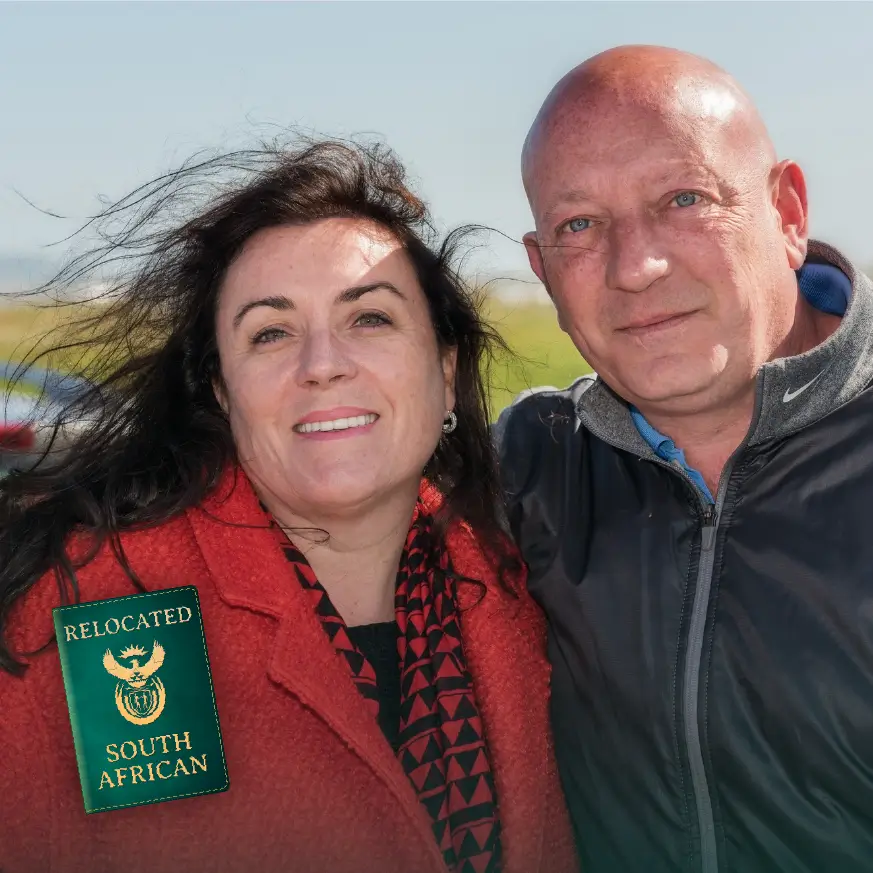
Jan Hugo: Welcome back to The Relocated South African. Today’s is maybe someone who doesn’t fit the typical expat mould. Werner Trieloff is based in Porto Alegre in Brazil, but his work spans continents, connecting people, opportunities, and businesses across Latin America, Africa, Europe, and the US. Welcome, Werner.
Werner Trieloff: Thank you, Jan. Always a pleasure to be with you and be part of the show.
Jan Hugo: Excellent, like it to have you. So I have to ask the first question. Where is Porto Alegre relative to, we all know São Paulo, but…
Werner Trieloff: Yeah, I would rather say the most famous one is Rio de Janeiro, yes, São Paulo as well. We are about an hour and a half, two hours’ flight down. It’s the southernmost state of Brazil, Rio Grande do Sul, and the city called Porto Alegre. It’s close to Argentina and Uruguay, so yeah, very, very southernmost state.
Jan Hugo: Of course, Rio.
Jan Hugo: Okay, excellent. Werner, where did you grow up in South Africa and study, and how did you get to live in Brazil?
Werner Trieloff: I’m a free state boy actually. I was born and bred in Viljoenskroon in the Mielieland in South Africa and stayed there until 21. Then I moved over to Scotland for a while, lived close to Loch Ness. I’ve been to Scotland, it was a great, great, great time.
And then moved down to London for a stitch as well, I think for a year and a half or so. And then moved back to South Africa, studied at Pukke, good old Potchefstroom Pukke, for my degree, postgrad and Masters in Management Accounting. And during my time when I was living in London, I travelled across Europe and I met a Brazilian lady in Austria and found out that actually she was living on the west side of London, I was living on the east side. We both were travelling across Europe and we met up. And then I think two weeks after the trip ended, we met by chance again in a bar in London. Now, you know London the size that it is, by chance is really… By chance. It was this. So that was 2004.
Jan Hugo: It was distant.
Werner Trieloff: And after a couple of years, you know, going back and forth, she actually lived with me for a year in Potchefstroom as well. She ever so kindly said, you know, now it’s your turn to come to Brazil. So 2008, we sold everything in South Africa and then moved over to Brazil. Now, at that point in time, I think I could say good morning, good afternoon, give me a beer, where’s the bathroom, and give me a kiss. That was my Portuguese. The basics to survive. Now it’s much better.
Now I can actually speak Portuguese, Spanish, and I’ve got two kids, half South African, half Brazilian. That’s here as well.
Jan Hugo: Okay, also we always get told that Brazilian Portuguese is very different to what we speak and what we hear. We have quite a lot of people, especially in the building trade, that come here and are Brazilian. But all I can say is now follow Portuguese. Because…
Werner Trieloff: Yeah, I unfortunately didn’t have that luxury of either you had to learn it or you had to learn it.
Jan Hugo: Yeah, no, I guess, you know, and we are on the Algarve, just everybody speaks English.
Werner Trieloff: Yeah, that’s actually one problem that is in Brazilian business in general: the population size that speaks English is a couple of percent, I think three percent or four percent or something like that. It’s still a couple of million people if you look at the population of 220 million. But if you go across the country, depending on where you travel to, you struggle. And specifically if you come here for business, it is complicated.
Jan Hugo: Okay, so I have to ask, I was wondering where you said you’re a whisky connoisseur, and obviously living in Scotland, the UK, that’s part of it. So what’s the best whisky you’ve tasted and why is it special?
Werner Trieloff: That’s a difficult question. It’s the same as if someone asks you what country is the best that you’ve visited or lived in. Each one has got its own nuances, good points and bad points.
Jan Hugo: Maybe I’ll make it easy and say Scotch whisky is the best.
Werner Trieloff: Yes, and there’s a Japanese whisky called Hibiki that is out of this world. Anybody that likes whisky, I really recommend that. And then on a Scotch whisky itself, Talisker 18 Years, that’s a sweet spot. It’s one of the best whiskies in the world for a couple of years. It’s phenomenal, but the Japanese whisky is something to explore for some people that enjoy whisky. It really is worthwhile.
Jan Hugo: Excellent. I had to ask that. So, I mean, as a management accountant, you studied to be a management accountant. Was the plan kind of to follow a traditional corporate type of office career? And, you know, how did that change to be where you are today?
Werner Trieloff: So yes, I did a CA first and then from there moved over to management accounting. And the idea initially when I moved through to Brazil was to work in the accounting field. I started working for a Brazilian audit firm. And at that point in time, since I couldn’t speak Portuguese, they literally hired me, put me in a corner and just said, find something to do. So it was me with a little dictionary, trying to speak to people and trying to find my way. I think out of the 150 people to spoke reasonable English. So it was a bit of a challenge. But after two, three months of just finding my way around the place, they were part of an international association. And I went to the board and I told them, listen, I might not speak Portuguese, but I know accounting and I speak English. So why don’t we create an international desk? Why don’t we create a department that focuses on helping foreign companies come in? And we created the department. They sent me on a European tour a couple of months later, and I was able to get our first clients to come in to Brazil. One of those I actually still work with today, so it’s been over 20 years, still that we work together. But with that, we started a whole new line, we started acting more, instead of doing the physical accounting, acting more as a liaison between the international associations and the Brazilian operation. And going forward, I then moved over to other companies doing similar roles. But the more you travel and the more you go between continents, the more people come to you with, can you help me with this? You’re in Brazil. Can you get me coffee? Can you do this? I want to export so and so to Brazil, how can we do that? But being inside a company or corporate structure, you have the service offerings that you have. So as an audit firm, you offer audit or tax or whichever. And that was in the back of my mind the whole time: there’s a lot of opportunities, but we can’t take all of them. We need to leave them at the door. So in 2013, I said, you know, let me give it a go. I opened up my own consulting firm. I was then able to still provide services for some accounting firms in Brazil, but then expand into other service offerings. So we started doing agricultural exports from Brazil to Africa and the Middle East. We started doing some other consulting with business trips, et cetera, from Africa to here, or from Brazil to Africa. Then in 2017, we opened up Open Road Investments, because another opportunity started appearing as well. Open Road has got three verticals: startups, we actually did two exits now at the end of the year and we closed the department; renewable energy, buying sell side, buy side, sell side renewable energy operations in Brazil and Latin America, hydro, solar, wind farms, everything else, and even a mid-market M&A for the Brazilian market. And then in 2018, with my connection with the international associations, one of the people that I met in 2009 in Barcelona created his own association in 2012, Abacus Worldwide, which is a global association of accountants, lawyers, and auditors. He reached out to me and said, hey, are you in Brazil? I said, yes, I am. He said, don’t you want to take on the role as Latin Director for the association? I said, okay.
Sounds interesting. And in 2022, over the last couple of years, I think I’ve been to more than 16 African countries for business trips and business missions, et cetera. In one of these missions, I met one of the board members of AfroChambers, which is a chamber of commerce that connects Brazil to Africa. And we got into discussions and I said, we actually already do a lot of business with Africa, don’t you want to get involved with us as well? So at this point in time, there’s a number of different hats that are on there. The accounting, I’ve never actually done accounting in my life, but it serves as a basis for everything else that we do. So with the startups, to be able to understand how the business operates, how the finance works, everything else. M&A, for example, being able to read financials, being able to speak to people from top level all the way down.
So it’s given me a good grounding in business as such. I realised that at a very early stage in Brazil, it’s much easier to contract people here to do the physical accounting itself rather than to do it myself. And I focus on the business aspect of it.
Jan Hugo: Okay, which African country would be the biggest in terms of trade? Is it still South Africa between Brazil and Africa?
Werner Trieloff: Yes and no, because it depends on what area. I mean, when people ask me about Africa, I normally say the easiest route of entry is always South Africa, because of culture, structure, organisation, tax wise, everything else. But there are a couple of other countries now that Brazil has got very good ties with. And depending on the industry, so for example, we… Ethiopia, for example, with cattle, or Senegal and Ivory Coast with cacao. So it depends on the different country. In Africa, the continent, the moment you start travelling it on a map, it looks small, but it is huge, it is massive. And it’s very different, doing business with someone in Senegal, for example, than doing business with someone in Tanzania.
Jan Hugo: So really.
Werner Trieloff: Cultures are different, the region is different, but Brazil is looking at the African continent very sharply from government level all the way to the private sector. I mean, we’re working now with companies in the energy sector and the mining sector, or in agriculture, expanding from Brazil into Africa, into different regions. So there’s a lot of opportunities.
Jan Hugo: Well, excellent. And just from thinking about doing business in Brazil versus South Africa, is it very different, the environment?
Werner Trieloff: Yes, Brazil. I’ve got this internal joke with the Brazilians, excuse me, and any South Africans that he has as well. People normally ask me, what is the cultural similarities between Africa in general, or South Africa, and Brazil? And I say, politically we are buggered, economically we’re suffering, but the people are always happy. That is very true for both countries. Now, if you look at the business perspective, Brazil has got one of the most complicated tax regimes in the world. It’s really, I think, Brazil and India, if I’m not mistaken. So it’s complex. But you’ve got a massive market. So the moment you can get into Brazil, and you can set up everything correctly, you’ve got more than 220 million people that you can access. And it’s a strong economy. So if I need to jump from Brazil, for example, to Chile, Paraguay, Argentina, Colombia, it’s reasonably easy. So it’s a good door of entry into Latin America. But it is complicated, not an easy market.
Jan Hugo: And I mean, one thought for the podcast in terms of immigration, it’s not sort of an obvious destination for immigration from South Africa, but yet it seems like it’s a great place to live. Why would you say people don’t immigrate there?
Werner Trieloff: I think they do, for example. So we have a WhatsApp group in Brazil called South Africans in Brazil. I think we have more than 55 members already. So there is a bunch of South Africans here. And I think it’s, people know about it. I mean, Brazil is famous globally for soccer, for meat, for samba, everything else. More people are looking at it. And a lot of the people that I know that have come through here, it’s normally been because they married either a Brazilian woman or guy, and through that have moved over. But it’s a nice country to live in, if you speak the language. If you don’t, and if you live in a region, you know, São Paulo, Rio, wherever, where you’ve got good foreign support, then it’s okay. But if you don’t, if you live maybe in the countryside or so and you do not speak the language, it’s complicated. My first year and a half here was like that. But once you get the linguistics and you understand the culture, amazing. They are similar to us in a sense, that there’s a saying in Portuguese: you lose a friend, but you never lose a joke. So if the opportunity is there, you have fun and you joke with it, even if your friend is a bit annoyed with you. But it’s a fun culture, it’s nice people.
Jan Hugo: Okay, because I was going to say, I mean, you’ve already answered the question that it took a while to adapt, and mostly because of the language, but just generally, what’s life like there? Is it similar to South Africa?
Werner Trieloff: It’s very similar and it depends on the region. So for example, Brazil is a continental country. For us, for example, to fly up to São Paulo is about an hour forty-five. And then from São Paulo to Manaus, which is the capital of the Amazonas, is another four hours. And you’re still in the same country. So it’s huge, it’s absolutely… And sometimes it’s cheaper for me to fly to South Africa than it is to fly to Porto Alesa in the north of Brazil, for example. So it depends. I’ve had the pleasure and the honour to be, I’ve been to I think more than 20 states across Brazil, and it’s very different. The northeast, the culture is very different to the southern regions, for example. Manaus is very different to some of the coastal regions. It depends. The region that I live in, they love their barbecues, the braais, the churrascos. The people are very open and very warm in receiving you, which is again similar to South Africa as well, and very creative. They find ways of surviving and of making things work, which is why for companies that work in IT, for example, Brazil is phenomenal, because the programmers think so far outside of the box. It can get complicated for people that try and find ingenious solutions, not to do the wrong thing, but the creativity is there. So it’s a nice country to live in.
Jan Hugo: Excellent. I mean, obviously you mentioned barbecue, the meat is phenomenal, but in general, just food wise.
Werner Trieloff: Food wise, again, it differs from region to region. For example, you’ve got black beans and rice, which is a staple food reasonably across Brazil. But then if you go to Rio de Janeiro, up in the north, it’s more of a brown bean or a white bean. In the northeast, a lot of spice, not like us with the peri-peri that has a taste, it just burns. But it is much more spicy than what you would eat in the south, for example. So each region has got its own type of food. The food in Minas Gerais is phenomenal, it’s very heavy, but it’s amazing. And in regards to the meat that you mentioned, my sister and my brother-in-law came through to visit a couple of weeks ago. And in Brazil, normally, for example, in the southern region, when we do a braai, we just put salt. There’s no pepper, there’s no olive oil, there’s no spices, there’s no anything else, because the reason is you want to taste the taste of the meat. Each cut has got its own taste. And that’s always amazing, for example, when my sister was here, for them to experience it and go, it’s the same animal, but just by having a different cut, it tastes completely different. And that’s something that we don’t do in South Africa, we normally have, you know, marinade, everything else, which is amazing. And a lot of the time when I do braais for Brazilians here, I mix in biltong spice and I do some crazy things. So the first reaction is, bless me, you didn’t use just salt. But when they experiment and they try it, they actually quite like it. You know it’s, but it really is, it’s very good, the food.
Jan Hugo: It’s interesting because we’ve got a South African steakhouse around the corner from us, and the guy imports all his meat from South America because he can’t import from South Africa because of foot and mouth disease. And the meat, I mean the cuts and the prime, the rib eyes, it is really, really excellent. I mean, one of the things that people immigrate, always talk about is just physical safety. What’s it like where you are?
Werner Trieloff: Again, it depends. It’s similar to South Africa, but I think depending on which city you stay in, it’s more relaxed, as well as which regions you go to. So, for example, my sister lives in Pretoria, depending on where I am in Pretoria, or walk around during the day, go a couple of blocks to go to a shop or whatever, at night I won’t. I’ll take an Uber and I’ll go from one place, or take a car and go from one place to the next. Brazil is similar to that. So, Porto Alegre, for example, where I live, there’s certain areas where it’s reasonably safe up until about ten, eleven o’clock at night. After that, I would recommend, you know, take an Uber or take a car home. And São Paulo is a bit more complicated, São Paulo and Rio specifically. So, there’s certain cities that you need to be much more aware of. But it’s normally… I mean, South Africa, well, I lived in Pretoria many, many, many moons ago, in the space of, I think, two years, our company was broken into twice, our house was broken into two or three times. So we had, I had personal experience with crime in South Africa. Whereas here, I think in 18 years here, I think there was one assault. So there are issues, you need to be aware, as in any other developing country as well. But normally it’s more to rob you, it is not to kill you. Yeah, they stop you, you know, put a gun, give me all your wallet, things you give and they go.
Jan Hugo: And in terms of corruption and policing, and that kind of thing, because that seems to be a big problem in South Africa right now, what is it like over there?
Werner Trieloff: Yeah. So corruption is something, Brazil had a couple of international scandals over the last couple of years. Unfortunately, on the political level, on a high level, corruption is massive, which also increases the cost and the complexity of doing business in Brazil, because there’s always someone who’s looking to get a cut some way or form. There has been improvement, there have been massive improvements with this over the years, but it’s complicated for people to come into the country to do business. And the policing, it’s again also depends on the region, so you’ve got certain regions and certain cities where I think it’s, for example, there’s a zero policy, you do anything, they can, you get caught, you’re in very big trouble. And then there’s other states where you get a slap on the hand and you walk away. So it depends, again, because it’s a big country. But you do, for example, you do see, if you call the police, they would normally show up reasonably quickly. And again, for people that think, for example, to come and live in Brazil, reach out to me at some point, or whichever, but it’s always good to get a better understanding of where you’re going to live, what you’re going to do, and each city has got its own neighbourhoods, which are going to be more recommended or not, safety wise, et cetera.
Jan Hugo: And further stuff, you know, these are questions that come up, you know, from people thinking about immigration. What about healthcare and schooling?
Werner Trieloff: So Brazil is one of the few countries globally that’s got a total public health system. It’s called SUS, S-U-S, and it actually works. You know, this integrated system covers the whole country, quite nice. On the private health side, very good systems. So if you’ve got the finances to pay for that, the majority of people do pay, but it’s very, very good. There’s a lot of people that do medical tourism coming into Brazil. So depending on what they need to have done, they fly in and do a fly out, specifically Americans. And schooling is very good. It’s very good. Again, depending on which region you live in and what you do. So for example, my kids, we went to Maple Bear, which is a Canadian school, so dual Portuguese, English. So there are a lot of international schools here. The universities are quite good. So education wise as well, it’s definitely not bad. The only thing there, again, is for universities and things like that, you do need to speak the language. So it’s not something that, you know, for small kids, there are normally international schools that they can do both languages in. But for the universities, et cetera, you do need to have fluent Portuguese.
Jan Hugo: Sure. And, you know, if you’re thinking of coming to Brazil, not just on holiday, but to come and live there, how difficult is it with red tape and so on to get a work or residence visa?
Werner Trieloff: It depends on your qualifications, and it depends, there is a couple of options. So the majority of the country is now often like investor, investor visas, you know, golden visas or things like that, if you’ve got the funds. These ways of coming in are reasonably easy. If you come from a work visa, there’s a number of hoops that you need to jump through, but there are specialised companies that help with that. It is a process that takes some time. Brazil, similar to Portugal, I know you’ve experienced that before, but we say Brazil is the daughter of Portugal. And you see that in regard to bureaucracy, because we have a saying, the Portuguese always say, that if you can do something in two steps, why do it in one? They love processes, they love processes. So sometimes we say, no, but you know, it’s quicker this way. No, no, no, but the process says step one, step two, step three. So there’s a lot of bureaucracy that is being changed. So for example, when I arrived in Brazil, to open up a company took you 60 days, 90 days or something like that. Now it’s down to a week or two weeks, so depending on the city as well, but it’s much quicker, much more streamlined. You know, things are improving. But the Brazilian culture does love bureaucracy, unfortunately.
Jan Hugo: No, it’s very, I suppose it’s true, it’s the same in Portugal. We have issues constantly now with the airports. My, we’re trying to get through an airport here with passport control, it’s just a nightmare. And it’s like they don’t care. I mean, tourism is one of the biggest things in Portugal, you wait three hours, you wait three hours, that’s just how it is. And they don’t get excited, that’s the other thing, the Portuguese are such calm people. Whereas us South Africans, we tend to get a little bit worked up if we have to wait. So yeah, it’s interesting. You mentioned, obviously, the tax complicated, it is fairly complex to set up a business, but if somebody wants to do it, it’s possible.
Werner Trieloff: Exactly. No, it’s definitely possible. And speaking to someone, for example, that is my specialty. If someone does think about doing business in Brazil, reach out to me. And if you set things up in the beginning correctly, it’s not that complicated. And if you’ve got the right business partners looking after each part of it, it’s very doable. But compared, for example, I remember when we did tax code training, et cetera, in South Africa, I think the tax code was changed once or twice a year, maybe. In Brazil, the tax changes come in about five or ten times a day. So it’s crazy. So for you to keep track of that, I mean, if you come into the country and you say, you know what, no, I’m going to do everything on my own, because we do it in many other countries, good luck to you, it’s not going to work that way. It’s good to have your specialist people that look after that, take care of it, and they focus on all of these changes and just give you the highlights, rather than you trying to reinvent the wheel, it’s not going to work. But the country is going now through a very big tax reform. It’s still a moving target, so we’re still going to need to see how things actually work out in the end. But it should streamline things a little bit, which, you know, for the day to day of an accountant or a tax specialist on this side, it’s going to make life a lot easier.
Jan Hugo: Just from a personal perspective, if you think about, you know, living in Brazil versus South Africa, what would you say is the biggest sacrifice you’ve had to make?
Werner Trieloff: First and foremost, being far away from family. My parents are still alive and both my sisters still live there. I have the possibility, I go back to South Africa maybe two or three times a year, so I still get to see them. But it’s a cultural change. There are similarities, but it’s different. And if you adapt and you embrace the language, and you adapt and embrace the culture, which I think is similar if you live anywhere else in the world, if you can adapt and feel part of that culture, it’s a great place to live. It really is not bad. I joke nowadays with people, I say I’m sixty percent Brazilian and forty percent South African, just because I’ve thrown myself so much into the local culture. But that helps, that helps. But we do, I mean, you miss, we get together, a couple of South African friends, for example, in Porto Alegre, and have a beer and just talk Afrikaans and joke about history and our things, and past and whatever. And that helps. And even with the WhatsApp group, normally, I think once a week, the conversation goes on to, we’ve got a new recipe for a milk tart, or who’s got a recipe for a koeksister. Because those are the things that you miss. Someone found the other day a mint Kit Kat, and it tastes apparently like Peppermint Crisp, and everybody went ballistic: where do we buy it, where do we get it? And it’s beautiful to see things like that, you know. We adapt to the country that we are in, but your heart will always be South African. Always.
Jan Hugo: Absolutely, you know, people have said that they feel more South African now that they live abroad than they did in South Africa, which I find quite an interesting concept, but it’s true, because, you know, yeah, we South Africans, we’re parts of different and diverse groups, so maybe it’s easier when we live abroad. I think the comment that you made now about embracing the culture, I think that’s so important, and maybe it’s better not to have a lot of South Africans around. Because you think about the South Africans who go to Australia, New Zealand, I’m not saying it’s a bad thing, but it’s a soft landing, as they call it. When you’ve got big Facebook groups and lots of people welcoming and big braais and so on. The one thing that we have found is not every South African who has immigrated is necessarily going to be my friend, because we have different values. We may be, we’ve got that in common, but that doesn’t mean we’re necessarily going to get on. So yeah, I think it’s a very interesting observation, embracing the culture, because that’s the other thing I find, and I don’t know how many Brits you have in Brazil, but yeah, they love going to the English pubs and the Irish pubs and they watch soccer and they just don’t become really part of the furniture here, because they can go back for a weekend. And I think this, you know, that’s the one thing I find also about South Africans, is when they move, it’s such a long distance away, they have no choice, and you’re going to be very unhappy if you don’t embrace it. So that’s very good advice.
Werner Trieloff: Yeah. But on that, what I want to make a comment, and this is for anybody that thinks of immigrating anywhere in the world in the future. This is something that helped me a lot when I arrived here. When I lived in London, for example, in Scotland, we had a big group of foreigners. And so I mean, I had, I think, two English friends. The rest were all from across the globe. But when I got to Brazil, I think my second or my third year here, I was invited to go and train a rugby team. And I started getting involved with people, you know, of the rugby guys, I think maybe one spoke English. And getting involved in that world and finding a sport, local sport, and making local friends just opened so many doors, just helped me connect and just helped me understand the culture. And in the beginning, they joked a lot with me about the linguistics, but that helped me to train as well. And then a couple of years after that, I bought a motorbike and started doing motorcycle trips with Brazilian friends, which again also connected me to local friends and gave me access to the local culture. So that, to me, would be, I mean, if I ever move again now to another country, that would be the first thing I would do: find a local sport, get involved where you don’t have a lot of foreigners that can give you that soft landing that stops you from connecting with the locals, or find something else like a motorcycle or some activity that you can get involved with the locals in, and that forces you to speak, connect, understand. And through that, it helps you to make the connection quicker, and it helps you to do that quicker as well.
Jan Hugo: That’s, I think that’s such good advice, you know, because we say, because you speak funny, people aren’t going to come and look you up. You’re going to have to put yourself out there, you know. And often in families, people get depressed, and, you know, it’s sometimes difficult for the wife, because the husband’s working and so on, but you’ve got to get out there. So you’ve got to go to the park and see other people and just be there.
Werner Trieloff: Exactly.
Jan Hugo: I guess on that front, with your wife being Brazilian, it was easier for you guys to adapt to living there, like for you living in South Africa. So it wasn’t really anything difficult for her moving to Brazil.
Werner Trieloff: No, for her, because I mean, we came through, her family lives in this region, so for her it was difficult for her to adapt to Potchefstroom, but her being there she got a very good understanding of how South Africa is, which has helped us on this side as well. And yeah, I would imagine, you know, if you go as a couple, like for a South African couple that move to a different country, it can be more complicated. At the same time, you’ve got each other, so you’re both going through the same struggles, which also then bonds you closer, because you’re learning your way through it. But in this case, she helped me quite a lot, extremely, in the beginning, to be able to adapt and understand.
Jan Hugo: Yeah. And then just another thought, cost of living wise, what is it like over there?
Werner Trieloff: It’s more expensive. It’s definitely more expensive than South Africa, for example. And, you know, if you pay a reasonable amount of taxes, and similar to South Africa, not all of that comes back. You know, it’s an expensive country. But there’s ways and means that you can streamline your taxes. At the same time, there’s also places that you can work for that you can really make some good money here. Again, because you’ve got a very big market. So if you come over as an employee, a lot of Brazilians are now working for foreign companies, the US, Europe, et cetera. And a lot of foreign nationals look to us to do the tax returns and things like that. They set up here, but they’re receiving dollars or receiving pounds or whatever. If you have a setup like that, then Brazil is phenomenal, it is not that bad. But it is more expensive in comparison to SA or South Africa, for example.
Jan Hugo: And compared to the UK, for instance, you know, just restaurants and buying a beer and a coffee and so on, that’s always interesting to compare.
Werner Trieloff: The UK, your money normally goes further, let’s put it this way. So a minimum salary in Brazil is, I think, 1,500 reais, which will be, in dollar terms, about $300, if I’m not mistaken. It’s, anyway, you don’t survive. People normally have two or three jobs and things that they do in order to try and make ends meet. But as a comparison, for example, McDonald’s, I think a meal would roughly be about 40, 50 reais, which would be about $9 or $10 for a meal. That’s about 40 reais. And a beer, depending on where you go to, can be anything from 5 reais up to 20, depending on where you buy. But that’s similar to, for example, London. If you go to zone one, something will cost you £10. And if you go to zone five, the same thing will cost you £2. It’s just depending on where you buy.
Jan Hugo: Yeah, that’s true. Yeah, yeah, that’s very interesting. But I mean, if I look at Portugal, I think the minimum wage is maybe 900 a month. So, yeah, so 300 is…
Werner Trieloff: Yeah, within 900 euros you can actually live quite well. That was the thing that I experienced, but I’ve been out of Scotland and the UK now for a while. But what I remember from there, even with a lower amount, with 1,500 euros, 2,000 euros a month, you can live reasonably well. You can buy a car, you can eat good food, you can live. In Brazil, not so much. You do need a bit more in order to have a comfortable life.
Jan Hugo: And in your region, is housing expensive?
Werner Trieloff: Yeah, compared to South Africa, definitely. So it’s much more, it’s increased over the last years. Cars, for example, as well, it’s much more expensive than it is, for example, in South Africa. And housing, Brazil, it’s much more customary to have apartments. So São Paulo, et cetera, as well, due to the size, it’s gone up instead of expanding. So people live much more in two, three, four, five hundred square metre apartments, instead of bigger houses. But yeah, it’s expensive to buy, again, depending on where you go to.
Jan Hugo: Now the problem in Portugal is obviously, because of all the foreigners here, the locals can’t afford their housing, so that’s a big, big issue all the time politically. But yeah, I guess that happens all over the world. So maybe last question, I mean, you’ve spoken about advice to people who are thinking, and maybe you can just think about that as a final thought, but do you see yourself going back to South Africa?
Werner Trieloff: Exactly. A lot of people ask me that. Maybe retirement one day, but business wise, I’m in a very unique position here, because you don’t have many accountants fluent in English, fluent in Portuguese, everything else that does what I do. So business wise, it’s very good for me to be a, I would love maybe actually to do Portugal and Spain, to give it a go. But we’ll see how life takes us. But at this point in time, South Africa, I’d love to go visit, I’d love to go see my family, I’d love to go drink South African wine, eat South African food. But there’s still a lot for me to do here. So I think for the time being, it’s going to be here. And maybe in future, look at South Africa again, as I said, for a time.
Jan Hugo: And your kids are fully Brazilian, they don’t see themselves as…
Werner Trieloff: Yeah, so at this point in time, my daughter is young, my daughter is eight, my boy is four. So, I mean, they’ve got both passports, we registered them in both countries. So they’ve been to South Africa a couple of times, you know, they’ve… It was the cutest thing when my son was, I think, two, two and a half, we’re doing a safari and he’s calling the zebras with his hand: “Come zebra, come.” It was lovely.
Jan Hugo: Ha ha ha!
Werner Trieloff: So I mean they are going to have contact with South Africa, they are going to be raised in English and Portuguese. So they are going to have their contact, and maybe, who knows, maybe in future they decide to go and live there. But they do know the history, they do know the roots, they do know where they come from. And we’ll see how that goes.
Jan Hugo: Excellent. So yeah, this is the final question. If you think back, as a young Werner now, and a young Werner comes to you and he says, okay, I’m 20, 22, what should I do? What will you advise him?
Werner Trieloff: Wow. Good question, difficult question. I mean, if you, at that point in time, we mentioned that in the beginning of the podcast, I was focused on a career route, free state boy, I think my hometown has got 10,000 people, small little place. Never in my mind could I have imagined Brazil, you know, different languages. I’ve been now, I think, to more than 65 countries. Never would have imagined it. And going back to the 22-year-old Werner, I would just say, live. Because life has got its way of bringing magic to you. It’s not always going to be good, it’s not always going to be fun. But if you can take the ups and downs together, it’s going to get you where you need to get to. Just make sure that you enjoy it and that you give it your most in everything that you do.
Jan Hugo: Excellent. Well, that’s an awesome way to stop. Werner, tell people where they can get hold of you.
Werner Trieloff: So you’ve got me on LinkedIn, Werner Trieloff, that’s my main contact page. And through that, you can send me a message, we can contact via WhatsApp or email afterwards. But that’s only my main form of contact.
Jan Hugo: Excellent. We’ll put your LinkedIn contact in the show notes.
Werner Trieloff: Yes, excellent, beautiful.
Jan Hugo: Thank you so much, geez, that was such a lack of conversation. Love hearing about Brazil. It’s one place that I still have to visit. So thank you so much for joining us today.
Werner Trieloff: Jan, it’s a pleasure, and looking forward to it, if in future you decide to come through, give me a shout, and that is open for other people as well. Yes, we help people with the business aspect as well, but if you think of, Werner, we want to come on holiday to Brazil, what do you suggest? Give me a shout, I’ll recommend a couple of things. I love to show people South Africa, and the similar on the same side as well, I love to show them Brazil and, you know, have them experience this wonderful country.
Jan Hugo: Awesome, and thank you so much. And to our listeners, if this episode resonated with you, please consider sharing it with someone who might enjoy the conversation. You can find more episodes of The Relocated South African on your favourite podcast platform, or visit our website at therelocatedsouthafrican.com. Thank you for listening. See you next time.
This transcript was generated with the assistance of AI and checked for accuracy.