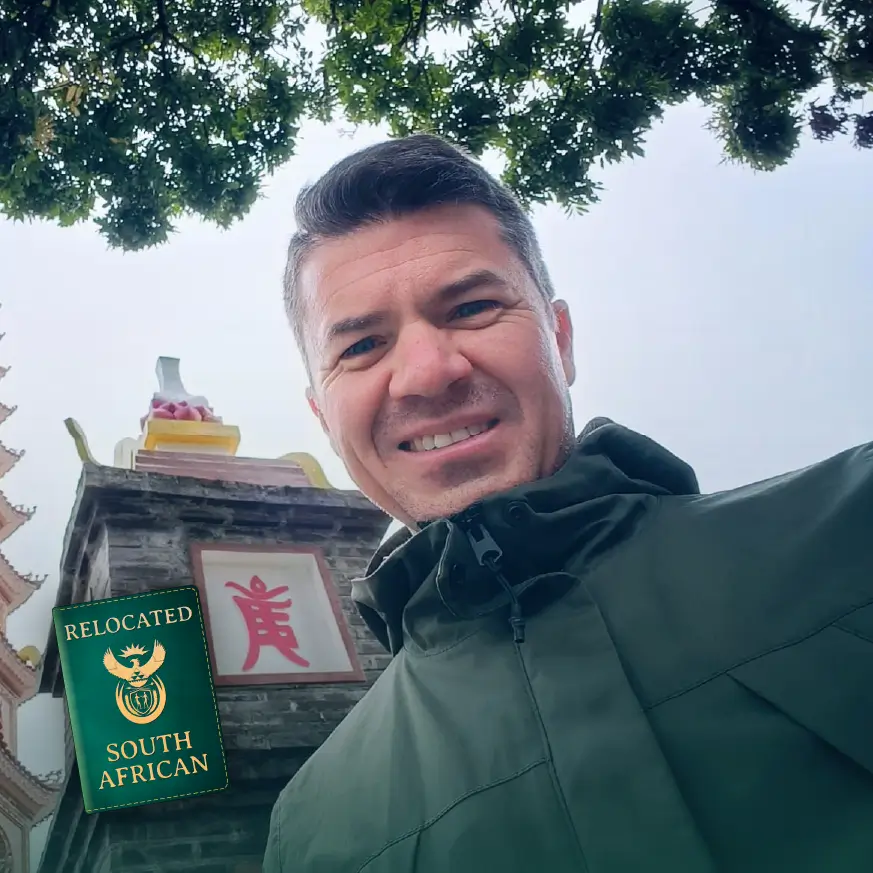
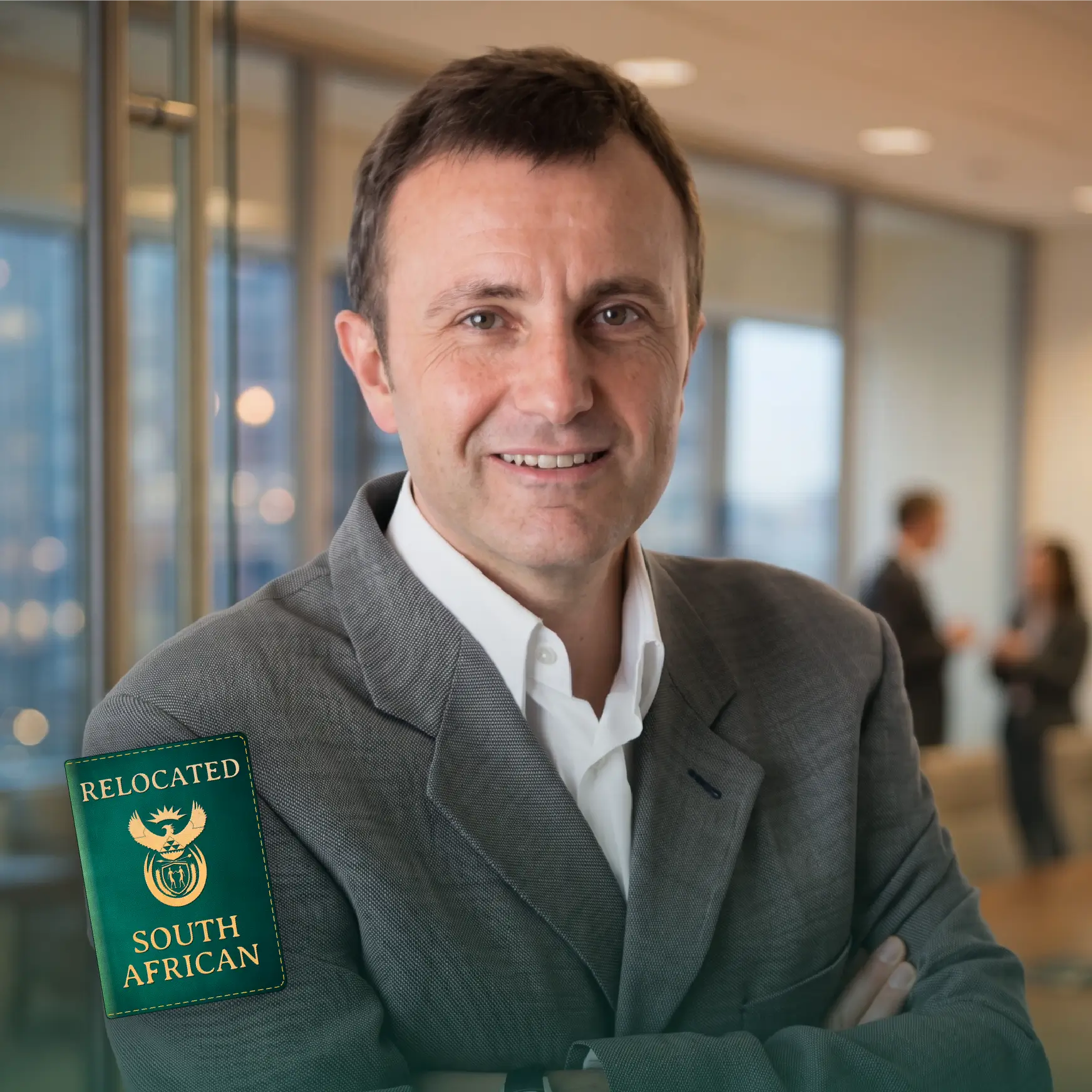
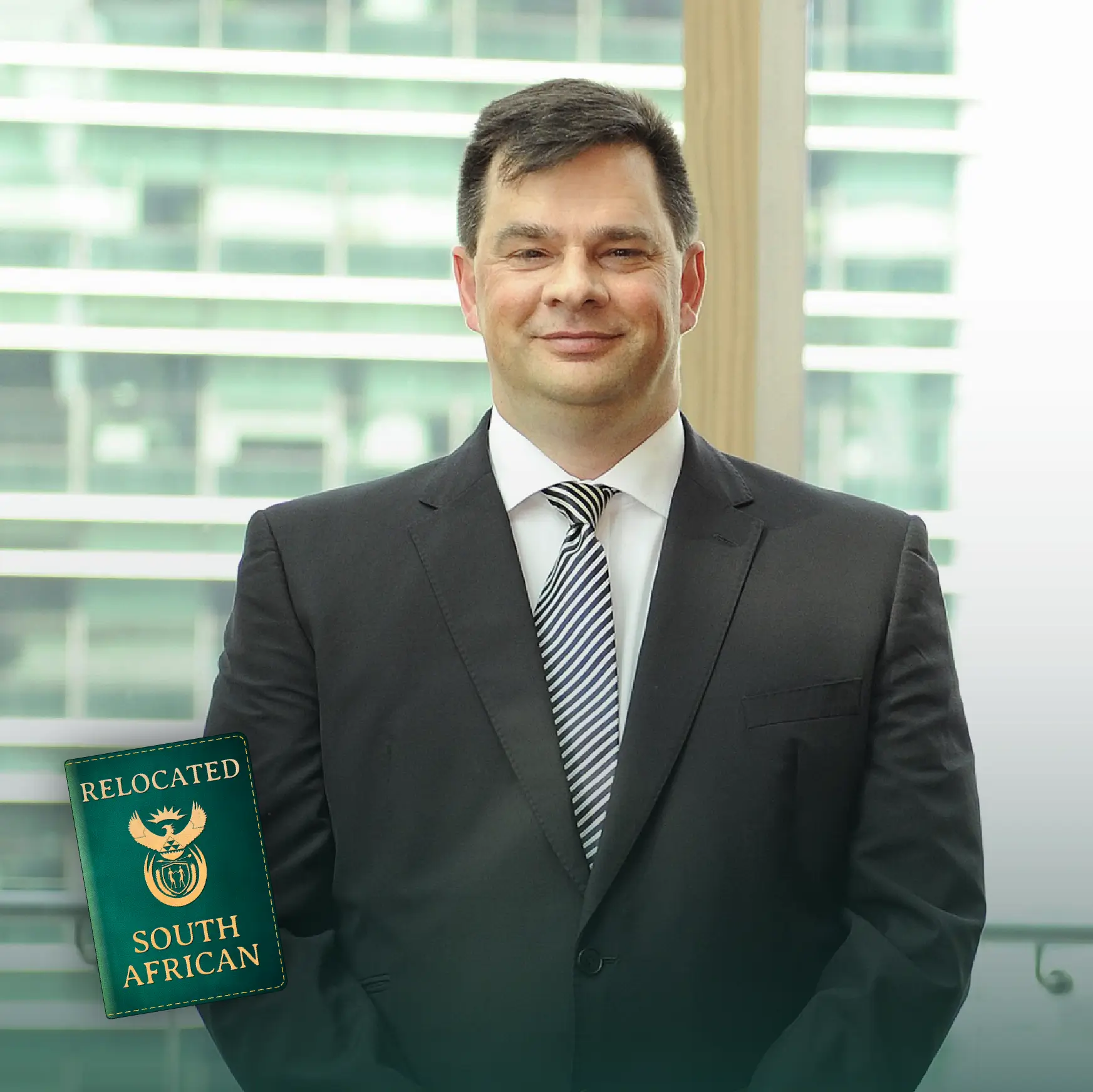
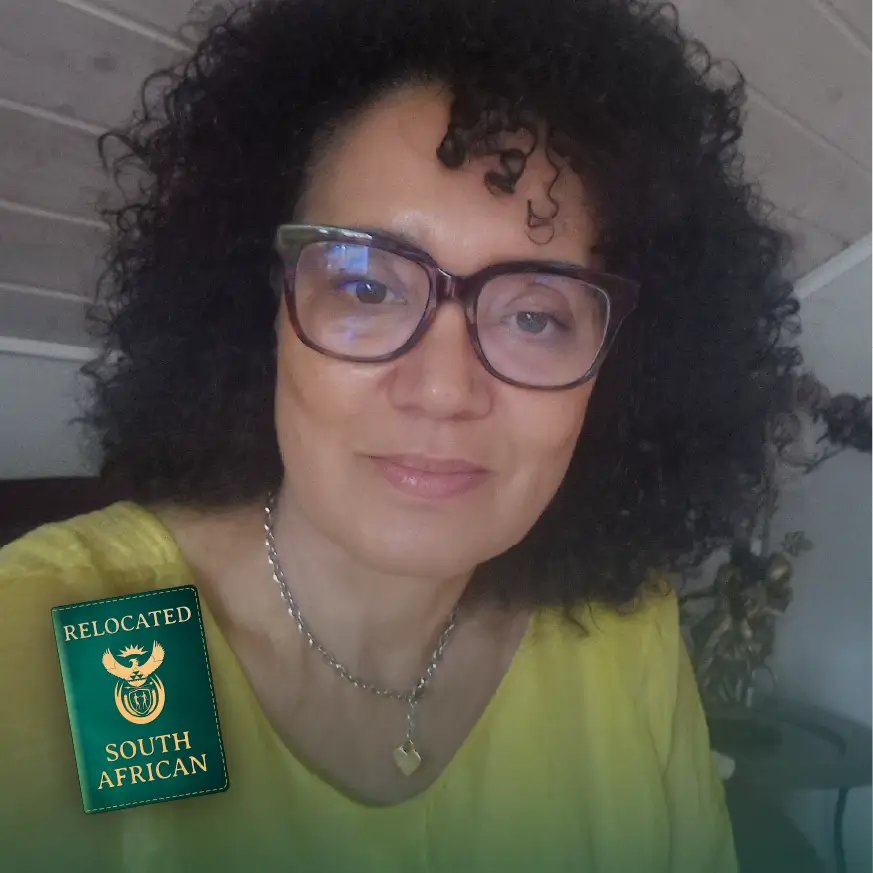
Jan Hugo: Today on The Relocated South African podcast, I am joined by Jesse Green, a fellow Lekker Network member, entrepreneur, and advisor, who has experienced both sides of the immigration journey. He is also the founder of Apostil (apostil.co.za). More about that later. Jesse is based in Sevilla in Spain, which is exactly three hours away from where I am in Lagos. So welcome, Jesse.
Jesse Green: Thank you very much, Jan. Thanks very much for having me.
Jan Hugo: It is a pleasure to have you. Just to start, I always ask the question: where did you grow up, go to school, and how did you get to leave South Africa?
Jesse Green: Well, my birth was in Stellenbosch and I landed with my bum in the butter, in that both my parents worked at the university, which allowed me to study there for free. After that, I moved to Cape Town, and I did a stint in Johannesburg as well. I also did a very short stint overseas teaching English in Russia.
I have always been a traveller, always someone who is very excited to travel and experience other cultures, not just the most visited tourist spots. There were push and pull factors for my decision to leave South Africa. I was not one of those South Africans who unfortunately had crime happen to them, or could not move up in their job. We hear a lot of these reasons in the work that we do at Apostil.
For me, it was more financial: what I called the double taxation, where you pay tax but then have to pay again to get proper service delivery for things like medical, education, and policing, as well as pull factors where there were better things overseas. Of course, one can always argue both ways. South Africa is also a wonderful country. I still have family there.
I am in the special position that I also have children in South Africa, so I am back there very often. I have left South Africa in one sense, and in the other sense I have not left the country. Why did I choose Spain? It was simply because it was in Europe. Spain and Germany were at the top of my list because I speak German, and at that time I did not speak Spanish.
It was very hard on our green mamba passport to get into either of those countries. I actually started with a sort of immigration loophole in Hungary, but once I found one in Spain, I moved straight to Spain.
Jan Hugo: Tell us about Russia. When did you live there?
Jesse Green: That was very long ago: 21 years ago, in 2005. I was in a small city, Yekaterinburg, just over the Ural Mountains, two hours by flight to the east of Moscow. I taught English there at a time when not many people did speak English.
It was quite exciting. I really immersed myself in the culture and did very well with the language, although my Russian is very rusty now. But it was an absolutely amazing time and has given me a great perspective on Russia and Russians, at a time when, at least from the West, they are often considered with a certain generalisation based on the war. I have a very different perspective to most of my peers.
Jan Hugo: That is so interesting. I spoke to Ida Garnier¹ on the podcast recently, a South African who lives in Lviv in Ukraine. There are so many perspectives on this: one driven by mainstream media, and the real perspective on the ground. So when did you end up in Spain?
Jesse Green: The way I left South Africa was probably different to most, especially for people leaving with families or leaving for work. The way I left was in 2017/18, and the reason I say it so broadly is because I started going over, coming back to South Africa, going over for a longer period, coming back, until eventually I was in Spain most of the time due to a change in my circumstances. I would have been very happy to be bouncing between the two countries more regularly, but I have a wife and a child in Spain now, so I am more tied to spending more time here. I always say that I have been here for eight years so far.
Jan Hugo: Jesse, when you think about living in Spain, your situation is probably different to a pure immigrant because your wife is actually Spanish. Is your journey very different from what the typical South African experiences when they arrive there, join the South Africans in Spain group, and try to meet other South Africans?
Jesse Green: Yes. My journey did start off with me being on my own and being single here, so one difference is that it is somewhat more challenging to meet people initially. Obviously, if you have a partner or a very good friend in the country you are moving to, you have much quicker access to meet other people as well.
In the beginning, I went to a lot of events for foreigners in general, where people speak your language so that you can start to get contacts, make friends, and build connections. Some people would also look at going to their church or place of worship in the area. There are those groups on Facebook too: South Africans in Sunny Spain is one of them, and they do occasionally have events, although there are not that many South Africans in Spain.
I recall once there was a poll on that group asking where you are based in Spain, and I was the only person who answered Sevilla. There was also a South African Afrikaans travel series at some point asking whether there are any South Africans in Sevilla they would like to interview. I was not in Spain at the time, and when I asked them afterwards whether they had found anyone, they said no. So it seems there are not many South Africans in Sevilla, but that is fine. I travel so regularly within the country and to other countries that I have my fill of South Africa and South Africans.
Jan Hugo: Sevilla is just a magnificent city, and wonderful golf courses. What do you like and appreciate about Spain: the food, the wine, the weather?
Jesse Green: So many things. It is an absolutely amazing country and I am very happy here. The one challenge people ask me about, if I compare Spain to a country like Portugal, is the lack of English. There is actually quite a bit of English here, but you do not easily find it. The Spanish are quite shy about it.
In fact, the easiest way for me to get a Spanish person to speak English in the beginning was to try and speak Spanish myself. Once they heard my poor Spanish, they switched to English, realising their poor English was better than my poor Spanish. But that changed as my Spanish improved, and I noticed they no longer switched. So one key thing: wherever you go in the world, you need to try and immerse yourself in that culture. You are never going to be 100 percent that culture. I am never going to be a hundred percent Spanish even if I try, because I am not originally from here. I will eventually have Spanish citizenship, and that is fine. But a big part of cultural immersion is the language, in any country wherever you go.
Spanish has been a challenge for me. It has taken me about three times as long to reach the same level as I was in Russian, because in Russia there was no choice. No one spoke English except when I was giving class. Everyone spoke Russian, and if you did not learn it, you would really suffer. In Spain, especially if your partner speaks a lot of English to you and you still work in English, it is going to be a challenge to find your way with the language. I really had to put my mind to it, take lessons, and do the work. Now I am very comfortable wherever I go. You really do need to learn the language.
What else is good about Spain? The food is phenomenal. The weather is one of the best in Europe, especially in the south of Spain. The travel opportunities are amazing. Spain is one of the most visited countries for tourists, often trading the number one spot with France. There is beautiful scenery, lots to do, and it is not expensive in comparison to the rest of Europe. There are also a lot of options now to get into Spain as an immigrant.
I would say it should be up there as a serious option. If a South African is not sure where they want to go and they are open to a non-English-speaking destination, not the USA, Australia, or the UK, then if they are looking in Europe, I would seriously consider Spain and Portugal as options to emigrate to.
Jan Hugo: Absolutely. For me, it is about respect for the country you are living in. You are a guest. You cannot make them South African. I think a lot of people say they will forever be South African and leave it at that. For me, that cultural respect is a critical thing. I know exactly what you mean about language progress: when I was in France, I felt I had reached a fine level when I could answer the phone in French and they responded back in French.
Jesse Green: In France, they are going to respond in French regardless.
Jan Hugo: Jesse, just on Spain as a destination for immigration: the tax situation for expats is a question that comes up often. If you arrive in Spain, how difficult is the tax situation?
Jesse Green: I am not entirely sure how it stands for someone arriving very recently, whether there have been any recent changes. As far as I understand, there is nothing like the Netherlands’ 30 percent rule. You simply slot into the Spanish tax brackets. Some people may still be paying tax in South Africa and need to manage the double taxation issue, but for me, having completed my tax emigration from South Africa, I now pay in Spain and fit into the standard brackets.
The tax rates are, I would say, for most people a little bit more than South Africa. The brackets are actually quite similar: within one to five percent of South Africa’s, as far as I have seen, though I could be corrected by someone in finance. However, there are many deductions here, and of course you do not have the double taxation of paying again for services. The policing is excellent. I can approach a policeman and have a friendly chat. Education of good quality is available at very minimal cost, and healthcare is excellent. You may pay the same or even a bit more tax, but you get really good services in return.
Jan Hugo: And healthcare: is it all run by the state, or do you have private health cover as well?
Jesse Green: You can have private healthcare, which is also very high quality. I have both, for a number of reasons. Sometimes you go to the state system because it is closer or for some practical reason, and you think, well, why am I paying for the private cover? Other times, for example, I know of an elderly man here who needed a knee replacement and the wait time was very long. Luckily he was also covered in Germany, where the wait time was two weeks. For myself in my forties, I probably do not need the private health insurance. I have it partly because of my extensive travel, as it saves me money on travel insurance each time.
Jan Hugo: I think it is the same across Europe: if you are in real trouble, a major accident or a heart attack, the state will look after you thoroughly. But do not go for elective surgery, because then you will wait. It is the same story everywhere.
Jesse Green: Correct. One of the reasons I have private insurance is exactly that: my extensive travel. It actually saves me money compared to taking out travel insurance each time.
Jan Hugo: And cost of living in Spain?
Jesse Green: It is certainly low by European standards. You can go out and have a beer or a coffee, and if I compare the price to what I pay in Germany, it is going to be half. There are restaurants where you will pay higher prices, of course, but in general you are getting good food at a really low price. Any tourist who has been to Spain will tell you that when they order a beer, they just get these tapas for free, and there is just so much food at such a low price.
Jan Hugo: I always compare with my daughter who lives in Dublin. They will pay for a glass of wine what we pay for a bottle here in Portugal. And people tell me South Africa has become really expensive as well, that inflation has caught up there.
Jesse Green: Yes, slowly the cost of living is increasing in South Africa. And I think in Africa in general, you need to have a good amount of money to have a good life. If you do not, no one is going to look after you.
Jan Hugo: You mentioned that you travel a lot. On average, how many days a year do you spend away from home?
Jesse Green: I calculated this for 2024. It was a third of the year: 122 days, so 33 percent of my time was spent not sleeping in my own bed. I was travelling around the world, going back to South Africa, and exploring other countries. I sometimes vlog about that on my YouTube channel. I go back to South Africa quite a lot because, as I mentioned, I still have two children there, I still run my business, and I have friends and family there. So there is a lot for me to go back to. I am in South Africa around six or seven times a year.
Jan Hugo: Well, that is a good point to get to the business side. Tell me: how did Apostil come about?
Jesse Green: So “apostil” with one L: A-P-O-S-T-I-L. The actual word for an apostille is spelled with two L’s and an E: A-P-O-S-T-I-L-L-E. An apostille is a stamp on a document for international use.
During my immigration to Spain, I needed to get a horde of documents ready. One thing the Spanish are quite infamous for is what is called papeleo in Spanish: you need a great deal of documentation. All documents needed to be less than three months old. I was told even my birth certificate needed to be less than three months old. So I needed to get all these documents ready, have them apostilled and translated. It was a real job getting the whole document pack ready. I even had an Excel spreadsheet to make sure I had them all ready at the same time.
This prompted me to need assistance, because I could not easily get to Pretoria for apostilles. I found a few companies online, but their websites did not inspire a lot of trust. Some of them said, send it to me, and here is my Gmail address and my cell phone number. I looked at the price they were charging and thought: that is per document, but it is the same person in the queue. And I thought, well, this is actually an opportunity for me to open something like this. What else do South Africans need help with when they are going overseas? And that was the birth, actually, of Apostil as a company: an organisation that would assist South Africans at home with whatever they required while they are overseas or while they are immigrating.
It very quickly went down the route of documentation, because I found that the demand was extremely strong in that area: documentation and visa assistance. Within almost ten years, we have serviced over 20,000 South Africans, both outside and inside South Africa. We have a host of services on our website and a team of between 10 and 20 people, depending on how you count them, because some we only use in certain situations. We have representation across all 14 High Courts in the country. We also have a notary on board, because a lot of the requirements South Africans have involve assistance with legal things, whether it is an antenuptial contract because they are getting married overseas, or whatever it may be. The business has been really successful and it is still growing. We deal with hundreds of South Africans every single day.
Although I may just add that we do also hope that some government departments in South Africa make it easier for South Africans abroad in future, even if that may be detrimental to our business. We are pro-South Africa as well as pro going out and exploring the world. But you are always going to need an apostille. If you are using a document abroad in a country that is also part of the apostille convention, they are going to need to know that document is legitimate, and an apostille still verifies the stamp and signature on that document.
Jan Hugo: Just stepping back to when you started the business: what were you actually doing at the time?
Jesse Green: I started off in recruitment out of university, when I moved up to Johannesburg. I had my stint in Russia, but I was very quickly drawn to the digital side of recruitment and eventually left recruitment to start something online. It was more in e-commerce, very similar to those Groupon websites from long ago. So I cut my teeth there in many of the facets of running an online business.
Over the next few years, I chiselled out a focus for myself. I was not fond of the CPM advertising model where you pay each time an advert loads, or even paying per click, because what if the clicks do not convert? The next level is paying for someone to fill in a form on your website, and that I liked: as long as the form is correct and the rest of the marketing has been done right, you can sell that lead and the company has the staff to turn it into a sale. I could operate on my own like that. I did a lot of lead generation for a very long time and really enjoyed it. That is actually what I thought I would do in the beginning with Apostil. But within a year it was so busy that I needed to hire my first member of staff, and that has continued ever since.
Jan Hugo: It does not matter how much money you have, you still need documents. Was this business born out of government inefficiency or a lack of knowledge on the part of the consumer?
Jesse Green: It is both to a degree. As I say: no matter who you are, you are going to need documentation, whether you leave South Africa or not. For example, if you get divorced, the High Court is not automatically passing those divorce decrees to Home Affairs to be registered. You have to go and register your divorce. We have an automated marital status check on our website, and I believe it is the only one that currently exists for South Africans online. Every single day we have people saying, but that is incorrect, I am not married, or I am not divorced.
The bottom line is you are going to need something. And if you are very wealthy, you can obviously pay somebody to do it for you, but you do not actually have to be that wealthy. You really can pay people to do these services for you. I had the same experience myself when I applied for my first Spanish residence permit. I applied for the incorrect permit in the incorrect way and got denied. As soon as I resigned myself to the fact that I needed assistance, I went to an expert immigration firm in Madrid. They applied for the correct permit in the correct way, and in two weeks I had it in my passport.
That is the inefficiency you speak about. Unfortunately, there is a lot of government inefficiency in South Africa, but it is not only South Africa. All over the world there is government inefficiency. VFS, Visa Facilitation Services, is a massive firm servicing so many governments all over the world, earning lots of money paid by the consumer to facilitate things the government could not handle more efficiently themselves. We are simply one of those. It is not about who you know; it is about what you know. We know what type of person can avoid a Home Affairs queue. We know which box to tick and which box not to tick. We know which door to knock on. We have so many ins, in so many ways, that it would be impossible for somebody on their own to do all of those things.
At least once a week I will have someone say to me: how can you charge us to do this when it only costs R 150.00 to do at Home Affairs? And I simply say: does it really cost you R 150.00 to do that at Home Affairs? Because when you take into account the time it takes to get there, stand in the queue, pay, be told you do not have it in cash, have to come back again, then take another day’s leave to collect the document: you do not know how long it is going to take. All of these stress factors. For some people whose time is worth R 1,000.00 an hour, this could cost you R 5,000.00 because you are going to spend five hours on it.
For me, getting a birth certificate means making an appointment in Madrid at my own cost, travelling to the embassy, and still not knowing when I will receive the document. Instead, I can literally sit at home watching Netflix or working, and wait for the doorbell to ring three weeks later with DHL saying, here you go. It is just a no-brainer.
Jan Hugo: So if we take this to a South African who is thinking about immigrating: the documentation is typically the last thing they think about. But it sounds to me like the earlier you start the process, the better.
Jesse Green: Yes. Even if you are saying in a year’s time you plan to immigrate, we have this phrase in the office: document ready. Are you document ready? Even if you are listening to this and saying you are never going anywhere, are you document ready? Do you actually have a birth certificate, a marriage certificate, or divorce decree? Is your status correct on the Home Affairs Population Register?
Because many things can happen at any time. An old handwritten birth certificate is not going to be as useful as an unabridged birth certificate recently stamped, because you cannot get an apostille on a very old document. If the person who stamped and signed it no longer works for Home Affairs, it cannot be apostilled. So a year to six months before would really be ideal to ask yourself: are you document ready? If you are not sure, give us a call, or go and have a look on the relevant government websites to see what documents are required. AI might assist but could be wrong, so it is very important to plan.
Jan Hugo: And in terms of the typical services you provide within the South African context: Home Affairs, SAPS, police clearances. How wide is that range?
Jesse Green: We do driver’s licence certificates as well. Many countries have the rule that for the first six months you can drive on your South African driver’s licence, but one day after that, you can receive heavy fines if you have not obtained that country’s driver’s licence. Not every country has an agreement with South Africa to exchange the driver’s licence. Spain does not, so I had to start all over again.
We offer documents for exporting your vehicle. We offer a lot of documents around businesses and tax with SARS, although typically people can handle those relatively easily with an accountant. We offer a lot of legal documents: powers of attorney, contracts, anything that needs to be set up or uplifted at the High Court, and pretty much anything at Home Affairs. We also offer ancestral research. Through SAPS, we can do expungements where some people qualify to have a criminal record removed.
What we cannot help people with is applying for a passport, an ID, or a driver’s licence itself, because you need to be physically present: we cannot sit for your photo or provide your fingerprints. But in South Africa, we can get you appointments at Home Affairs so that you do not need to stand in a queue.
Jan Hugo: You mentioned previously that you also deal with tourist visas and getting appointments. The US Embassy, for example: are you able to get people appointments there?
Jesse Green: Yes, absolutely. We do short-stay visas at the moment: tourist or business visas where you go for tourism, business, or perhaps a sports event. South Africans need visas for many countries: the US, Canada, UK, Australia, New Zealand, all of Europe and the Schengen zone, Japan, and various destinations in Africa. Wherever you need to go, we can help you with a short-stay visa and the documentation for that.
Jan Hugo: Nic Latouf said you were very helpful with Irish visas, because getting a visa to visit Ireland has become quite an issue too. And what about South Africans who are already living abroad, say in Ireland, who want to visit a Schengen country? How difficult is it to get an appointment for those people?
Jesse Green: That unfortunately we cannot do. We can only help people in South Africa at the South African Visa Application Centres or embassies. But I have heard that in some countries it is really hard to get appointments as well, and we do have some contact services we can refer people to.
Jan Hugo: It is worth checking with you before people give up, because I hear it is a big problem. People in Ireland wanting to travel to France cannot go because they cannot get a Schengen visa appointment.
Jesse Green: We deal with a huge number of travel agents and travel agencies. They are very good at selling tours, tickets, and flights, but they almost never handle the visa side. When a client asks about visas, they are very happy to hand them over to us, and we pay them a healthy commission. In the tourism industry, we are actually quite active.
Jan Hugo: If you think about your clients, you talk about more than 20,000 people. What is the biggest mistake people make in terms of getting these documents? Because it is almost like a grudge purchase.
Jesse Green: It is a grudge purchase in the sense that you must have it. But I think for many people it is a relief that there is a place you can go to and pay. We have over 2,000 five-star reviews on Google and other review websites. One of the reasons we really do this work is the absolute relief you see from people in their emails and on the phone, and how much we have actually helped them.
I will give you one example that happens at least once or twice a month: someone wants to get married, they are living overseas, and they are getting married to a citizen of that country. What they have not thought of is that, as a South African, they need to prove they are not married back in South Africa. This document is sometimes called a single status certificate, but in South Africa it is called a letter of no impediment: nothing impedes you from getting married. This needs to be issued by Home Affairs, then sometimes apostilled and translated. It is now two weeks to the wedding day, the hall has been booked, all the guests are flying in, and they suddenly find out they do not have this document.
You can imagine the trauma they go through. Then they find us, and we say, obviously something may still go wrong, but we should be able to help you. We get the document to them, and the marriage officer says, this is fine. I cannot imagine how much that changes people’s lives.
The biggest challenge, I suppose, is that they have not done their homework. If you are document ready, you can apply for this at your embassy well in advance. But luckily there are cases where people simply could not have foreseen it: a headhunter calling them out of the blue, and three weeks later they have an offer but must produce a police clearance for a new work visa. They need it now, and they could not have planned for that. It is good to know there is someone on the ground in South Africa who can look after you.
Jan Hugo: There must be some really last-minute stories.
Jesse Green: We have had cases where someone says they will pay triple if we can just get this done. We always tell them we are not going to charge them triple, but we also cannot always promise we can deliver in time. We put out all the stops: we will make an extra drive, make extra phone calls, and really see what we can do. But there are cases where unfortunately it is just too late and you have to try and move the visa appointment.
Jan Hugo: What causes the biggest delays?
Jesse Green: The biggest delays ever are caused by things like when SAPS did not pay the rent on the Criminal Record Centre, the CRC, where they issue the police clearance. The landlord locked the building up, and it did not matter whether you were working through us or had submitted it from anywhere else: every police clearance in the world that had arrived at the CRC was going to be delayed. And it was delayed for three weeks. We have had all kinds of other situations: once Home Affairs said there was no ink to print, so we went and bought ink. Generally, though, we have a really well-oiled business with a lot of different moving parts working well together.
Jan Hugo: Capturing the client’s information correctly must also be critical so that it does not cause a delay.
Jesse Green: Absolutely. We have a CRM system. We adhere to POPIA [Protection of Personal Information Act] in South Africa, and you can see that report on the bottom of our website. We are very good with people’s information and very trustworthy with everything. We work with really trusted couriers like The Courier Guy and DHL. In the eight or nine years that we have been operating, DHL has only once ever lost a document, which we then had reissued and sent off to the client.
Jan Hugo: That is amazing. As an entrepreneur building a business from Spain, in South Africa and around the world: how difficult is that, and what advice would you have for someone in a similar position?
Jesse Green: First of all, it is difficult. You are not on the ground in South Africa. I would say recruitment and people are critical. Luckily, I had a recruitment background, so I was well trained in interviewing and picking up things about people. The people who have been working with us for six and seven years are still there. We are a very happy bunch.
Once you have the right person in place, that is going to reap a lot of rewards. If you do not know how to recruit, rather hire someone who can assist you. I would also say it depends on what kind of control you need and what sort of business you have. If you are like us, you can consider a more remote model. And if you are based overseas, I think you are going to need to visit South Africa every now and again. I do not know what kind of business could be run entirely from abroad without visiting South Africa at least once a year. You may need to put a manager in place in South Africa.
Jan Hugo: Last question: when you go back to South Africa from Spain, what is the first thing you do that you cannot do in Spain?
Jesse Green: I walk in the garden barefoot. I can walk barefoot in the garden here too, but the Spanish are more prim and proper: even in summer, you will find a lot of people wearing shoes rather than slip-slops. I also make sure to buy biltong once I get to the shops. There is actually some good quality biltong available overseas, but it is very expensive. And obviously friends and family, trying to get to the beach. I am from Cape Town, so I have to go to the mountain. In general, the things I notice people miss most are food products, and we do partner with a number of South African shops overseas and are looking to partner with many more.
Jan Hugo: Awesome. I think this is a good time to say that The Relocated South African will be partnering with Apostil in the future, and we look forward to working with you, Jesse.
Jesse Green: Thank you very much. I am pretty sure all your listeners, all South Africans who are in South Africa thinking of emigrating or who have already emigrated, have a need for either our services or just to have a chat with us, or to know about us, because we can always tell you what we are seeing in the market and give you some free advice.
Jan Hugo: For people to get in touch, it is apostil.co.za: confirming that is apostil without the double L E. There is a contact form, a Johannesburg number, and a WhatsApp line. Jesse, thank you so much for sharing your journey, your business, and your perspectives. I really enjoyed the conversation.
Jesse Green: My pleasure. I look forward to hearing from any South Africans abroad, and thank you again, Jan, for having me on your show.
Jan Hugo: Awesome. And to our listeners: if this episode resonated with you, please consider sharing it with someone who might enjoy the conversation. You can find more episodes of The Relocated South African on your favourite platform or visit our website, therelocatedsouthafrican.com. Thank you for listening, and see you next time.
This transcript was generated with the assistance of AI and checked for accuracy.