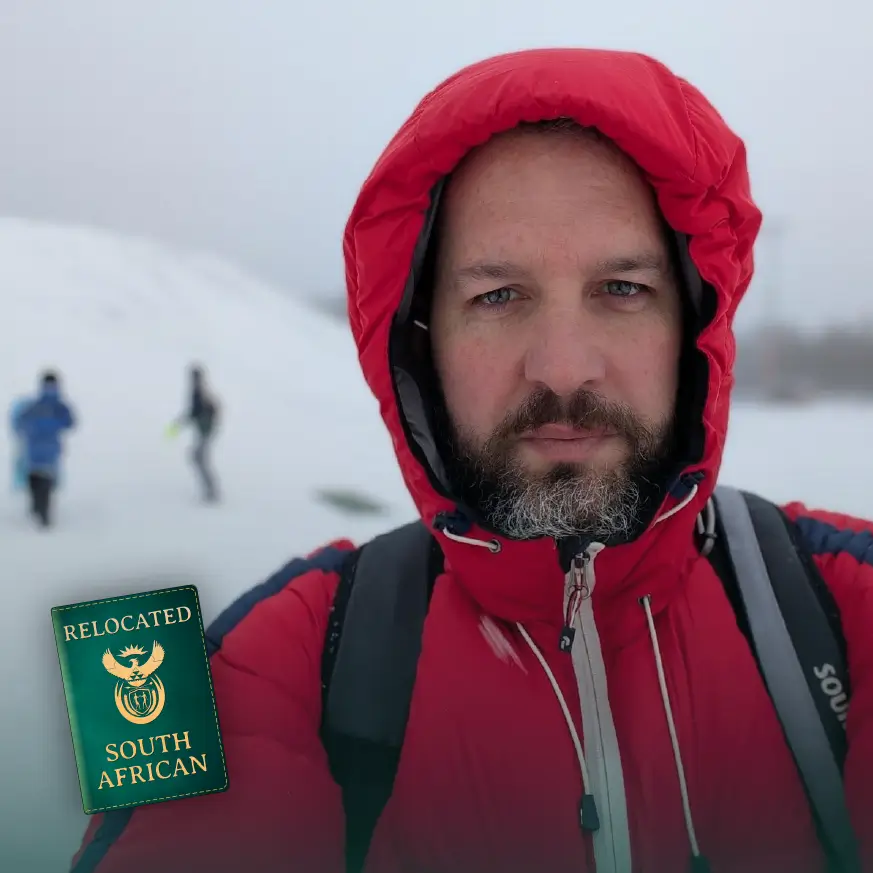
Jan Hugo:
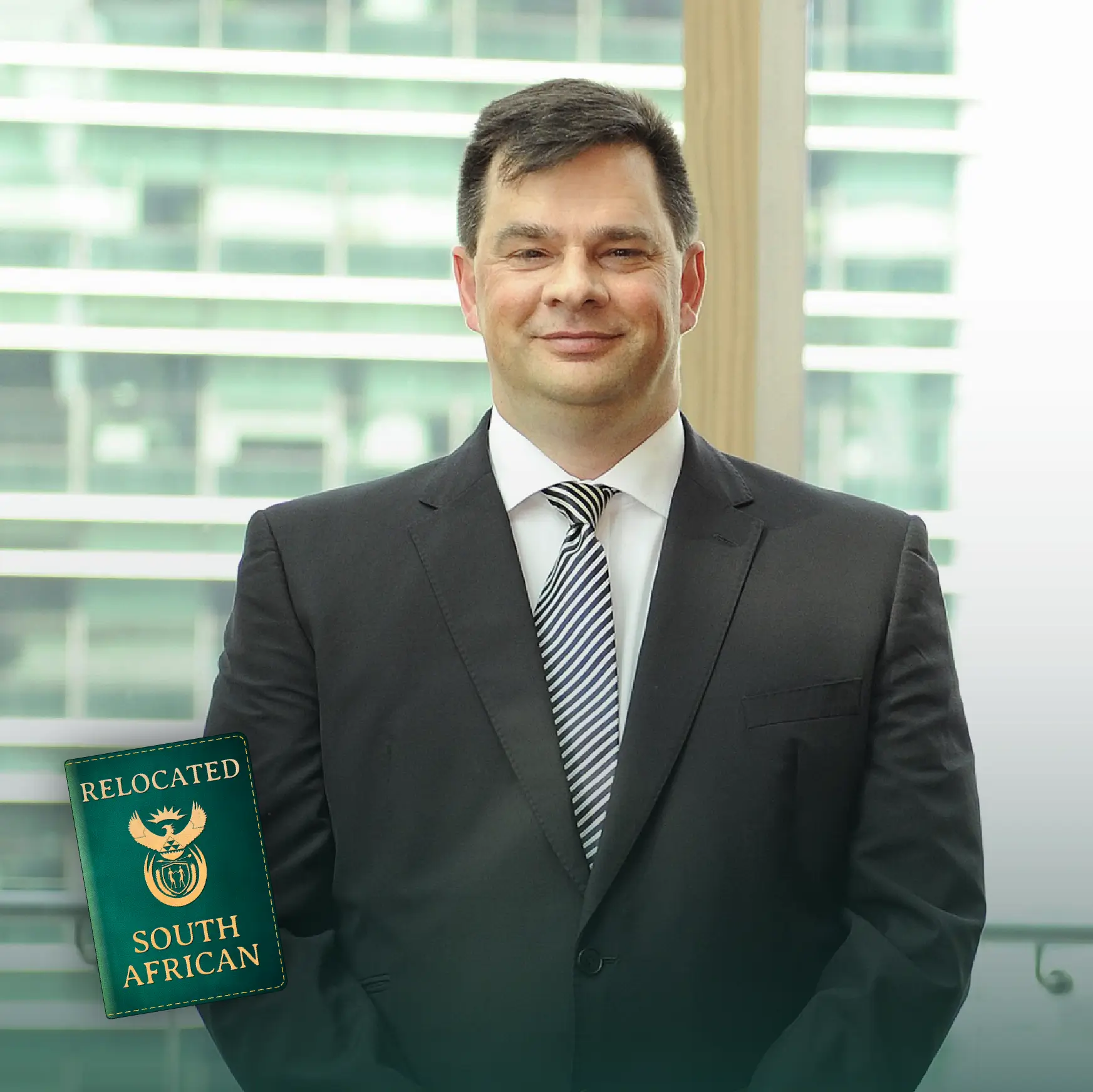
Welcome to The Relocated South African, the podcast that explores the journeys of South Africans building lives and careers around the world. I’m your host, Jan Hugo, speaking to you from Lagos in Portugal. Today I’m joined by Cornis Van Der Lugt, a South African sustainability expert who has built an international career working across Europe and with organisations such as the United Nations on issues of corporate responsibility, sustainable finance, and the green economy.
Jan Hugo:
It’s nice to have you. Cornis is also, like me, a member of the Lekker Network, and he is currently based in Geneva, Switzerland. So where did you grow up and study?
Cornis Van Der Lugt:
Good morning and good to meet you, Jan.
Cornis Van Der Lugt:
I grew up mostly in the Western Cape. I was born in Port Elizabeth. That is where I get the Dutch family name. My grandfather was born in Delft in the Netherlands. He and his family decided at the beginning of the previous century to move to South Africa, leaving Europe because of war in Europe. And my mother was from Cape Town, from the French Huguenot tradition. Her grandmother had a cousin who was married to Jan Smuts, and then there were the typical divisions between the Nats and the Saps in the family. Once, the grandfather kicked Jan Smuts out of the house because of a political argument. So we always had this back and forth between Port Elizabeth and Cape Town.
Cornis Van Der Lugt:
My father was a reverend in the Dutch Reformed Church, and for most of my school life we lived in the Western Cape in Montagu. So I’m basically on the border of the Little Karoo and the Boland. I then went to study in Stellenbosch, and I always enjoyed international life. Maybe it’s my Dutch blood, but I was interested in travelling and seeing the world.
Cornis Van Der Lugt:
As a student, I got somewhat involved in the anti-apartheid movement. I was with the first group of students from Stellenbosch who went to Lusaka to have discussions with the ANC in 1989. And then after 1992, I went to work in the transition government in Pretoria in diplomacy and started attending international conferences. And eventually in 2000, I got a job at the United Nations working in the environmental field, because I had studied developments in the environmental field, climate change, and so on. I did my PhD in this area as well, in global environmental governance. So I went to work at the UN Environment Programme in Paris, in France, at a division that works with the private sector on the role of business in society. Much of the discussion on responsible business globally had roots in, among other things, South Africa, the whole debate about boycotting the apartheid economy. Foreign multinationals faced dilemmas: do we stay in the economy, like companies such as Shell, or do we pull out of the country, like Kodak? So I built on that background and worked from Paris with businesses in different industries and associations on voluntary initiatives for how you deal with environmental issues and how you use natural resources sustainably. That got me involved in international standard-setting, and I progressively moved to focus more on what I would call sustainability accounting, making the link with financial management, accounting, and responsible investment. And finally, my Spanish wife convinced me to move to Geneva from Paris. So that is where I have been, in Geneva, in Switzerland, since 2011.
Jan Hugo:
Wow, that is amazing. We have to go back first. So as an Afrikaans guy growing up in, I bet you, can you say the new name for Port Elizabeth? I can’t. Anyway, Gqeberha. Growing up there with a Dutch Reformed pastor as a father.
Cornis Van Der Lugt:
Something like that.
Jan Hugo:
Was it the university that awakened your thoughts around politics, or did that happen at school already?
Cornis Van Der Lugt:
I guess it is partially how you grow up. Our parents always took us around South Africa. They said, you know, people get very excited about going overseas, but before you go abroad, you need to see your own country. My father, when he was a student, studied theology in Stellenbosch in the 1950s, and he went to London and worked there for one year before he came back and started his career as a reverend. So he had that exposure, and that mindset was passed on to us as children. And then when you go to university in South Africa in the 1980s, people forget how difficult things were. We were in a state of near civil war. So if people complain about events of the last 30 years, they forget how bad things were before 1990.
Cornis Van Der Lugt:
Before you go to university, you do tests and they ask what you are interested in. The man in Stellenbosch said to me, do you want to go and study law? Well, he initially said, don’t you want to follow in the footsteps of your father? And I said, no, I know too well the ins and outs of that career. I don’t want to become a dominee. So he said, why don’t you go and study law? But in my first year of law, I quickly realised it was not for me. I am bad with names, and memorising all those court cases with names, titles, and concepts was difficult. But I loved philosophy, and went on to study philosophy and politics, and later also business and economics. We had student protests in those days. There was a cultural war. There was the alternative Afrikaans music.
Cornis Van Der Lugt:
My oldest brother wrote the song Voëlvry, which became the theme song of the Voëlvry concert series by Johannes Kerkorrel and the gang. They came to Stellenbosch, and Voster was on the phone with the university rector saying you should not allow that concert to happen on campus, as he did with other main campuses across the country. So the concert was held off campus.
Cornis Van Der Lugt:
Those were dramatic experiences. One cannot be melancholic about those times, but that is part of what makes us special today abroad. I think we have experienced the transition in society from an authoritarian system to a democracy.
Jan Hugo:
That is fascinating. You mentioned this visit to the ANC in Lusaka. I still recall. I mean, I am a little bit older than you, but I remember reading about it. We were somewhat indoctrinated, and the media we were fed was censored by the government. There was no real free press. So what was that like? Were you welcomed there? Was it a good conversation? I should mention that I also spoke to Johan Allers, who said he interviewed Mandela 14 times, and that when things changed, the way South Africa was welcomed abroad was just something unbelievable, from being a complete no-no to being number one. He said it was just incredible how South Africans were welcomed after the changes took place.
Cornis Van Der Lugt:
At that time, these discussions were starting to happen behind the scenes. It was the time when Frederik van Zyl Slabbert and some of our colleagues from Stellenbosch went to Dakar as well. So we had good discussions. The ANC executive was meeting in Lusaka at the time, so we met Thabo Mbeki and colleagues. We also had discussions with Steve Tshwete and members of the Youth League. We met them in Harare as well.
Cornis Van Der Lugt:
We were led by the head of the Department of Biblical Studies, Professor Johann Kinghorn, who later transformed that department into a Department of Knowledge Management. And many years later, as a hobby, he started flying. He became a pilot just for fun. So he shares that with you and your helicopter flying.
Cornis Van Der Lugt:
There were great minds involved, and we had very interesting discussions. You could also see there is a certain mindset among people who were in exile and people who were part of the liberation movement inside South Africa. There were different perspectives, and there were tense moments. But we overcame that.
Cornis Van Der Lugt:
In those days, you sometimes had instability. The security police found ways of finding out what we discussed, but they were also informed. They were aware of what we were doing. I think preparations were underway then for the big announcements of 1990, which happened on my birthday. That was a good birthday present. And then came the dramatic events of the 1990s. I think the world was amazed at how we managed to do that transition peacefully.
Jan Hugo:
Well, that is absolutely fascinating. And working for that transition government, what was that like?
Cornis Van Der Lugt:
I was initially very excited about going to Pretoria and working in government. What strikes you when you work in government is all the facilities and infrastructure you have at your disposal. Working in the foreign ministry meant we were coordinating various government departments. At the time, the UN Convention on Climate Change was being created, and I had to coordinate our participation in the climate change convention. I was coordinator of our delegation that went, for instance, to Kyoto in Japan as we finalized the Kyoto Protocol to the UN Climate Convention. Working across different government departments, we then hosted a coalition meeting of the Non-Aligned Movement, which was chaired by then-President Nelson Mandela, and I was on his delegation for his last appearance at the UN General Assembly in New York. He spoke just after Bill Clinton, who also received a standing ovation. That was the time of the Monica Lewinsky affair, and the international community obviously decided on that day to give the man a break. Nelson Mandela also received a standing ovation.
Cornis Van Der Lugt:
So we travelled, and I met fascinating people inside the government. There were people coming from the old TBVC homelands governments. There were people who had come back from exile. There were some from the old UDF movement. It was a fascinating melting pot, a remarkable mix of people, some high performers and highly talented individuals, and some who severely underperformed. So it was clear that in any new democracy there are going to be difficult times. But I have some incredible colleagues who after all these years still work in government. People generalise about governments, but there are pockets of innovation where people do incredible things, and there are pockets where people get stuck in corruption, are totally underperforming, and bad things happen. You see all that diversity working inside government, just as you do when you work inside a big company.
Jan Hugo:
That is really interesting. And what is your view, as someone who studied philosophy and politics, did you forecast what was going to happen and where we would be today? Did you foresee it? Are you surprised?
Cornis Van Der Lugt:
If you studied politics, one of my old professors focused on the politics of African countries. We also looked at transitions from authoritarian rule in Latin America. It was all very predictable: once a country gets independence or democratises, you have an old liberation movement that governs, there is an initial honeymoon period, and then all the ideals start to meet reality. You often have cases of corruption creeping in. This plays out over decades. We have seen this with various African countries. Our neighbouring Zimbabwe was a prime example. In 1989, we still visited Harare and parliamentarians told us about the Zimbabwe success story. In those days you could more or less still speak of a success story. But we all know what happened to Zimbabwe. So it was somewhat predictable. One hoped that South Africa, going through its transition so many years later, would learn the lessons of the past.
Cornis Van Der Lugt:
I think our society is more complex. Our infrastructure was more developed. Our financial system was more developed and more connected internationally. So I was always positive that things would not collapse totally, but the Zuma years were a particularly bad period. We are going through all those birth pains that were to be expected.
Cornis Van Der Lugt:
But hopefully we are also learning lessons from other parts of the world. Remember that one motivation for taking that big step in 1990 was the fall of the Berlin Wall and the end of the Cold War. So we were always connected with developments abroad. And people should also remember that it was not just a black and white racial issue. At that time, many people’s mindset was that they were fighting against communism. There was foreign intervention and involvement: the wars in neighbouring countries, Namibia, Angola. There was that element to it as well. But I remain hopeful about the long transition we are going through. And it all comes down, in the end, to quality of leadership.
Cornis Van Der Lugt:
Today, at least from what one hears behind the scenes about fixing our infrastructure, someone said the other day that behind the scenes you have working groups and the mindset is a bit like it was in the 1990s: let’s stop just pointing fingers and work together to fix things. That means the public and the private sector have to work together. In South Africa, the government will not do it on its own and the private sector will not do it on its own. So we can really innovate and come up with examples for the rest of the world of how to fix these things. As South African Tourism has always said, it is a world in one country. You see that diversity and all the extremes, including the rich and the poor in South Africa. And that is why South Africans are so attuned to coming up with innovative solutions and thinking out of the box, because our daily life is about being exposed to those extremes.
Jan Hugo:
I have to ask you, I said to you in the beginning we don’t talk politics, but one of the themes that comes out of every conversation is the safety aspect. Can South Africa work without solving the crime issue? There are a lot of people who feel unsafe in the country. If you think about Geneva, you never feel unsafe. I don’t feel unsafe where I am now. That is a huge positive, and people leave because they feel unsafe, they feel unsafe for their children. Is that a government responsibility, or is it something that everybody must fix together? We don’t have to delve too deep, but it seems to me that is the one critical aspect that needs to be resolved somehow.
Cornis Van Der Lugt:
Yes, it is clearly not just a government responsibility. It is a collective responsibility. And a key thing is not to just throw money at the problem and focus narrowly on crime. Why is there high crime? There is unemployment. And the people who suffer most from crime are the poor people who live in townships. That is where most of the killings happen.
Cornis Van Der Lugt:
At the end of the day, things become relative. The whole world has migration. There is war in the Middle East. We have immigrants coming to Europe. I myself am an immigrant from South Africa, living in Europe now for 25 years on a South African passport alone. But anywhere in the world, I always tell people that if I visit Johannesburg, it is like visiting Rio de Janeiro in Brazil. There are certain suburbs where on a Friday evening I would not go. But to fix these problems you need to get your economy right, create jobs, and all of that starts with education. So to fix crime, it starts at the crèche. Is there sufficient infrastructure in the education you provide to poor kids when they are young?
Cornis Van Der Lugt:
My wife is Spanish and she works at the World Health Organisation. She will always remind me that the most critical part of your development as a human being is the period up to age six. From before birth, the health of the mother and then the baby, right through to age six. That is when your brain is physically still growing and developing, and your mental capacity and all of those things are severely influenced by what you experience in life up to age six. What I see in Switzerland is the wonderful infrastructure they have to give people quality education starting at the local crèche. In your neighbourhood, there is a public crèche with a kitchen. Kids get good food. There are tools to play with. The crèche considers the level of income of the family.
Cornis Van Der Lugt:
If you earn less as parents, you pay less for the crèche. So there is that fundamental education and civility among Swiss citizens. That is where it starts, where people learn why it is not a good thing to steal and how to solve problems. So if we want to fix the crime issue in South Africa, part of it is collaboration and fixing the broken windows. But it is not going to be just building walls and arming ourselves. It starts with the creation of jobs and with education.
Jan Hugo:
My sense as well. Very true. That is so interesting. Let’s go back. Living in Paris, what was that like? Are you a French speaker now?
Cornis Van Der Lugt:
Yes. When I was a student in the 1990s, I did some research and received two scholarships to study in Germany and the Netherlands. So I had to learn German, and that was fascinating. I had a DAAD scholarship and was in a group with ten students from China who had already spent a year studying German in China. As an Afrikaans speaker, within three months you could learn German, because the vocabulary is a lot easier if you already have a Germanic language. But the Chinese students were like mathematicians, following all the grammatical rules precisely. That was a fascinating experience. And then going to Paris, I had to learn French.
Cornis Van Der Lugt:
In our office we had people from all over the world, so we spoke mostly English. But my boss was a French woman, a director. She was the first woman who, in the 1960s, did an MBA at INSEAD Business School. A fascinating person. She was really my mentor in those early days. I slowly learned French, but Parisians speak very fast French and they are quite intimidating. It was a lot easier once I moved to Geneva, where they speak slower French. It is a lot easier to learn French in the Swiss Romand. But Paris, yes, it is culturally a fascinating city, a romantic city. I was based there when I met my wife. We were both working at the UN. We met at a conference in Salvador in Brazil, and eventually she convinced me to move to Geneva. I am from the Western Cape, I love mountains, and at some point Paris feels a little flat. You have the Sacré-Coeur, but it cannot beat the Alps when you live in Switzerland. Seeing the mountains was a big attraction. Geneva is better for outdoor life. Paris is fascinating culturally, and I love food, and the French are absolutely passionate about food.
Cornis Van Der Lugt:
So you pick up French mannerisms, like using bread to clean your plate and enjoy that wonderful sauce when you finish your food, and experiencing good French wine. But of course now my Spanish wife introduces me to good Spanish red wine.
Jan Hugo:
And good cheese. Of course. There are even good ones in Portugal, in the Douro Valley.
Cornis Van Der Lugt:
I can tell you a funny story. I once went to Lyon and my French was not so good. I went to one of the traditional restaurants and I liked veal. They gave me the menu, I saw something that looked like veal, put my finger on it, and said I will take this. Now I do not normally eat offal, and I got this wonderful plate. It was Tête de veau. It is the brain of the calf, served with a mayonnaise sauce, and it was apparently the favourite dish of Jacques Chirac. You would have it with a big beer on the side. I swallowed half of it. I didn’t want to offend the chef, but that is the sort of experience you have when your French is not so good and you pretend to be better than you are.
Jan Hugo:
Trust me, living in France for us as well, I have a very basic rys, vleis en aartappels palate. So living in France, my word, when they bring the lapin I just could not. To this day I have not eaten rabbit, and I have not eaten frog legs, and I am not into snails and the more adventurous French food, even though I love the country and the culture. It is an acquired taste, I guess.
Cornis Van Der Lugt:
Well, you have wonderful fish in Portugal and in Spain as well. My Spanish family love the wonderful fish we have in South Africa. The only recommendation from their side is that we have this bad Anglo-Saxon habit of drowning our fish in butter. And the Spanish say, no, no, no, replace the butter with olive oil. It is healthier and it is tastier. It is good for your health as well. It is interesting to see the different cultural approaches, but they have a great appreciation of the fantastic fish we have in South Africa.
Jan Hugo:
And so, obviously you speak Afrikaans, English, French, and German. Do you speak Spanish as well?
Cornis Van Der Lugt:
A few words from my father-in-law. I get what they call malas palabras. He uses plenty of swear words. But you know, we have an 11-year-old son. He was born in Geneva, so he is a real Genevois. But I always speak Afrikaans with him. He is in a Montessori school where they do English and French, and then at home he speaks Spanish and Afrikaans. So he is processing four languages every day.
Cornis Van Der Lugt:
I just persisted with the Afrikaans. Somebody stopped me at the airport one day and said, how do you do that? Because I have an Afrikaans son and he wants to switch to English all the time. And I said, you just have to be hard-headed. If he asks you something in English, you say, what? Because it is a real loss of diversity if you lose your ability to speak a Germanic language. The philosopher Hegel said you can only philosophise in German, because there are certain concepts, Gesellschaft or whatever, that are truly Germanic and have a special meaning. So if you lose your access to German, Dutch, and Flemish, it is a real loss for diversity. I think there is more appreciation for Afrikaans today as well in the German-speaking countries, in the Germanic language countries.
Jan Hugo:
Yes, that is actually quite fascinating. And the different cultures must be so interesting. I just think, we went to Seville and we were there playing golf and getting used to the culture of starting late. We like to eat early, so the restaurants don’t open until eight o’clock. You are an hour away from the Portuguese border but it is just completely different cultures, which I find fascinating about Europe. But it must be even more so for you, living in a place like Geneva where there are so many different cultures.
Cornis Van Der Lugt:
Yes, Switzerland from a food point of view alone, because there is the German side, the French side, and the Italian side. You have fantastic pizzerias here in Geneva and good Italian food as well. I see us South Africans abroad finding ways of staying in touch with our own culture, but I don’t like being one of those people who just sticks to their own community and doesn’t get to know the locals. You really need to get to know the locals. People often say the Swiss are a bit cold, but once you learn the language it becomes easier and you get to know them well.
Cornis Van Der Lugt:
I obviously got my son to join the local rugby club that is part of the French Federation. He started playing rugby. Eventually he stopped. I couldn’t force him to continue, and he liked tennis more. But the rugby community is one thing. The other thing is the church community. In the big European cities there are Dutch Reformed congregations. There is a big one in Luxembourg and many in the UK. In Geneva, we have a Protestant church. It is the Church of Scotland, where I am an elder and coordinate Sunday school. My child is there in Sunday school. I think of the things my parents did when I was young. Those are the ways that people shape communities and help each other out. But importantly, you don’t just stick to one community or an Anglo-Saxon community.
Cornis Van Der Lugt:
You experience the European continental attitude and approach to things. I also stay in touch with my Stellenbosch University alumni network. Since COVID, we have twice-yearly online wine tastings, where a winemaker from some cellar in the Stellenbosch area presents a talk and you order your wine in advance through an agent in Germany to get it delivered to your apartment. You do a wine tasting with a presentation by the actual winemaker, everything online. And some of the participants in those events are also Europeans who went to study in South Africa, had a great experience, and then came back to Europe.
Jan Hugo:
I think that is amazing. You know, one of the other things we often hear is that when people go abroad, the first thing they do is go for the soft landing. They meet South Africans. They join South African groups abroad, and it is good. I don’t think it is a bad thing. But my sense is that you have to put yourself out there. People are not going to come to you. You have got to meet the other people. As you said, you are kind of a guest in the country and you have got to embrace the culture and be part of it. It is not going to come to you. You have to go out and do it. And it feels like that is what you are saying about living abroad as well.
Cornis Van Der Lugt:
Yes, you embrace the country, and we know we are all immigrants. Since 2022, I have worked in an American company, Standard and Poor’s, on responsible investment. We had a new CEO, a woman from Ireland, who once described how she had been very tense in the US because her visa was about to expire and she wasn’t sure she would be able to stay. And I just thought, you have no idea, because I am from an African country and all the hassles you go through over your life, applying for visas and always thinking about the residence permit that has to get renewed or the work permit. I have been playing this game for the last 30 years.
Cornis Van Der Lugt:
As immigrants, you have to get used to that and find ways to adapt and interact. And all countries struggle with immigration issues. We talked about crime in South Africa. In Europe you realise how things are relative. In France, people complain about growing crime in smaller cities in different parts of the country. In Spain, they complain about young unemployed men coming from North Africa and gangsterism. So the world is changing. There has always been migration. We have to learn to deal with it better.
Cornis Van Der Lugt:
You have to adapt to the country where you are living while staying in touch to the degree that you want. I have come across somebody in Australia who never wanted to go back to South Africa and didn’t even want to discuss it. So there are those people as well, who feel they have run away from something and don’t want to look back. But I am not like that. I think with our business network of South African entrepreneurs, our society is slowly normalising, and people come and go as is the case with any country. At the UN I had colleagues from all over the world, colleagues from India, and nobody ever accuses them of having left India. They all remain proud ambassadors of their own country, and our South Africans can be the same.
Jan Hugo:
I think so. And I think the Lekker Network is doing an amazing job. My experience is that it is such a positive network about South Africa. I have never once heard anything negative in any interaction there. I don’t know if that is your experience as well. I think that is the only way to go forward: to be positive and not let the negatives drag you down.
Cornis Van Der Lugt:
Yes, it is a matter of whether the glass is half full or half empty. And I think if you are able to say the glass is half full without being naive, just that positive mindset boosts your energy levels, because a negative mindset drains your energy.
Jan Hugo:
No, that is absolutely true. Just a question about the cost of living in Switzerland. People always say it is a really expensive place to live. Is that your sense of Geneva compared to other cities you have lived in?
Cornis Van Der Lugt:
Yes, people always say Scandinavia is very expensive and Switzerland is very expensive. Within every country there are more expensive and less expensive parts. In Germany, people would always tell you Munich is the most expensive. In Switzerland there are certain cultural things, like the local fish from the lake, a freshwater fish that they love here, the Filet de Perche. They serve it in a restaurant, it is sustainably sourced, and you will pay an enormous price for it, like a big steak. But my Spanish family, if you present them with this, my father-in-law tells the waiter, where I come from we throw this fish back into the water. It is a little thing without a special taste. So, value for money, things are much more affordable in the southern European countries.
Cornis Van Der Lugt:
Switzerland is expensive, and sometimes I think they go overboard. With their medical system, there is good support with medical insurance, but there is also a lot of expenditure on examinations, tests, and so on. But at least if you work here, the salaries are adapted for that. If you can earn in a stronger currency, of course you have a wonderful time. And if you go back home to visit South Africa, you can do so much more on vacation with a strong European currency.
Jan Hugo:
That is absolutely true. You touched on the medical. Is there a state medical scheme as well, or is it all private?
Cornis Van Der Lugt:
There is a public scheme system as well.
Jan Hugo:
Okay. I mean, these are things that always come up in conversations. People leave, they start looking at all the different things, and medical is obviously a really big one, along with insurance and cost of living. So that is fascinating to hear about Switzerland. And exactly as you say, Portugal is even cheaper than Spain. We always joke with my daughter when we go out for dinner: I take a picture of the bill and send it to her in Dublin, and then I get a really angry response back, because what we pay for a bottle of wine, she pays for a glass of wine sometimes. So the south is a lot cheaper.
Cornis Van Der Lugt:
You have some Swiss who take up offers to go for dental care to an Eastern European country, and the trip, overnight stay, and flights are cheaper than having the treatment done in Switzerland. So you have those instances. But as we also know, I have seen over the years Germans moving to South Africa to retire, in Somerset West and other places. With their pensions they can do a great deal more in South Africa, and they work with the assumption that there are good private hospitals and quality healthcare available. So there are those Europeans who, in their old age, immigrate to South Africa.
Jan Hugo:
That’s weird. Yeah. And I mean, you have now lived and worked with people from all over the world. I would love to hear your opinion on why South Africans are so successful abroad.
Cornis Van Der Lugt:
I think what you would hear from any successful person is that it is not a picnic. It didn’t fall out of the sky. People work very hard. I think generally the people who come abroad are curious, they have a strong work ethic, and they are reliable. I also think that just being South African, people tend to be exposed to diversity. What you see in some Eastern European countries, for instance, is that the culture is still very homogeneous. People don’t quite know how to deal with immigrants. Whereas we are used to the extremes. It constantly incentivises us to think differently, out of the box. I think that is where the mindset of an Elon Musk comes from as well, having grown up in South Africa.
Cornis Van Der Lugt:
So I think we have a good capacity for innovation coming from this diverse background. But settling abroad for any citizen is not a picnic. It takes years. It takes paperwork. It takes getting to know the local community, and there are times when you struggle. My wife and I are currently going through difficult times: because of the Trump trade wars and the impact of artificial intelligence, my team and I were retrenched last year. So I am in the process of looking for a new job. Many of my wife’s colleagues lost their work at the UN because the US government under Trump withdrew funding from various UN agencies, and that created a negative economic impact for the whole of Geneva. So we go through difficult times. It is not always a picnic. And in that sense, the support from family back home is also very important. You talk to your family and your parents on a weekly basis, and supporting them of course remains very important.
Jan Hugo:
Yeah, I mean, that is something one does not even think about, that something can go wrong. And this family thread runs through every conversation. Migrating within Europe is not such a big thing because you are an hour or two away on a plane if you go and live in another country. But South Africa is very different, especially for people who move east or west, to Australia or New Zealand. It really is far, and when things go wrong, it is difficult even when things go right. So when they do go wrong, it is very tough. So I hear what you are saying. And in the process, would you consider going back to South Africa?
Cornis Van Der Lugt:
Well, my wife and I always work with the idea that when we retire, we will do half Spain, half South Africa. Spend time with family in Catalonia, near Barcelona, and time with family in the Western Cape. I still visit South Africa at least once a year and sometimes teach with Stellenbosch Business School. So we are thinking of that retirement model.
Jan Hugo:
Okay. But you still want a career in Europe. Obviously you can do private consulting given the amount of experience you have. Is that an option now?
Cornis Van Der Lugt:
Yes, consulting and advisory work. We all have to get used to the impact of artificial intelligence. In this field, I can see the South Africans who specialise in IT are very innovative. So there are opportunities for us. But the advanced IT developments also bring the risk that those who did not get a good education get further left behind. So we need to make sure that in South Africa, if we want people to excel in the IT field, it again comes back to fixing the school system and getting that right.
Jan Hugo:
Very true. And you have been in Europe for more than 20 years. What do you miss most about South Africa?
Cornis Van Der Lugt:
Every year when I go home, it is like an energy boost. Europe is fascinating. When I worked in Paris, every time I flew from Cape Town back to Paris, people said that’s not fair, it looks like you’re going on holiday. Whereas I was going back to work. But what you also realise is that just being back home, the sun, the scenery, the friends. Last year, I went to my first matric reunion in Montagu. It is an energy boost and it makes you look back at your life in a different way, and you come back with new enthusiasm. That is great stimulation.
Cornis Van Der Lugt:
What you also learn is that your children become locals. I look at my son as a South African, but he is half Spanish and he thinks of himself as Swiss. So you have to make peace with that. But at least he has that diverse exposure. There are things you miss, including braaivleis and great sports events and the weather. But you also find ways to stay in touch online and you have local sports events and meet up occasionally with South Africans. I see my Spanish wife meeting up with fellow Spaniards. That is also a very important community to tap into. So we all have that dimension.
Jan Hugo:
Absolutely fascinating. You are a true international citizen, but you keep your roots, and I think that is absolutely amazing. I honestly think this initiative of the Lekker Network is going to be huge in the future. When they talk about South Africans overseas being the tenth province, I find that absolutely fascinating.
Cornis Van Der Lugt:
Yes, and with our child, what I would like to do is make sure he is not just Swiss. I expose him to South Africa as well. When we go there, I would like to take him on a safari. I would like to show him what life looks like in a township, so that when he thinks of the world’s problems and solutions, he is not just a Swiss person who knows the clean streets of a Swiss neighbourhood. He has also seen the diversity and the extremes of our country at the tip of Africa. Because that is going to make him a stronger person in his own career. So I expose him to our roots.
Jan Hugo:
Absolutely. Two last questions. Thinking back over your career and where you are now, would you have done something differently knowing what you know today?
Cornis Van Der Lugt:
In my career, I worked in different sectors. There is a bit of a journalist in me that is interested in everything and wants to find out how things work. So I worked in government, I worked at the United Nations, I spent ten years as a consultant after I did an MBA in Paris, and I worked for a Fortune 500 company for four years. Every seven to ten years, I made a radical change, and I am at one of those transitions again now. So it has its ups and downs. It is not a picnic, but it has been fascinating. I don’t think I would have done it any differently.
Jan Hugo:
Awesome. And if a young Cornis came to you today and said, I have just finished my studies, what do you recommend I do? Should I go overseas? Should I build a career in South Africa? I ask that in the context of the previous episode as well, where I spoke to Francisca Lombard, who is building MineGPT, an AI platform for the mining industry in Canada. It is just fascinating what can be done.
Cornis Van Der Lugt:
I think a question for many is what should I study? People ask, is it worthwhile going to university? Because in the age of AI, they would say the secure jobs are the ones that AI cannot replace: the plumber, the gardener, the chef in the kitchen. These can be well-earning jobs in Europe. They are well-earning jobs that cannot be replaced by AI.
Cornis Van Der Lugt:
So people will ask more critical questions about the value of a university education. In South Africa, everybody still dreams of getting a university degree, but that is not a given. In Europe, they have very good systems to educate people in other fields and with other types of qualifications. What I have seen from my own life is that I am not a typical quant, I am more of a qual. And you need to combine studies in a professional field, like engineering or accounting or finance, with your passion for other things, the arts, whatever the case may be. This combination strengthens your ability to secure your career. In the social sciences and the arts, if you are only qualified in that domain, there is a small elite that becomes superstars. But for most of us, you need to diversify to hedge yourself and secure your job opportunities in the longer term.
Jan Hugo:
Very, very true. And very interesting. So, Cornis, thank you so much. Thank you for your time. I really appreciate you getting up early in Geneva and being available and sharing your story. I think it is absolutely fascinating.
Cornis Van Der Lugt:
It is spring here. Thank you. I look forward to seeing more of your podcasts.
Jan Hugo:
Excellent. As always, if this episode resonated with you, you are welcome to share it with someone who might need or want to hear it. You can find more episodes of The Relocated South African wherever you listen to podcasts. Thanks for listening, and I will see you next time.
This transcript was generated with the assistance of AI and checked for accuracy.