Jan Hugo:
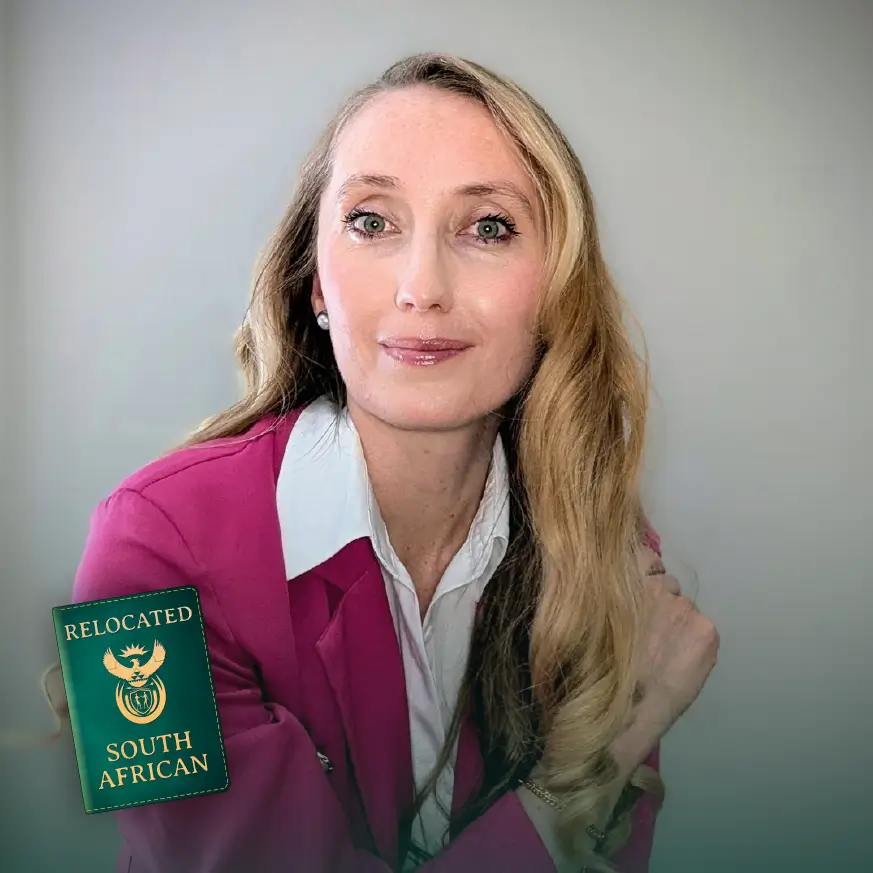
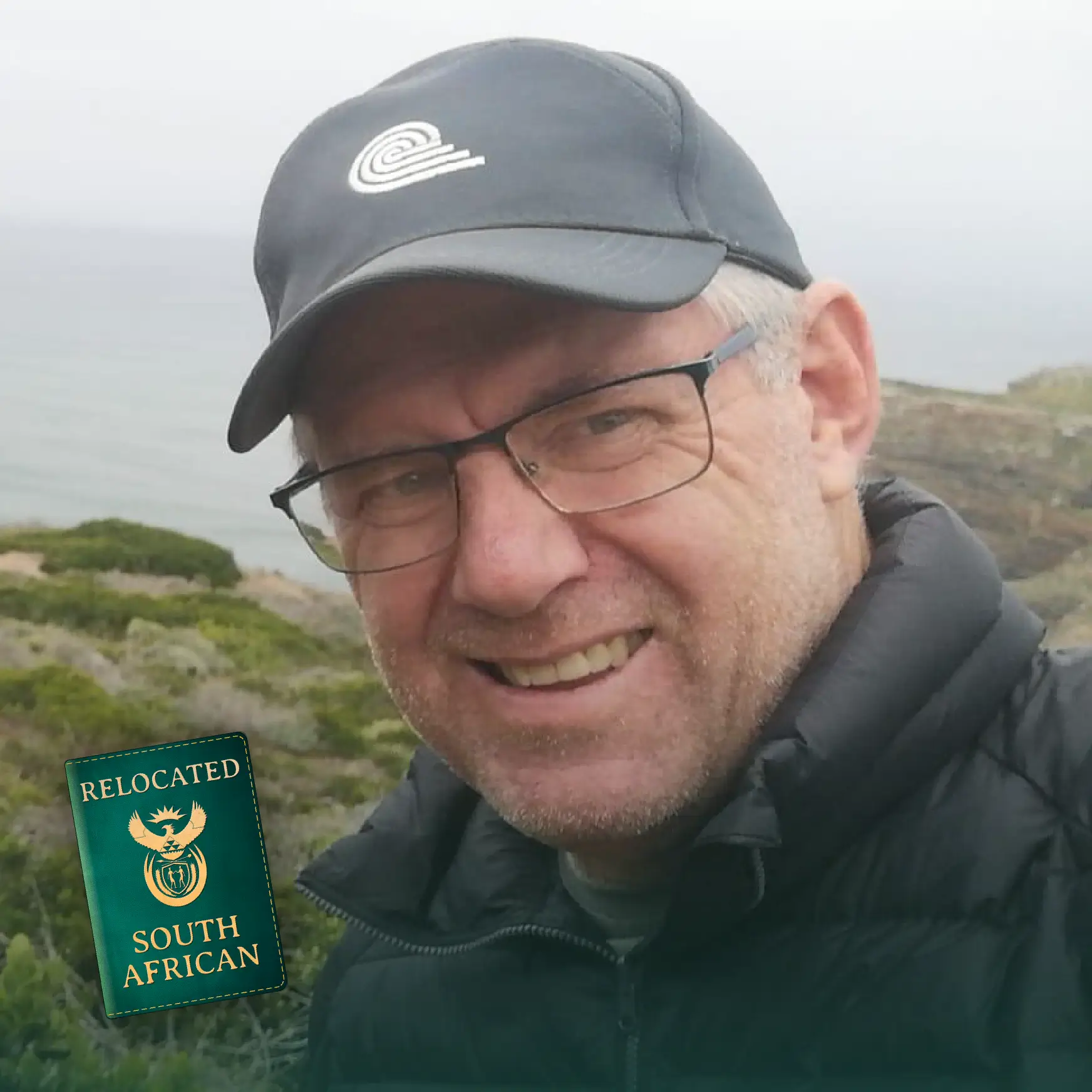
Welcome to The Relocated South African, the podcast that explores the journeys of South Africans building lives and careers around the world. I’m your host, Jan Hugo, speaking to you from Lagos in Portugal. Today I’m joined by Francisca Lombard, a South African entrepreneur who made the move to Canada and is now the founder of MineGPT, an artificial intelligence platform in the mining sector. Sounds like a mouthful. I don’t even know exactly how artificial intelligence works, but we’re going to find out today. Welcome, Francisca. It’s so lekker.
Francisca Lombard:
I’m excited to be here.
Well, I grew up in Heidelberg. It’s a small town outside of Johannesburg, on a dairy farm of all places. I’m a proud Volksie, from Hoër Volkskool Heidelberg. And I studied at Stellenbosch, the University of Stellenbosch. So I’m also a very proud Matie and part of the Maties chapter here, and I take part in all the alumni events that I can.
Jan Hugo:
That’s awesome. Stellenbosch. We were living in Stellenbosch when we left South Africa, so you can’t tell me enough about Stellenbosch. What a beautiful place. When did you, sorry, did you study mining, chemical engineering, or mining engineering?
Francisca Lombard:
I did chemical engineering, or process engineering, and whilst I was working I was part-time also doing a post-grad through TUKS in metallurgical engineering. So that put me smack bang in the mineral processing sector. I started off on a coal mine of all places, and then eventually got to the growth department of that mining company and was able to then work on several mines. And that’s how it all started, I guess.
Jan Hugo:
Wow, that’s interesting. And when did you decide to leave South Africa?
Francisca Lombard:
I decided to leave South Africa, though the decision and the moment of departure were two different things. As you know, it takes time to apply for these things. When I was fishing for places to go, I decided on Canada for very simple reasons: its low UV radiation, as well as it being the easiest country to get into if you have a professional degree that Canada is looking for. You can come without needing a job offer on the Canadian side, whereas with all other places you need to actually secure a job first and then be sponsored to go over. So it’s a bit different. You go through the permanent residency programme and then you get permanent residency, and you can then make the decision: are you going to take it and make the jump and move, or not? And so I did decide to take the jump in 2017. I’ve been here now for quite a while already. Still not acclimatised to minus 19 degrees in winter, but well.
Jan Hugo:
And have you by now got a Canadian passport?
Francisca Lombard:
Yes, I do.
Jan Hugo:
That makes life a lot easier, isn’t it? I mean, just the ability to travel and get around with a different passport.
Francisca Lombard:
Yes and no. I mean, the South African passport was actually a benefit for me in the first part of my career here, because I was working on Russian projects and I was able to go to Russia and back without a visa because of my South African passport, whilst all the Canadians had to apply for visas to go to Russia. So don’t dismiss the value that the South African passport can bring to you.
Jan Hugo:
I must say, you’re the first one with a positive word about the green mamba. That is amazing. And I suppose, yes, it makes sense. And also, just thinking about it career-wise, Canada’s got a massive mining industry. I don’t think everybody knows that. But there is a massive mining industry.
Francisca Lombard:
It’s true, because 46% of the global publicly listed mining companies are listed on either the Toronto Stock Exchange or the Venture Exchange. So it is almost like a hub of mining, because the asset doesn’t need to be located within Canada. But if the company is registered here, it means that you have to comply with a lot of the regulations associated with it, which means there is a lot of mining-related work that happens in Canada for the whole global industry, really.
Jan Hugo:
Yes, a lot of exploration starts there, isn’t it, in terms of capital raising and getting going on that exchange.
Francisca Lombard:
Yes, yes, yes. The junior mining market is quite big and, well, that’s a big deal for a lot of people. They can make a lot of money, especially if you pick the right ones initially. I myself hope to become a little more active in the junior mining investment field in the future. But up to this point, I was just the one working, in terms of actually compiling those regulatory forms that you have to complete whenever you do exploration, through to doing your resource estimate, your pre-feasibility, feasibility, and so on.
Jan Hugo:
And you said Canada was obviously easier. Did you look at other locations?
Francisca Lombard:
I did. I looked at the US, I looked at Australia, I looked at New Zealand as well. So I did weigh my options up quite a lot. And again, it’s just that requirement of needing to have a secured position that is quite restrictive, because unless you win the green card lottery in the USA, which is also very hard because so many people from around the world apply for that, it is hard to just get into a company, especially if you don’t have somebody to vouch for you, in order to then relocate to another place.
Jan Hugo:
Amazingly, one of the people I interviewed early on in the podcast actually won it from South Africa, that lottery. And she’s very active on X and she’s helping a lot of Afrikaans people who go to America with finding jobs and so on. But yes, that was amazing. I always thought it was a scam. So yes, there is one.
Francisca Lombard:
Wow.
Jan Hugo:
So when you arrived in Canada, did you have a job at that time, or were you looking?
Francisca Lombard:
No, so I was busy doing the commissioning of a diamond plant in Cullinan and I resigned from that company I was working for, the EPCM company, came over to Canada and two weeks later started working for the same company but in Canada. They just happened to have a position open that I was perfect for. So I was just really, really lucky. You know, excuse my Afrikaans, but ek kan my gat in die boot beweeg in this case.
Jan Hugo:
That’s amazing. And they didn’t know you were coming across. It wasn’t through the company, it was completely independent.
Francisca Lombard:
No, no, no. So on my CV it looks like I just went from one position, took a vacation of about a month, and then started another.
Jan Hugo:
I think you should apply for that lottery. That kind of luck is amazing. And I mean, people always ask why did you leave South Africa. Was it a push or a pull? What was behind it?
Francisca Lombard:
I can’t say that there was one big thing that pushed me to go, that I felt like I needed to leave South Africa to stay safe. But my brother passed away from cancer and he was not even near 35 when that happened. So I had this feeling of, well, not all of this is guaranteed. Do you want to just play it safe, or do you want to maybe just take a chance? I had married early and got divorced early, and as I was finalising all of that post-divorce process, I decided, well, why not just go somewhere? I never intended to make it permanent, that was never in mind. I just wanted to see more of the world and maybe work internationally, because I always wanted to work a little bit internationally, especially in a mining career, as that can be very beneficial for your career. Never thinking that I was going to end up staying here, but now I’m here and now I’m here to stay, basically.
Jan Hugo:
And you’re married to a Canadian now.
Francisca Lombard:
Yes, I am. So that’s why I say now I’m here to stay.
Jan Hugo:
And you’ve got a little girl, I see.
Francisca Lombard:
Yes, yes. It’s beautiful. The thing is, trying to have kids here in Canada also just changes your perspective completely, because everything you grew up with, you know, just go play outside. When it’s minus 19, you just can’t do that. So you kind of have to start getting very creative with regards to what to do with kids when it’s six months of winter. So yes, it’s a bit rough still for me. I know that I need to harden up a little bit more, but I don’t think I’ll ever get used to this cold.
Jan Hugo:
No, I can just imagine. And you mentioned that your family is still in South Africa. How difficult was that part of the journey, leaving family behind?
Francisca Lombard:
I think that in all honesty, making this jump, I did not realise what I was doing. You just go, because you go on vacations and you come back and you think it’s nothing to quickly go to a different country, it’s easy. But then you land here and you realise, okay, you have no support system. You can’t just quickly pick up the phone and call your parents when you want to because it’s the middle of the night. There’s a seven to eight hour time zone difference. So whenever you are down after work, you can’t just quickly pick up the phone and say, hey, I just want to hear your voice. You’re just completely alone. So it was quite a harsh realisation that, okay, this is actually big and major and it’s not easy.
There are no direct flights from Canada to South Africa either, which means going home is quite a mission, and it’s not that easy for people to come and visit either. So yes, I’d say I definitely didn’t know what I was getting into. I just thought I was going to have an adventure, but it’s quite rough really, being so far from family and friends and especially being in a completely different time zone. It makes it all so hard to just catch up and stay in contact with people.
Jan Hugo:
Yes, it’s almost like the people I’ve spoken to in New Zealand: they almost have to make a specific time to talk to their family and to see them. I can just imagine how difficult it is. Have your parents or family ever been over to see you?
Francisca Lombard:
Yes, but it was also such a big mission just to get visas to come and visit. My dad’s visa, I think it took two and a half years for his visitor’s visa to get approved. Because Canada goes through phases where, you know, everybody complains about binnelandse sake in South Africa, but it’s not the only place in the world where things are not necessarily efficient.
Jan Hugo:
No, listen, I think that’s the one thing that we all learn, especially if you leave, is that red tape is just a fact of life. I’ve often spoken to people in South Africa and they say they’ll leave one day when this or that happens. And I say, you know, it’s not that easy. You can’t just leave. There’s a lot that has to happen, and red tape and dealing with governments and dealing with officials, it’s a challenge. Absolutely. I mean, I have to say the family thing cuts through every conversation. People really, really miss their families. People leave for different reasons, but I think people underestimate how bad it is not having that support network, especially if something goes wrong in South Africa and you can’t get there quickly. Trust me, it’s not easy.
Francisca Lombard:
No, it’s rough. It’s rough.
Jan Hugo:
Anyway, before we get to the business, obviously you mentioned the weather, but other than that, how different is life in Canada to what you’re used to in South Africa?
Francisca Lombard:
It’s night and day, I would say. The one thing that I appreciate about South Africans is the fact that, as a society, people go out on weekends and actually enjoy themselves. There’s more of a culture where people can relax and look at the more beautiful part of life. But Canada is built upon immigrants, so the majority of the people around you are all just hustling and trying to get ahead. It’s very busy and it’s a very fast pace, and you don’t necessarily have the same type of environment where people have enough time to just relax, meet up with friends, go and have a coffee.
There isn’t necessarily the same amount of infrastructure for that either. South Africa being a tourist hub, you don’t actually appreciate just what that means for your own personal convenience, because all the touristy things that are there to attract tourists are also what you get to go and enjoy on weekends: nice restaurants, nice coffee shops, going to see some wild animals, and so on. Whereas if you move to a country that is not necessarily a tourist hub, you miss that. I think people really underestimate the value of what the FIFA World Cup, for example, and all the infrastructure that came from it, did to South African society.
So it’s different. Everything is faster. And just having to live in a place that is built for six months of minus temperatures also means that the infrastructure is different: a lot of things are indoors, whereas as a South African, you like being outdoors. So it’s night and day, really. And that makes me miss South Africa more and more.
Jan Hugo:
We all do, absolutely. And in South Africa you can even be outside in winter. It’s not like that here.
Francisca Lombard:
What is winter in South Africa is what is a very beautiful spring day here.
Jan Hugo:
I’ve heard that before. Years ago there was a little story written by a South African about shovelling snow, and the tone of it got worse and worse as winter carried on, with some choice words in between. Initially it was beautiful little white flakes, and then it got bad. But anyway, so talk to me about weekends. You’ve got a little one, you’ve got a very busy work week, so how do you spend weekends?
Francisca Lombard:
Well, in Canada you have to spend at least one day doing admin, cleaning your house, doing all those things, because you have to do everything yourself. Depending on whether the weather is nice, we like to go out for a hike or something. But in wintertime, for example, you’ll go with her to an indoor playground, because at certain temperatures you can only be outside for so long before it becomes dangerous. Weekends in general, I really want to just spend more time driving to places in future, but it’s also not that there are so many places to go within an hour’s drive as there are in South Africa, which is something I really miss.
But we are very blessed: we are within 40 minutes of what is wine country here, and within 40 minutes in either direction from lakes and so on. So there’s still beauty here, but you have to drive to get somewhere that is calm and not the hustle and bustle of the city.
Jan Hugo:
Yes, I can just imagine. And cost of living, how does it compare to South Africa?
Francisca Lombard:
It doesn’t compare, really. I remember the one big mistake I made coming here: people told me to give away my stuff and sell it, because it would be much cheaper to buy everything new on this side rather than shipping it over. Biggest mistake. Honestly, everything is ten times more expensive than in South Africa.
And even when I speak to friends back home, they don’t really understand what I mean, because one tomato, you go to the store and buy one tomato, and it costs what two bags of tomatoes back home would have been. In Canada, almost everything has to be imported because for most of the year it’s cold. So it’s not as though you have growing seasons, and it’s not as though when there is some summer produce, they’re just going to drop the prices. So it just consistently stays extremely, extremely high.
It’s hard when you have a professional career. You work very hard. Your husband works very hard and has a professional career. Yet what is considered luxury here, even though we have a decent lifestyle, would, if you look at the South African equivalent, have us living in luxury there compared to what is just average here. Our house is very average, we are in a very average neighbourhood, yet it costs a ridiculous amount of money.
Jan Hugo:
That’s very true. There’s a price to making this move. It’s not that easy. You had your daughter in Canada, so you’ll be a perfect person to talk about medical care and having a child there. What was your experience of that?
Francisca Lombard:
I personally am not a proponent of the free healthcare in Canada. So in Canada, it’s a socialistic society. The unfortunate thing about the public healthcare is that no private healthcare is allowed at all, so you don’t even have an option. You go to the queue, and you are in the slot in the queue that you get, and then you get help whenever there’s capacity. And because it’s all public and free, the resources get stretched quite a lot. To give you an example, people will get terminal diagnoses and then have to wait a year before they can see a specialist so that they can receive medication to treat that for the first time. So our healthcare system is crumbling, and there’s very little that we can do about it.
The hospital experience of giving birth, I had a friend who gave birth a day before me in South Africa. Her hospital room was so beautiful, she sent me pictures, and mine was not clean and it was not great. Again, I mean, it’s a G7 country, but it was an awful experience, to be fair.
Jan Hugo:
It’s so interesting, because I had a lady on the podcast a while ago, Bronwyn Rodrigues, and she left Canada after 23 years to go back to South Africa. She has a special needs child and she said the care is there, they give you money, but you can’t get an appointment. And she went back to South Africa for that reason. She’s a single mother. That’s actually quite rough to hear, I must say. Is that something that you think, if you had to consider, “I don’t want to live here anymore,” is that something that would make you leave to go back to South Africa?
Francisca Lombard:
100%. I mean, my husband and I have these conversations quite frequently, though he is not open to moving to South Africa, even though I’m like, you know, we would be able to live quite a nice life there. But yes, that definitely is a driver. I mean, I was pregnant and I had a black spot, and I was like, there’s something wrong here. So I went to my doctor, had it cut out, and it turned out that it was actually skin cancer, it was melanoma. So despite the fact that I had a melanoma diagnosis, I was not able to get in with a dermatologist anywhere. When I had a referral put in, it got rejected twice. And I was sitting here thinking, what am I supposed to do, really?
So we did find a private skin cancer clinic where you can go and pay for a scan out of pocket, where they can scan for moles. But you can’t get in with a dermatologist even after you’ve had a mole removed that was melanoma. And that’s the crazy thing.
Jan Hugo:
Wow, that is amazing. Just a quick one on friends: you’re in a bit of a different position to South Africans who arrive as just South Africans, because you’ve married a Canadian, so you obviously have Canadian friends through his connections. But when you arrive, a lot of people go on these Facebook groups and try to get help. There’s a lot of help available. But I’ve certainly found that not every South African abroad has the same values that you do. They may have emigrated, and that’s a realisation I came to. I thought, well, you’ve also lived this life, you also think the way I do, but they don’t. So what was your experience of that when arriving and connecting?
Francisca Lombard:
Yes, so I tried some of these groups when I arrived and very quickly realised that I was not going to continue with that, because I found there was just a lot of negativity and people talking ill about South Africa when I don’t necessarily have any hatred or bitterness towards the country. So I just don’t want to be part of an inner group that makes every conversation a negative conversation about South Africa.
I decided to go the route of just making new friends and not necessarily looking out for the South African ones, because some of the groups I joined on Facebook seemed to be more targeted towards people trying to advertise to and exploit others, rather than actually being a community. And that’s really sad for me, because I look at Italian communities and Polish communities and all these others, where people get together and it seems like it’s just more of a community vibe. South Africans seem to take all of the differences we harboured in South Africa with us, rather than just seeing the positive and finding that goodness out there. So I have made good South African friends too, so I can’t say that that’s everyone, but these communities can actually be quite deceiving and disappointing.
Jan Hugo:
It’s so strange, because Justinus, I think, has spoken about South Africans in South Africa who are negative about those of us who have left. People slag us off and say we shouldn’t have gone, or whatever. And on the other hand, you have South Africans living abroad trying to justify their decision, where any bad news about South Africa kind of makes them feel better. Ultimately, it’s a decision that you make based on what’s right for you. So I think people should respect that. It’s a South African thing, I don’t know.
And we were talking the other day: it’s funny that South Africans abroad talk about themselves as ex-South Africans, but Italians stay Italian. They’re not ex-Italian when they live in Canada.
Francisca Lombard:
I’ve never actually heard somebody say ex-South African. And I still talk about myself as South African in every way, shape, and form, so that’s really surprising to hear. And it’s super sad, because I am South African. I’m not going to change that about me. That’s my heritage.
Jan Hugo:
No, exactly. But I’ve certainly heard it many times. So it’s interesting times. Now let’s get to your business. I mean, I’m fascinated by MineGPT. I’ve looked at it. Let me just say I don’t fully understand this, I think I use it a lot, but my goodness. Do you think it would have been possible to build this business in South Africa, to start there?
Francisca Lombard:
Well, yes. It’s just that AI is remarkable. My whole AI journey started just two years ago: I knew nothing about AI at all. But I had my daughter, and whilst I was sitting in the nursing chair getting bored out of my mind, I decided to start fiddling around, because I’m just not the type who can sit and watch series over and over. So I started to fiddle, and then I discovered AI and started fiddling more.
The hardest part was to think of an application for AI within the experience range that I have, which is within mining. But anybody, anywhere in the world, can grab this opportunity now and use AI to build whatever they want. That’s the most incredible thing.
Yes, my experience in Canada is what actually made me capable of doing this, specifically because I’m in Canada and was able to work with NI 43-101s, which is the regulatory filing you have to make if you’re a Canadian-listed company. That experience, I wouldn’t have had it if I’d stayed in South Africa, and I would not have been able to build MineGPT. Fair enough, yes, I would never have been able to build this company. But AI, at this point in time, can take somebody who knows nothing about development, and if you have the determination and you’re willing to work hard, you can build anything now. That’s truly incredible. So whatever your experience base is, if you’re sitting in South Africa and you have internet access and access to Gemini, ChatGPT, Grok, DeepSeek, then you can build anything, truly.
Jan Hugo:
Wow, that’s amazing. Maybe just explain in one or two sentences what your business actually does, because I went straight for AI, but maybe you can just explain.
Francisca Lombard:
Well, even in explaining it, because it’s just so foreign, it still is going to sound foreign, because nobody is used to this yet. So it’s an agentic intelligence system for the mining industry. In simple terms, I took all of these regulatory filings that you have to produce when you do exploration, when you build your resource model, whenever you have the various studies that you have to do as part of mining projects. Massive reports get generated from all of that. Some reports are like 600 pages long. It’s enormous, and it is so rich in technical data.
So I took all of that and I built an AI brain that is filled with mining industry-related knowledge. And then MineGPT is the interface where you can then interact with that mining-focused brain. It doesn’t have any other information about recipes or how to do an oil change or any of the things you can get from general large language models. So you can actually just get a real answer that is not hallucinated, that is very technical and focused for the mining industry, when you interact with MineGPT. Does that make sense?
Jan Hugo:
Absolutely, it’s fascinating. And in terms of clients, have you already got clients in South Africa in the mining industry?
Francisca Lombard:
I have people who are interested from the South African mining industry side. I’ve had some meetings with people in the industry because there are some assets there. Again, people who work for a company in South Africa might have assets from all across the world and might be working for a Canadian-listed company. So I have had interest from there, as well as from Saudi Arabia, from Chile, and from a couple of interesting places, really, because the mining industry is so global. Whether you work for a supplier of equipment, whether you’re making pumps or truck tyres, whether you’re an engineer specialised in some field within the mining industry, or even, as I was interacting with the other day, environmental lawyers, it’s so wide.
A lot of the interest comes from people who are retail investors, though, especially with the Canadian indices being one of the places where people particularly play in junior mining investment.
Jan Hugo:
And this brain that you’ve built, thinking of it as an accountant: if I wanted to extract the key information from a 600-page report, can it summarise that and take out the essentials? Because that’s obviously part of the benefit of AI.
Francisca Lombard:
Yes, and what makes it really unique is this: if you take a PDF and you feed it to ChatGPT, ChatGPT will read it from top to bottom, and when it answers you it’ll give you the first relevant answer it encounters. By loading all this information into a brain, and if you think about your brain as a neural network that fires and has different nodes that connect and talk to each other, when you ask MineGPT questions about a 600-page report, what it will then respond to you with is the most relevant response.
And what is great is this: we read something that’s 600 pages. I promise you, you will not remember what’s on page 24, or page 50, or page 375. Yet if you now ask it, “find for me all of the risks that are implied but not explicitly stated in this report,” then it can do that for you. Whereas if you were to go and do a word search even with a PDF and you just search for the word “risk,” you’ll never be able to find those risks that are implied.
It can do thinking on a level that we as humans are actually not capable of, because of the sheer number of variables it can look at simultaneously and analyse, giving you such a rich answer back. That’s incredible. I’m still amazed, honestly. I’m not even going to say that I’m an AI expert, because I still get floored by it, just seeing the things that come out of it and how the industry itself is developing.
Jan Hugo:
That is absolutely fascinating. Just thinking of the efficiency and what it can do, you almost wonder what people did previously. How did they get that information? It must have taken forever.
Francisca Lombard:
It did. And that’s just it: we’re entering an age where the business model drivers used to be, and I mean still is now because AI adoption is still very low, an hourly-based type of exchange. OK, I have this question, you go and spend a certain amount of time reading through everything, analysing it, and then come back to me. All of these EPCM companies, their driver is to sell more hours to clients, really. So what is going to be interesting is to see how work itself evolves when hourly exchange is no longer necessarily the primary driver for monetary benefit, because you can get answers that would have taken six weeks for somebody to work on in three minutes.
So how will work transform, and what are going to be the ways people justify their bottom line? AI should not be responsible for decision-making. Humans are always still going to be necessary. But by using AI to actually inform those decisions, you are able to make significantly better decisions, because you understand your risks more, you can plan for risks better, you can optimise your capital spend. All of those things make it just an interesting age to be moving into. The first AI adopters are going to be the people who just leapfrog over others. Truly.
Jan Hugo:
I hope you can protect your patent or whatever, because I think you’re sitting on something huge here. So well done. I have to say, just that sounds absolutely amazing for an old dinosaur like me. I can imagine how it makes me nervous. Anyway, I don’t talk politics, but I have to ask you this question. Are you perhaps concerned about the mining industry in South Africa, because when I was in investment banking, I see what we did in those days and I look at what’s happening now, I’m not very bullish about the industry. What’s your sense?
Francisca Lombard:
I’m always bullish on mining, though. So I’m the worst kind of person to ask, because I think that everything is seasonal. There were seasons when I was working in the mining industry in South Africa where nationalisation was really topical, and then it also died down. So all in all, I’m super bullish, because South African mining, I joke always, but engineers in the mining industry from South Africa are one of our best exports, just because of the amazing experience and the quality of the engineering and mining that happens there. So I’m bullish, but I’m also very biased, so I don’t think I’m the right person to ask.
Jan Hugo:
No, absolutely. Stuff like the regulations and BEE and things like that can make it quite difficult from a business perspective. It doesn’t matter what kind of product you produce, whether you extract it from the ground or not, these things happen in South Africa. So that’s probably why there are a lot of mining engineers living in Canada and all over the world. But yes.
Francisca Lombard:
Yes, but look at Chile, which had inflation in the double to triple digits. The second they had a regime change, mining again started to boom. I was working on mining projects there whilst the economy was down, and it was really hard, because the team you worked with changed every two months because people were forced to resign and look for another job just so that they could get a pay increase to afford food. But around the world, the economy is just one of the levers, one driver. Mining always persists through any of those challenges, and work always continues. And the second anything changes, it usually just flourishes and booms. That’s why I continue saying I’m very bullish, because the mineral assets in South Africa are enormous and it’s a very rich country.
Jan Hugo:
Yes, well, Australia and everywhere in the world, as you say, there’s opportunity. Let’s get back to some of the personal stuff. Have you been back to South Africa since you left in 2017?
Francisca Lombard:
I have been back. I went back to do the Argus with my dad. That was one of our traditions and he still carries it on strong. And then when I started getting serious with my now husband, I took him back home to meet the family, and he asked my dad for my hand and we got engaged there. So yes, blessed to go back. I need to go back again at some point, because my daughter hasn’t seen South Africa yet. But the cost of living is at this point in time just so high that it’s a little bit hard to justify trips like that at the moment.
Jan Hugo:
And I think it’s going to get very expensive given what’s happening now in the Middle East. Airline tickets are going to become pretty expensive for the foreseeable future, I would imagine.
Francisca Lombard:
Yes.
Jan Hugo:
Just in general, I mean, this journey of yours, did you find it to be an emotional rollercoaster, being up and down during the time of immigrating and then living, getting to Canada and settling in?
Francisca Lombard:
I’d say it was a rollercoaster, but also I feel like there were some extenuating circumstances, because COVID also happened after I moved. Even though COVID was isolating for everybody regardless of where they were, Canada had very, very strict lockdowns for close to two years. You weren’t allowed to interact with people and move around and do things. So society as a whole basically just shut down in Canada, and it was quite isolating. So I’d say anything would be better than that.
But I did also during that time meet my husband, and when you have a young family, it’s just the biggest joy in the whole world. I’d say the rollercoaster is at a high at this point in time.
Just the moving away from family and friends is harder than anybody can really explain to you in words before you decide to take that leap, because it was fuelled by bravado and things like, no, everything is just going to be hunky-dory.
Jan Hugo:
I think a lot of us forget, because it’s already almost six years since COVID, but the impact it has had on people, I mean, it’s just something. We were in South Africa and it was terrible, but Europe was bad, everywhere was bad, and it sounds like Canada was rough. So to get through that already makes you a very resilient person. So if you have to advise a young couple or a young professional thinking about a career outside of South Africa, what would your advice be?
Francisca Lombard:
I would highly recommend it. Just leap, just do it. You can always go back. Honestly, you can, unless, like me, you decide to sprout roots somewhere. But it does open your mind on so many levels. You gain a perspective that any career benefits from, because your foreign experience will also add significantly to whatever organisations you join and work for and contribute to, wherever you go, because you get to give a bit of flavour and a different way of thinking about things.
So it really does, just in general, working in multicultural teams, there’s a real benefit in that collaboration due to the differences in experience that people bring. So I would highly advise it. But again, I should maybe go and play that lottery, because I have been lucky. I have also heard of people who come over with an engineering degree and end up working as cleaners because they just were never able to find the right role. So you need to realise that it is a gamble, and that you might not end up doing what you planned to do. But it’s still worthwhile. You can always go back and you can always reinvent yourself. You are never too old to reinvent yourself. That is the one thing I know.
Jan Hugo:
Absolutely, absolutely. So getting to the end: knowing what you know now, would you have done anything differently?
Francisca Lombard:
Well, firstly, I had beautiful furniture and art and wooden pieces that I still to this day regret giving away, because people were like, oh no, no, it’s so much cheaper to buy abroad. No, it’s not. Don’t underestimate the value of what you’ve accumulated over time. You came out of university and you bought your knives and forks, and then a year later you bought your plate set, and you accumulate over time. You don’t actually realise the value of all your possessions, and trying to rebuild without bringing the things you’ve accumulated over a long time is quite a financial burden that you have to take on if you choose to just come and start from scratch.
So don’t necessarily just listen to others when it comes to things like that. You can wait a couple of months for something on a ship and it makes a massive difference if you just have something from home that warms up your new home. A few pieces that I did bring over, man, I love them to death. I wish I had brought more. But luckily when I go and visit my sister, I see a lot of the pieces still.
But it does leave a little bit of a bittersweet feeling. That’s a little bit of a superficial answer, but other than that, I think it’s just that mentally, I don’t think anybody can necessarily be fully prepared for how big a leap it is. So just do it, because it enriches you as a person.
Jan Hugo:
No, yes. It’s just interesting on the furniture: a lot of people I’ve spoken to have the opposite view. We had to donate the 40-foot container because when we arrived in France with all our stuff, the house was too small and we had to give it away. But anyway, I think again it’s a personal choice, but it really is good to have some of your stuff, as it just makes it feel more like home. So I totally agree with you.
This journey just enriches you. It makes life interesting. And I think you’ve just shown us what resilience can do and what building a business like this means. I think we’re going to hear of MineGPT in the future. So absolutely, well done. And thank you so much for sharing your story. If people want to find out more, I suppose they can find you on LinkedIn, and the website is minegpt.ai.
Francisca Lombard:
Yes, indeed.
Jan Hugo:
We’ll put it in the show notes. So thank you so much, thank you for sharing, and thanks for making time to come on the show. I really appreciate it.
Francisca Lombard:
Thanks, Jan. It was a pleasure, and thank you so much for the opportunity.
Jan Hugo:
Thank you. If this episode resonated with you, please consider sharing it with someone who might find it interesting. You can also find more episodes of The Relocated South African on your favourite podcast platform, or visit our website at therelocatedsouthafrican.com. Thanks for listening and I’ll see you next time.
This transcript was generated with the assistance of AI and checked for accuracy.