Jan:
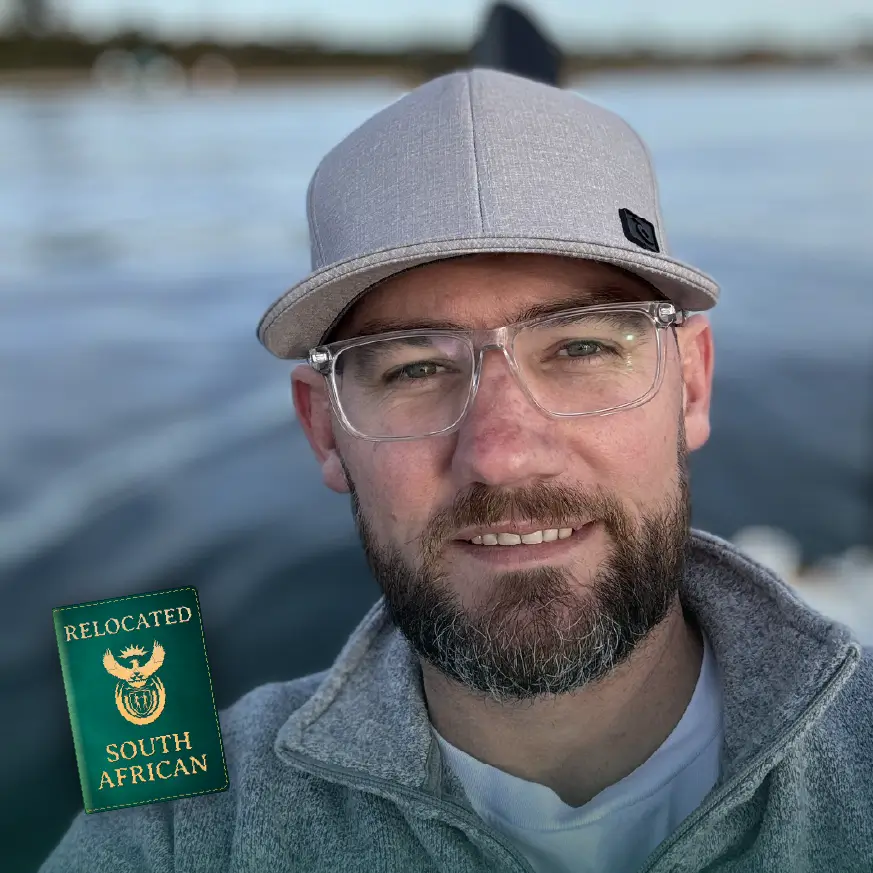
Welcome back to the relocated South African. Today I’m joined by Duncan Goldsmith in Melbourne with a career spanning tech, banking, and logistics and a migration story that started long before it was fashionable. Welcome, Duncan. It’s great to have you on the show.
Duncan Goldsmith:
Thank you.
Jan:
Duncan, you’ve been in Australia for a long time, but we’ll get to that. Let’s just go back to where you grew up and study.
Duncan Goldsmith:
I was born and raised in South Africa, in Port Elizabeth, South Africa. can’t pronounce the name and I have no intention of trying. My family basically came out in the mid 1800s from England, although my great grandfather married an Afrikaans lady, so tracing my family history back to… Oosthuizens and Bouwers back in the late 1600s and early 1700s, but predominantly English medium upbringing. Went to Grey High School in Port Elizabeth, where Pollock and Siya Kolisi and others went to school. And I was a third generation. My dad and my granddad also went to school there. I finished school in 1977. So I’m going back next year for my school 50th reunion, which is going to be a lot of fun. And I did my national service. I joined the bank, Barclays Bank. I worked for six months before I did my national service starting in Kimberley in the middle of winter. Didn’t know South Africa got that cold, I tell you, it was very cold. And then ended up in Pretoria at Quartermaster General’s headquarters.
Jan:
Yeah.
Duncan Goldsmith:
included a stint on secondment to the Public Works Department for quite a bit of my national service. And then while I was in the army, I sort of realized I needed to do some work and not having gone to university, so I started my banking exams. So started doing that and during the course of that, I met an old bank colleague doing my banking exams and I said, I’ll house the old branch at Kempston Road. And said, no, I’m in the computer section. I said, that’s interesting. And he scored me an intro to the computer manager in PE and I wrote an aptitude test and got the second highest mark ever, I was told. And long story short, I ended up getting transferred to Johannesburg a few months after I finished my national service and did a programming course and then worked for Barclays Bank until the end of 1986. when I then emigrated to Australia, having been offered a job in Melbourne.
Jan:
Okay, I was going to say, was it the job that drove it or were you thinking?
Duncan Goldsmith:
Ah, combination of things. I went through that whole military service as an English speaking South African, which in some places can be rather unpleasant. Being called an eight-liner and all sorts of other things, and a communist and all the rest of the things us Rooinek said he used to have to deal with. So in some respects, I felt a little bit of a foreigner in my country. History is one of my favorite subjects and looking at the story of Africa and the decolonization of Africa, I saw no future under a white government and even less of a future under a black government. So when I saw a job offering that I had the perfect skill set for, I applied, got accepted, got sponsored and took my wife and two young children and packed up everything and hit the road. So that was…
Jan:
Okay, excellent.
Duncan Goldsmith:
And I was a bit tired of army camps at that stage. you’re looking at the mid eighties and getting called up every year, leaving a pregnant wife twice. yeah, just the whole, the whole situation was, yeah, rather unpleasant at that time of the year.
Jan:
Yeah, I remember I also got called up to camp. I was in the Air Force, but after studying and then my, was at the time working in America and my father sent a letter to the Army. I almost wanted to throttle him to say, no, I’m in America, but I’ll be back on that date. And I thought, I never wanted to do a camp again, but.
Duncan Goldsmith:
you All right. Don’t keep her.
Jan:
So yeah, I know exactly how that felt. It was horrible.
Duncan Goldsmith:
My problem was my father served in the same regiment because I got transferred to Prince Alfred’s Guard in PE. My dad was a captain and had a long history and even my great-grandfather served in what became the PAG during the Boer War, the Port Elizabeth Volunteer Rifles, a Slavish Queen Service Medal, plus dad’s medal and my own medal and all my grandfather’s from World War II. But yeah, no, it’s… I just got tired of every year just… trading that call up and just that the whole story in the mid 80s wasn’t great.
Jan:
Yeah, it wasn’t great. But immigrating at that time, surely the thinking around immigration was, it wasn’t a popular thought. We were quite lonely in that decision that people criticize you.
Duncan Goldsmith:
Oh yeah, a bit of flackered work because I knew quite a bit before that I was actually going in when my visa came through. They gave you six months to arrive. I basically made it with two days to spare because you’ve got to go through the whole selling your house and packing up. And so we decided to camp in South Africa and send our goods three months in advance. So we arrived in Melbourne and now our stuff arrived within a couple of weeks after our arrival. But no, lot of, and then leaving, the guilt of leaving, you know, your parents behind and taking their two grandchildren away, you know, your whole life, your whole past, but then you’ve got to push through that, I think, and say, well, I’m doing this for my future, my children’s future.
Jan:
Mm.
Duncan Goldsmith:
And it’s worked out really well for me in that respect. mean, my wife and I are no longer together, but I’ve married a local and we’ve been married 28 years now, I’m very happy. My oldest son’s moved on to New Zealand. In fact, just been selected in the New Zealand over 40s cricket side. And I was over there a couple of weeks ago seeing his debut. And funny enough, the first five batsmen on day three were all South African born.
Jan:
wow.
Duncan Goldsmith:
for New Zealand, including Dennis Hobson’s son, the late Dennis Hobson, the leg spinner from EP in the Western province. And then my number two son who is 19 months old when we immigrated, he lives in California now. But I have two kids that were married, they were to my second wife, my Aussie wife and a local. So I have four sons and two grandsons now.
Jan:
Yeah. Okay, awesome. Just thinking back at that time, because this comes in a lot of conversations. The conversation with your wife, was that an easy conversation to leave? Was she on board?
Duncan Goldsmith:
yes and no. Yes, she understood why we were going. During our whole sort of breakup, was, I suppose, served up to me like many things are. That you dragged me to the other side of the world, blah, blah, blah. And I didn’t have much say in it, yet it was the best decision we ever made. She’s repartnered and, you know, just retired like I have. Don’t really speak to that often, there’s no need to anymore. But yeah, there was that. But at the same time, I think there’s subliminal. understanding that I suppose it was the right thing to do for us and our children in the long term. And I’ve just retired and I’m actually going to retire quite comfortably. I’ve used the time from 38 when I remarried till now 66 to hopefully be quite smart in investments and saving and using superannuation, which is like retirement annuity to build up a nice little… nestegg that I can retire quite comfortably.
Jan:
Absolutely. I mean, the family thing is such a big thing. Did you, over time, I assume, like in my case, your parents have passed, but did you have much interaction with them because it was kind of before WhatsApp calls and Zoom calls and that kind of thing?
Duncan Goldsmith:
That’s the side. They visited quite often and then they went through the, my sister joined us in Australia, even though she lives, she lived up far North Queensland and has since moved to America. And my parents came after that when it was a little bit easier for reunions. So my parents came about 20 years ago. My dad passed just before COVID. and mum, mum’s still around. in fact, I’m going up to see her in about 10 days time. She’s just gone through cancer treatment. but yeah, they eventually joined us and then they decided to stay where my sister was staying and now she’s since moved on. So mum’s on her own now. So I do worry about her and whether she’s far North Queensland or South Africa, it’s this country is so big. It’s, it’s a whole day to get to her. You know, it’s, It’s about a three day drive. Sorry about the dogs in the background. They’ve got two idiots.
Jan:
No, I’ve got the same. We near construction sites, so the construction starts up, it’s about seven, you know, early morning now, so they’ll soon start making a noise.
Duncan Goldsmith:
But yeah, but a lot of my cousins have moved as well. we, during COVID, we were all very close as kids. just, on my mum’s side, my dad never had siblings. And we started having COVID, we started having COVID cousin meetings via Zoom. So I was the poor bunny that got 5 a.m. drinking tea while the rest of them were sipping on wine and stuff. So we had cousins out of Joburg, out of Cape Town, London.
Jan:
You
Duncan Goldsmith:
Kent, Connecticut, So yeah, the scuttlings of Africa.
Jan:
Yeah, I often think about that, know, it’s our generation, people that have moved like ourselves, you know, sitting in Portugal. We miss out on a whole generation. You my kids live in America, Ireland, Isle of man. And it’s kind of the same thing. And for me, the worst is the grandkids that you don’t see. You know, they grew up living their own lives, not…
Duncan Goldsmith:
this.
Jan:
not knowing their cousins, and it’s actually, that’s a sad part of this immigration thing, unfortunately. But yeah.
Duncan Goldsmith:
But when you look back to my ancestors did the same. So my Goldsmith ancestor was a brickmakers laborer and he left England in 1858 with a wife, a four year old, a two year old, my great grandfather and a nine month old and spent 60 days on a migrant ship from Liverpool to Port Elizabeth. But had he stayed in England, he would have been maybe a brickmaker.
Jan:
Thanks
Duncan Goldsmith:
But in South Africa, he owned the factory. And he had 11 kids of which 10 survived. So he left England for a better life and made a better life. But circumstances change. my two grandchildren live in New Zealand. And I don’t see them maybe once a year, once every two years. My other sons in America, I saw him last year for the first time in 8 years.
Jan:
Hmm. Wow, yeah.
Duncan Goldsmith:
Well, we had a bit of a schism for a while and we sort of had out. But I went to his wedding in Maui and he’s married a doctor who’s half Indian and half Lebanese. Absolutely stunning girl and smart as a whip. So yeah, very, very, very different. And I’m going through what my parents went through, suppose. So I can’t…
Jan:
Yeah, I suppose you’re right.
Duncan Goldsmith:
I can’t begrudge them having a good life. My oldest went to Japan, met a Kiwi girl and then moved to Singapore. My grandkids were born in Singapore and now they live in New Zealand, you know where she’s from. And they seem very happy and very settled and he’s a general manager in IT and doing really well for himself. Number two son’s senior designer, UX UI design and yeah, he seems to be doing very well for himself too. good luck to them. what you can have for your children to be happy and successful.
Jan:
Well done. Absolutely, Duncan, at that time, again, I’m trying to take you back. Did you ever think that if it doesn’t work out, I’ll just go back? Or did that thought never crop up in your mind?
Duncan Goldsmith:
Never had the money, initially. I saw a very poignant thing at the 1820 Settler Memorial many years ago. I went to school in Grahamstown for a couple of years when my parents were there before I moved back to Grey High. And there’s a saying up there, I can’t remember who said it, might have been a dug mall or someone. And he said, we must take root here where we stand or die. That always resonated with me.
Jan:
Suck. Okay.
Duncan Goldsmith:
Many have gone before me and in much harder circumstances than I went through. And, you know, they never had the chance to go back, I don’t think. And the convicts who went to Australia and America, you know, they were just transported to the ice end of the world and dropped off and could never go back and just had to get on with it. there’s always someone in a worse position than you. And a lot of it’s mental as well.
Jan:
Mm-hmm. That’s very true.
Duncan Goldsmith:
I find now there was no support when I came. There were no South African shops. were no South African community. There was no Facebook groups. was no, you just had to adapt to it assimilate and just bring up your kids, Ozzie, and start loving Australian rules football and the Australian cricket side, God forbid, and the rest of it. But, know, and the local food and, you know, there were no, there was no borovoz and there was no that. I see Aldi next week having a South African. week at LDN Australia where you can buy your resks and all your sources and that sort of stuff. Never had any of that. So you just fit it in, joined a sports club, started playing hockey, you know, just had a good time. So just make it happen.
Jan:
Yeah, I was going to ask you about these, you know, again, when you arrived, because today it’s a lot easier. People talk about a soft landing with all the SAFA groups. You go on Facebook, there’s a gazillion groups, and you meet other people, yeah, and get to know what’s happening. The one thing I found is that not every South African is necessarily going to be your friend.
Duncan Goldsmith:
Hmm. ask questions. No, not at all.
Jan:
My sense is that initially I had just thought, they also immigrated, so they must think the same way that I do, and man, was I wrong. It’s definitely not like
Duncan Goldsmith:
Not only that too, South Africans got a bit of a reputation. And I always say on these Facebook groups as well, because I’m there to try and provide advice and that I’ve been here long more, spend more years in Australia than I have in South Africa is, and I always have two pieces of advice. One is if you’re looking for South Africa in Australia, you will be disappointed. So you come here and you say, well, it doesn’t have this and it doesn’t have this, doesn’t have that. mean, get over it. The other is, unfortunately, lot of South Africans think… quite arrogant. Sorry to say, I may come here with that attitude of, know, I’m better than everyone else and I’m going to stomp. I had to take two steps back in my career and you just suck it up and get on with it. And the other pieces of advice is leave your arrogance at O.R. Tambo, whatever, the previous Jan Smuts Airport when you come out here and just be humble and listen and learn. And God gave you two ears and one mouth for a reason. So, but don’t come here swanky. And no one cares what car you drive. And with the house has got three bathrooms, or one bathroom and all of that. There’s none of that crap here. Just people don’t care. know, yeah, you know, we’ll go to Bunnings and you’ve got those horrible sausages. Bunnings is a hardware store. don’t know how much you know about Australia, but Bunnings is a huge hardware store.
Jan:
That’s absolutely true. So true.
Duncan Goldsmith:
My brother-in-law from South Africa loves the place. It’s a happy place when he comes and visits. And on a Saturday, you know, the Scouts Club or the local sports club or cricket club or some sort of volunteer group will be given that Saturday to run the barbecue, cook sausages. You get a sausage and bread with without onions and sauce. And to me, it’s, you know, it’s not cuisine. No, it’s not a boerewors role.
Jan:
You
Duncan Goldsmith:
And if you’re looking for a boerewors roll, then maybe some of the Saffa shops do a Saturday morning special, but it’s a Bunnings sausage. No one’s asking you to eat it. Just either eat it or don’t eat it. know, mean, but all this continual comparison, it just drives me absolutely spare. know, people don’t care whether you used to a boerewors roll with Mrs. Ball’s Chutney. It’s not pretending to be that.
Jan:
Mm-hmm. No, I don’t think one has to ever give up your South African identity, but my view is if you’re a guest in another country, then you behave like a guest. You don’t behave like they know nothing, you know, and we have the same in Portugal.
Duncan Goldsmith:
No. went to Tony’s deli yesterday because my father-in-law was in hospital. He’s 96. So he’s not well. And my mother-in-law wanted me to give his car a drive and I went, ah, I’m going up to see mum. She wants sandwich spread. I know they have salad at Tony’s deli. And so I’ll take the car for a drive. I got myself some nice chili droëwors and I got myself some chunked biltong rather than sliced biltong some padkos for the ride home. And yeah, I love my, I make my own Biltong too. I love Biltong, I love boerewors So does my Aussie wife. You know, we went to a boerewors roll thing at one of the Saffa shops and she goes, what’s this tomato sauce stuff? No, I chutney. So they actually had to open a bottle of Mrs. Ball’s Chutney for her. you know, I’ve taught, my kids love rusks and Biltong and droëwors and all that sort of stuff. But you know, if I don’t get it, I don’t get it. I’m not going to hanker off.
Jan:
No, no, I agree with you. And Duncan, you, did you arrive in Melbourne, you stayed in Melbourne.
Duncan Goldsmith:
It’s Yale, but you know. Yes. I was, these dogs are getting on my nerves. So I was offered a job at Colonial Mutual which was a life insurance company that had ICL computers, which I worked on at Barclays in South Africa. So I was hired a job offer permanent residence visa. mean, when I look back now, I didn’t have any of grief getting the visas or visa changes that others have. You know, I arrived and it was there two years later, we became Australians. And I just enjoyed Melbourne, know, the sport, it’s cultured. I love the seasons. A lot of people hate Melbourne because it’s cold in, cold compared to some places, cold in winter. So you’ve got four seasons, you’ve got spring, you’ve got winter, you’ve got summer, which gets really hot, much like sort of, I suppose, Kimberley and Upington, that very dry heat. And in winter it’s like Cape Town. But you know, I love the changing. I couldn’t think of anything worse than living in a place where it’s 30 every day and it’s 100 % humidity. Yuck.
Jan:
I remember I went to Oz quite a bit in the 90s for work because I was at RNB, but we went to a footy game in Melbourne. It was just amazing. And it was just like a pre-season game in the stadium was packed out.
Duncan Goldsmith:
Yep. 1000. Well, I went to the Lions match last year in July and that was, I think, just short of 100,000. I’ve been here this long. I’m actually a full member of the Melbourne Cricket Club. So I have the ability just to rock up and go to any cricket match or any football match and sit in the members where it’s a nice padded seat and a nice cold beer and a glass. I don’t have to go and sit out in the…
Jan:
wow. That is… that is awesome.
Duncan Goldsmith:
in Bay 13 and places like that at the MCG. So, no, the sport is wonderful. Melbourne, the Grand Prix, the Australian tennis open, rugby league. had rugby union team up until last year in the super rugby. Melbourne Rebels are gone now. Yes, just, well for choice, the coffee’s sensational. You can eat food from around the world.
Jan:
You, you, that is amazing. I was going to say it’s got a coffee culture of note and a big Greek community. I was going to say, but there’s a big Greek community, if I’m not mistaken.
Duncan Goldsmith:
right near us is Eaton Mall, which is really 10, 15 minute drive from home. And that’s just a whole mall of Greek restaurants and cake shops and that. if you’re not getting your melktert there’s a Greek version called galatopita and it’s actually better than melktert It is sensational. And we go there quite often for a meal and just have a nice, you know, a… gyros platter with chicken and lamb and the Greek salad and a couple of mythos beers. And then we’ll go off to Nikos and go and have a coffee and a galatopita afterwards. Or kourabiedes, the little crescent shaped biscuits that they make, almond biscuits. But you know, we’ve so spoiled here. I my suburb is very Asian now, so it’s well for Asian restaurants, know, Chinese.
Jan:
yeah.
Duncan Goldsmith:
Neighbours on one side are Indian, the other side are Chinese. Behind us are Chinese. Across the road are Armenians. So yeah, it’s a whole melting pot.
Jan:
Now that you are… Yes, that’s what I remember now that it’s coming back. it is, yeah, I must say I really enjoyed Melbourne. It’s completely different culture to Sydney and Perth.
Duncan Goldsmith:
but great, that’s the third biggest Greek city in the world. yes, Sydney’s very, a bit like Joberg in Cape Town, suppose. Sydney’s very fast and brash, probably more money oriented where Melbourne’s a bit more cultured, arts, sports, food, good wineries and that sort of stuff. Perth to me is very isolated. I’ve got family there on my wife’s side, but yeah, Perth’s never really. turned me on and I’ve traveled a lot within Australia on business too. So I’ve been to Darwin, I’ve been to Cairns, Goulburn, Canberra, Sydney a lot. Tassie’s nice. South Australia is not bad. Yeah, seen a lot of Australia.
Jan:
And cost of living wise, from when you left South Africa, I guess in those days the Rand was pretty much on par with the Aussie dollar, I’m not sure.
Duncan Goldsmith:
Yeah, I think I got about 70 something cents when I left. But when I left, remember we had exchange control. So all we could take was our travel allowance. So that was 18,000 rands. So 6,000 rand each adult and 3,000 for the child. So that gave us about $12,000. But frankly, that’s all the money I had. I left behind some shares and stuff like that have subsequently been sold and my retirement annuity that I got out eventually. I didn’t get out, I got it paid up and paid out to me about 10 years ago now. That was a complete, I don’t know if I’m allowed to say it, shitstorm.
Jan:
You
Duncan Goldsmith:
I’m trying to get through that, but FinGlobal were very good helping me get through that last bit. And I was going back for my score 40th, so I just put it in an FNB account and got a debit card, debit credit card thing. So when I went on my holiday, I just basically blew, I think it was about 28,000 Rand. I had a few thousand left and then one of our… schoolmates lost his house in the Knysna fires just after I’d finished. We started raising money for him, so I just told the bank, just put the rest of the balance into the fire trust accounts and then just closed the account. So that was the last of my South African assets. And unfortunately, young Greg rebuilt his house and died a couple of years ago on a cycling tour of Italy, funny enough.
Jan:
shit.
Duncan Goldsmith:
Yeah, so that’s coming to roost now where all my school friends and we’re a really close cohort actually. A lot of us go back to 1966 when we started in Sub A or Grade 1. But yeah, they’re starting to unfortunately fall off their perch. So the time has come to enjoy my life before it ends.
Jan:
Yeah. Yeah. I agree with you. with, I mean, obviously you’ve earned a salary, good salary. So cost of living now is, is Melbourne, for instance, more expensive than other cities? Or would you say it’s on par?
Duncan Goldsmith:
housing’s dropped slightly. I mean, it’s still really expensive to buy property and there are a whole number of reasons for that without getting, you know, political. We’ve just had a budget two days ago, three days ago where, some of the benefits, one of a better word that were available to investors to invest in property and other assets, have been, cut and they’re to stimulate the property market for first home buyers. But the problem is supply and demand. There’s not enough supply and we’re getting a lot of migrants at the moment. And at some point something’s going to break. So property is expensive, rentals are nigh impossible to get as well. And with this whole new budget where they’re trying to disincentivize people investing rentals is just going to fall because people are to sell properties to avoid the capital gains tax. That’s well, we’ve got capital gains tax now, but the discount’s 50%. That’s only going to go to 30 % in a year’s time. So yeah, lot of people are going to look at other. other ways to invest their money and get a better return than property. that’ll mean less investors, which will mean less rentals. So yeah, I’m not sure how it’s going to play out. I’m pretty lucky for one of a better word. I had a restart my life at 36 when my wife and I sort of went our separate ways. So my third start in life. And I bought a, in a good suburb, a bit of a wreck and over the last 30 years, my wife and I’ve, my second wife and I’ve got it to the point where we like it. Hopefully, because I’ve got to stop spending money now that I’ve retired. And we’ve paid it off. So I don’t have a mortgage. I only have one property in regional Victoria, Daylesford, which is spa country, which is a holiday rental. But I’m thinking now that I’ve I’ve retired and want to travel and the capital that’s sitting in that property is far better in my superannuation. Earning a passive tax-free income than me worrying about linen and supplies and cleaners and irritating guests and all the rest of it. we, plus the capital gains tax discount will diminish from July 1st, 2027. I might, we’re thinking of getting rid of it.
Jan:
Okay, yeah.
Duncan Goldsmith:
just cashing up and sticking everything in super and enjoying the fruits of our labors.
Jan:
And in terms of the culture, the tax culture, because I often think that South Africans feel hard done by with what’s happening with their tax money and is there a much more positive tax culture in Australia that people see?
Duncan Goldsmith:
Hmm. Yeah, well, we’ve got a sort of, yeah, mixed sort of thing. It’s quite a bit of socialism. That’s both good and bad. Certainly having things like Medicare is good, although it doesn’t pay for everything. And in some cases, you’ll get back only a part of what you pay. So private medical is still something that you probably need. especially if you want to get something done quickly and you don’t want to go on the waiting list because that could be years. Food, food’s okay. think if you shop smart, you can eat well without overspending. Taxes are high, so there’s a consumption tax of 10%. Probably, you know, someone on a good income would be paying 37, 40 % in the dollar after your marginal rate. It’s complicated, but you do get stuff back for it. mean, like you get education where you don’t have to pay too much if you don’t go to private school. Quite a lot of things are subsidized. Nobody should be living in poverty. I think a lot of people might choose to be gentlemen or ladies of the road, but there’s a lot of safety nets that look after people. So unlike South Africa where you paid a lot of tax even during the apartheid years, You really got nothing for it because they were spending it on infrastructure or defense or whatever. So suppose you got something through the infrastructure. But here you at least get some money. You get some back for your money. Yeah, you get some value out of it. And I mean, I don’t have a problem with tax. I have a problem the way politicians spend the money that they raise. There’s a very famous YouTube, if you ever looked it up on Kerry Packer.
Jan:
Some value, yeah.
Duncan Goldsmith:
who you might know from World Series Cricket and all the rest of it. And a multi-billionaire and he was holed up before a Senate committee, basically being accused of tax avoidance. And he said, no, I don’t avoid tax. I minimise tax. He said, anyone who’s got any smarts would minimise their tax. Because quite frankly, I’m not going to pay you dollar less than I have to pay you. And I don’t need, I’m not going to pay you a dollar more than I have to pay you. And quite frankly, what you do with it is not
Jan:
Actually, he his son in South Africa.
Duncan Goldsmith:
doesn’t really excite me either. So it’s actually quite a famous interview where he just basically served it up to the Senate and said, you know, you’ve, you’ve accused me of something. I’ve got good accountants and all the rest. And I pay what they think I’m due to pay not a dollar more and not a dollar less. And we all try and it’s a sport in Australia to minimize your tax. I mean, it’s probably the same in any country, but you know, if you’ve got a legitimate deduction, like I need a computer or an iPad.
Jan:
Yeah, absolutely. Of course, but…
Duncan Goldsmith:
to do my job or run my business, I’m not going to not claim it. So again, I’ll pay what I’m due to pay. And I’ll pay an accountant good money to make sure I pay what I’m due to pay.
Jan:
I’m with you, absolutely. to do that. The South African press likes to make stories out of South Africans returning from immigration. What is your sense? I’m seeing quite a bit from people from the UK that are going back to Cape Town. They’ve made a lot of money. They don’t go back to Joburg. They go back to Cape Town and…
Duncan Goldsmith:
I know, I mean, if I ever move back to South Africa, I won’t, but if I did, my wife just told me, she’s always just like, I’m not leaving mum and dad, I’m no ways I’m going back. I’d love to go on a holiday, but as long you take me to Graaff-Reinet, that’s been renamed to, I can’t remember the name of that one. She’s quite happy, but yeah, they call them the Swallows, I think, aren’t they? They migrate during the summer months to Cape Town on the Garden Route and Plett and Hermanus and…
Jan:
Yeah, I know. Hmm.
Duncan Goldsmith:
Knysna those types of places. They buy themselves a nice property for next to nothing, spend their pounds or their euros. And yeah, if you can afford to, but are they actually resettling in South Africa or they, or, or they living there while times are good. And if the shit hit the fan, they’d be back on the first plane back to the UK or wherever. Other people struggle to assimilate or miss their families. And that’s quite legitimate as well. Or they don’t like to step down in career They just don’t find the culture. A lot of South Africans complain about the kids here. They’re not the same as high school in South Africa, which to me is probably a lot softer than when I was at school. know when I was in the koshuis it was cold showers every morning, crap food and a regular thrashing once a week.
Jan:
You
Duncan Goldsmith:
I don’t think today’s South African generation could handle that kind of, and cadets every week. you know, got to the army and it was tough, but it wasn’t that bad. then, you know, we had some real mommy’s boys, know, really rich Cape Townians and people from Sandton who had never made a bed or polished their shoes or had any sort of adversity in their life. And they really sukkel those guys. felt sorry for them. They really struggled in the army with a lot of us.
Jan:
No.
Duncan Goldsmith:
Air cadets can do a of marching. Cold showers today, okay. If it’s crap, okay, well, just deal with it, you know. yeah, this generation are quite a bit softer.
Jan:
Deal with it, absolutely. We spoke about South Africans who come there and are wanting to recreate South Africa. Other than that, what’s the biggest mistake people make when they immigrate to Australia?
Duncan Goldsmith:
probably made it myself. brought too much stuff. yeah. probably would have not packed the whole household. Although in some respects, I didn’t have to rebuy everything and we didn’t have, you didn’t have things like Facebook marketplace and buy nothing Facebook page like we have in our suburb. have a buy nothing. So if someone’s got something they want to get rid of, they just put it up and
Jan:
I hear that every time.
Duncan Goldsmith:
And we do the same. get quite a, I got a beautiful champagne, French champagne tub with a bottle of champagne because the people who got it don’t drink. And then I came up and then I said, my wife would love that. And I won, I won the bid and went and picked it up. was probably about a hundred and something dollars worth of stuff. So yeah, rather than chuck stuff away and repurpose it, people put stuff on the, on the verge that they don’t want. And we have hard rubbish collection. once year too, where people come and fossock and look for stuff. So yeah, I wouldn’t bring a whole lot of stuff like last time. Don’t get too hung up on just having South African friends. Start making companions. I’ve got West Indian friends through cricket, hockey, people from all over the world, neighbors from different cultures. try the food, you know, at work, obviously worked with a lot of Indians in IT and we had the United Nations, the Canadians, UK, Malaysian, Indonesian, American, UK, South Africa, New Zealand, yeah, from all over basically. In fact, the young guy, Tinus ver Neenun who came when he was about three, spoke Afrikaans, loved it that someone could speak Afrikaans to him, couldn’t read or write Afrikaans. but they could speak it. yeah, just try and assimilate, just try new stuff, broaden your horizons, travel, see stuff, try new stuff, just don’t just hang out with South Africans and hanker off to what you’ve left behind because, and for me, what I left behind is no longer there.
Jan:
That’s awesome. Make it your home. That’s true. That’s very true. And safe.
Duncan Goldsmith:
I’ve gone back to South Africa and it’s just the place I grew up in and the childhood I had, that place doesn’t exist anymore. It’s gone.
Jan:
doesn’t, yeah. Absolutely. And safety never came into your thinking in Australia. Physical safety.
Duncan Goldsmith:
Melbourne’s got bit of crime with machetes and stuff. Unfortunately we have imported people from parts of the world that don’t have the same… morals and values perhaps. I’m from the same continent you and I are The other problems are judiciary. They talk about bail. People get caught and then they get bailed. They get caught and they get bailed and they get caught and they get bailed. And then obviously there’s one who’s just got off a whole lot of crimes because she was deemed to be too young to know what she was doing. So yeah, there’s a bit of that. It’s worse than what it used to be.
Jan:
Thank
Duncan Goldsmith:
But. We’ve been, I’ve lost, I’ve had a car stolen since I’ve been here and I’ve had a house robbery. But it tended to be a robbery when you weren’t home rather than when you were home. Although that has changed with a lot of youth violence. And in my opinion, the judiciary not being tough enough. I call it the catch and release program. Like fishing, you catch the fish and then you release it back. Yeah, it’s pretty much like that. So yes, it’s definitely got worse. But then I’ve been to Port Moresby in Papua New Guinea and
Jan:
Yeah.
Duncan Goldsmith:
That makes South Africa look like a doddle. But then, you know, going back to South Africa, I’ve noticed it’s, it’s, you’ve got to have your wits about you. You can’t, I mean, the parts of Melbourne I wouldn’t go to on a Saturday night, you know, and I think like any city in the world.
Jan:
You Yeah, Maybe second last question for a person in South Africa sitting on the fence thinking about leaving. What would you suggest to them?
Duncan Goldsmith:
Probably a good idea to maybe come for a look-see, LSD trip, we used to call them, look-see and deposit, when the exchange was on. Have a look around.
Jan:
Hmm.
Duncan Goldsmith:
mean, there two ways of doing it. Like I did, come sight unseen and no money to go back and it’s, you just got to make it bloody work. Or if you’ve got the time and the money and you’ve got contacts on this side, it’s probably worth having a look. Not a good idea to look for work while you’re on tourist visa because you may never come back again and be barred. Certainly with all the agents they have now and all the different… visa types, there’s a lot more assistance. But do your sums as well. People will take advantage of South Africans that appear to be desperate to get out and sort of offer them below the market sort of rates. And then they come over here and living in poverty or not having the lifestyle they had before. You also got to lower your standards with your house. So you’re not going to have a manicured lawn. fact I’ve got to get hold of the gardening guy to come and mow ours. So if it’s green you mow it. You do a lot of your own cleaning. So we get a cleaner every fortnight. comes to two hours, does all the heavy stuff, but that’s $115. So forget about, you know, Suzy Matwaetwa and Philiemon. You know, you’re not going to get them here. You know, you’re going to have to do stuff and probably husband and wife are going to have to work. And a lot of the husbands, if anything like my South African father, you’re going to have to step up, And it’s none of this sitting on your ass drinking a beer when you get home from work. You’re to have to learn how to cook or you’re going to learn how to do the thing. You got to help your wife because if you don’t, you’re going to have family issues and your wife’s going to say, stuff you, Jack, and she’s going to leave. My wife and I separated for other reasons. I do all the cooking and I always have done and the shopping. My wife does the laundry, but it’s, have to be a team.
Jan:
Yeah. It to be a teamwork. Yeah. No, that’s very…
Duncan Goldsmith:
Yeah, and your kids are gonna assimilate a lot quicker than you. And you’re gonna have the first years is definitely the hardest. And yeah, you just gotta plow through it. And talk to people, mean, the people have done it before. And don’t be afraid to reach out and especially the men, don’t be afraid to reach out and join a sports club, meet people. You gotta have balance in your life.
Jan:
Yeah, excellent. Yeah, absolutely.
Duncan Goldsmith:
And if the house is messy, you know, and it’s a choice between a messy house or going out with friends or going out for beer at the pub or going out for a cheap meal. Choose having some downtime rather than just being, because people really don’t care as much as they do in South Africa. You’re not going to be judged. You’re not going to be judged as, and if someone who does judge you for the way your house is, they’re not true friends anyways.
Jan:
I agree. Last question. So when the Boks in the Proteas play Australia, who do you support?
Duncan Goldsmith:
Yabba. I still got a hell of a soft spot for the Boks But unfortunately, politics has come into cricket in a bad way. From all my friends back there, the proteas don’t resonate with me, unfortunately. I’m very involved with cricket. As I said, my son plays for New Zealand over 40. So since he was a very good, very good cricketer at an early age, played Premier League at like 20. I’m seeing a lot of my heroes and I used to be an umpire in Johannesburg Premier League. So see Kevin McKenzie’s just gone as well the last few days. I should name it old Eds. But now Boks I’ve still got a very soft spot for the Boks and having an old grey captain them for the last few years and
Jan:
Yeah, so he’s just passed away.
Duncan Goldsmith:
the last world cup was very, very bad for my nerves. quite a final, semi-final, final by point. but now I, I’ve got some good friends who love their rugby here. good Scottish mate. go, we go to quite a few sporting events, rugby league, rugby union, AFL, AFL on, on Sunday. I’m going to hockey on Saturday. I’m still involved in hockey as an official. So, yeah, get involved, do stuff, man.
Jan:
Yeah.
Duncan Goldsmith:
But no Boks for me and cricket. You have us playing England. Sorry, I’ve got caught up in the whole ashes thing. It’s not a lot of love lost between Australia and England on the cricket field. So we’re England on the rugby field either for that matter.
Jan:
like some. My favourite team is Boks the team playing against England. Same here.
Duncan Goldsmith:
But now got a lot of time for New Zealand sport cricket. They play a good brand of cricket and nice people. I’ve met a few New Zealand test players, obviously, through my son. Rugby side’s not half bad. Hockey sides are really good for their population. yeah, the Kiwis, I got a lot of admiration for the Kiwis from a very small nation. was punching above their weights. So to Australia, actually, when you look at the Olympics and stuff like that, I’m very big into Australian swimming. I just love beating the Yanks at swimming. Oh, man, that is just the best.
Jan:
Yeah, so… Awesome. Duncan, thank you so much for sharing, man. You’re a proud Aussie and still South African at heart, but thank you so much for sharing your journey.
Duncan Goldsmith:
My wife tells me my accent’s changed and I’m now half and half.
Jan:
You do sound a bit Aussie, I have to say.
Duncan Goldsmith:
I go back, I get accused by my friends of sounding Australian. But the good thing is you can talk and people who think you can’t speak Afrikaans may be skinder about you. I’ve had a couple of those situations where I can talk quite a bit in Afrikaans if I have to and understand more than I can speak.
Jan:
Exactly. Thank you so much. really appreciate it.
Duncan Goldsmith:
That’s all right. So where you based yourself, you’re saying Portugal, did you say?
Jan:
Portugal in Lagos on the Algarve, south west coast. And to our listeners, if this episode resonated with you, please consider sharing it with someone who might enjoy the conversation. You can find more episodes of the Relocated South African on your favorite podcast platform or visit our website at the relocatedsouthafrican.com. Thanks for listening. See you next time.
This transcript has been cleaned and lightly edited for readability with the assistance of AI. Every effort has been made to preserve the accuracy and intent of the original conversation.