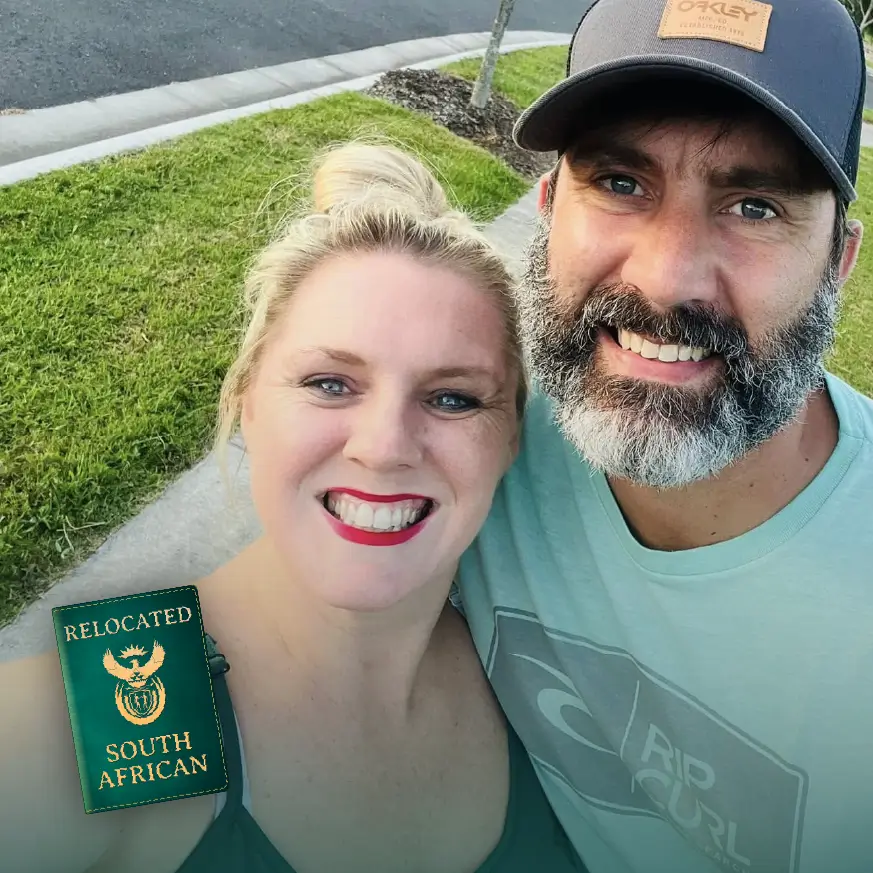
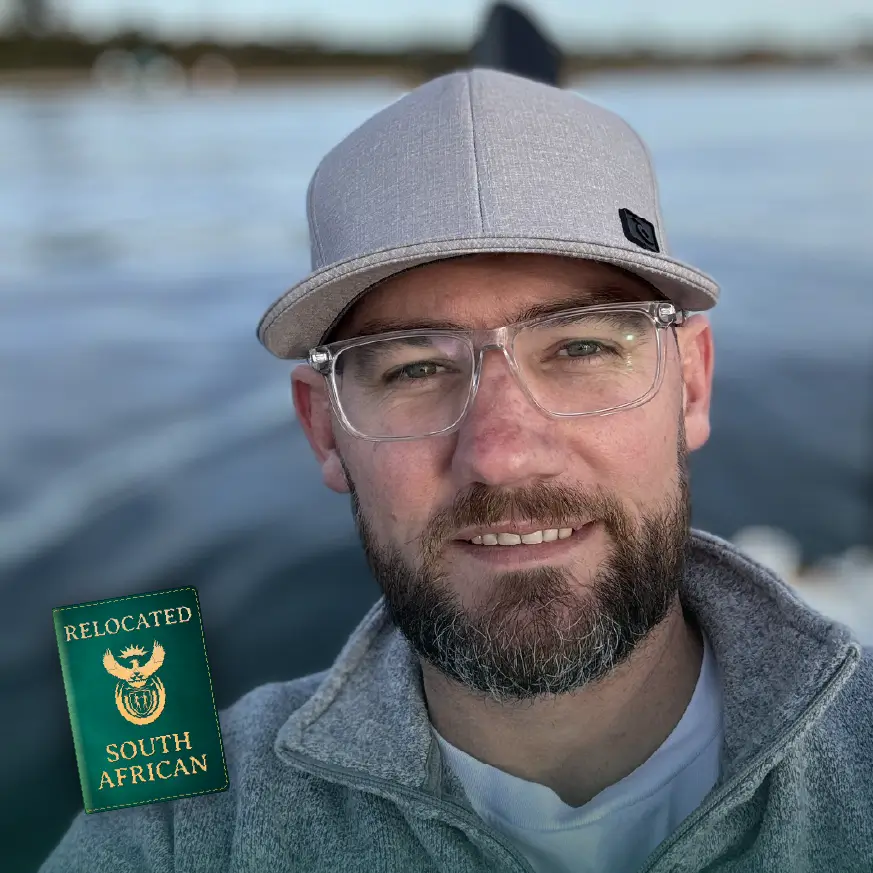
Jan Hugo: Welcome to The Relocated South African, the show for navigating immigration from South Africa for a better future. I’m your host, Jan Hugo, from Lagos in Portugal. Check out our website, www.therelocatedsouthafrican.com. It contains a whole lot of useful information and details of all episodes to date. If you want to interact with us or comment on our discussions or even participate in an interview, please contact me on jan@therelocatedsouthafrican.com.
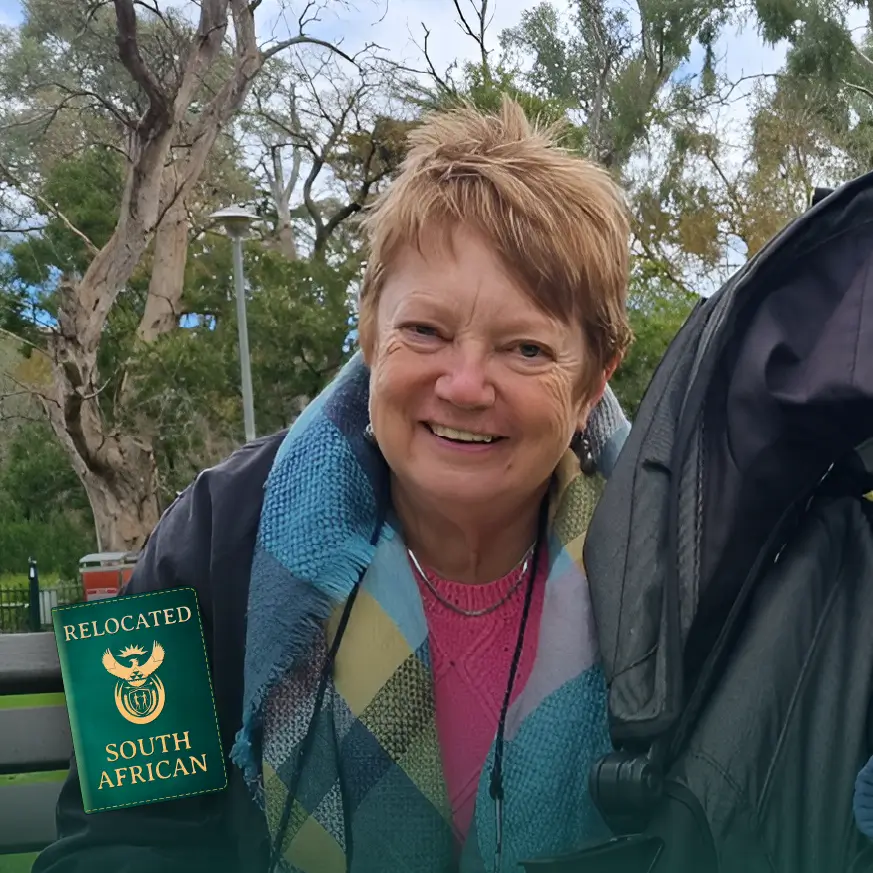
Also, if you like our content, why not subscribe on your favourite platform. Today, I welcome from Perth in Australia, Reeva Cutting. Welcome, Reeva.
Reeva Cutting: Thank you so much for having me.
Jan Hugo: Great. Reeva is a South African expat who has emigrated three times. She’s a migration and travel blogger behind Proudly South African in Perth, where she shares practical advice on moving to, settling in, and exploring Australia. What is more, I will let Reeva fill us in on more of the details of what else she’s involved in.
Reeva Cutting: Awesome. Thank you so much. Yes, so my blog is kind of like a hobby of mine that I started just over 10 years ago now. So it’s been going for quite a while. I started it because I recently started working in the digital marketing space and I got quite involved in blogging for clients and then I attended a one day workshop about blogging and I was really inspired to start my own blog and I thought what do I know best, you know, moving countries three times, putting up a Facebook group for supporting South Africans in Perth and WA and I thought what better way to kind of share my knowledge with others who are doing the same thing.
It was back in 2013 when we moved before Facebook groups really were taking off and the online space has changed so much since I started, but I really enjoy supporting other South Africans who are either in the process of moving, thinking about moving or already here and looking at settling and exploring.
Jan Hugo: Awesome. Just off the cuff question, blogging versus podcasts. I mean, there are a gazillion podcasts and a gazillion blogs. Are they competing?
Reeva Cutting: I think there’s space for both. Some people enjoy reading content. Some people enjoy listening to content. Some people like both. I’ve toyed with the idea of starting a podcast, but I’m sure as you know, it’s quite a lot of work and all the editing behind the scenes. It’s quite time consuming and having three jobs already, I don’t feel like I can move into that space. So I’m going to leave that to you. And then I like writing. So writing is where I’m the happiest.
Jan Hugo: Okay, cool. So maybe let’s just take a step back. Can you tell us where you’re from, school and just a bit about the immigration journey to find yourself in Australia now?
Reeva Cutting: Yeah, I always say I took the long way around to Australia. I grew up in Durban, lived a few years in Johannesburg and then moved to Cape Town for my last two years of school and for university. And once my uni was over, I wasn’t really sure what I wanted to do or how I wanted to move into a career. And my mum had just recently relocated to France. So I took the opportunity to move there, live a bit of life in Europe. And after a few months, she then relocated to the UK and I had a choice: either go back to South Africa or move with her to the UK. And I chose going to the UK. She had a British passport and I qualified for the ancestral visa. So it was kind of an easy way in at the time to start a new life abroad and kind of see what Europe had to offer.
And after 10 years in the UK, moved over to Perth. We’ve been here ever since. So yeah, coming up for 13 years next year. So I’ve definitely come a very long route from South Africa to Perth.
Jan Hugo: Absolutely. And in terms of, I mean, deciding to stay in Australia versus life in Europe, what kind of prompted that? Is it the weather, the people?
Reeva Cutting: The main thing that prompted it would have been when I had my son. So we were, gosh, I think he was about 18 months when we first toyed with the idea of moving to Australia. And we were actually looking at moving to Ireland because my mum lived in Ireland at the time and we were based in England and we were travelling a fair bit to see her backwards and forwards. And we wanted a bit more of her support when my son was growing up. And then we sat down one day and we said, why are we moving somewhere where the weather is worse than where we are now? We want sunny and warm and, you know, everybody thinks of Australia.
Neither of us had ever been; my husband’s English and he’d never been to Australia either. So it was a bit of an off the cuff remark I said to him, would you ever consider moving to Australia? And he said, yes, which really surprised me. And we took about six to eight months to decide whether we actually really wanted to do it or if it was just, you know, a joke or a dream. And once we started the application process, it only took six months for our visa to be granted. So it was quite a surprise for us. And then we had to be like, okay, we’ve got 12 months to actually pack up our whole lives and move.
So my son was about just before he turned three when we moved over here. And I think he was the big factor in wanting a better life for him, the kind of lifestyle that I grew up with. Everybody said to me, if you move to Perth, it’s like South Africa 30 years ago. And I thought, why pass up the opportunity to give my child the kind of childhood that I had? I would be silly not to try and take that up.
Jan Hugo: Yeah. I can totally understand. I mean, you mentioned something, the support from a mother. And that’s a line that draws through every conversation I have: people find it very difficult without parents. So you moved with a three-year-old. How did you cope in Oz without the mother?
Reeva Cutting: It was quite tricky. I mean, we didn’t have her close by already in the UK. My husband’s family were about a 45-minute drive from us. So where we lived, we didn’t have any kind of immediate family support anyway.
I think for people who’ve got family five minutes down the road or even next door, it’s a real shock to the system to have to move to a place where you have literally nobody that you know or trust to help you with your kids and just general kind of life challenges that get thrown at you.
I was quite lucky. My mum does visit us fairly regularly and she actually came with us when we emigrated and she stayed with us for the first three weeks and helped, you know, look after my son while we were out looking at houses and job hunting and just familiarising ourselves with the areas. So we were really lucky to have that.
Jan Hugo: Yeah, it’s not easy. Yeah, I think the difficulty comes when the kids have issues, you know. We have our daughter in Ireland and it’s fairly close to Portugal, but it gets very tough when there are issues. You have to work. They have to work and they don’t have the kind of support they would have had back home. So yeah, I fully understand what you say.
Okay, just moving on, I know you in another podcast discussed mental health challenges as a business owner after being fired early in your career. Would you like to tell us a bit about that?
Reeva Cutting: Yeah, that was a pretty stressful time. We bought a house less than a year before and ended up getting fired. And I’d been toying with the idea for a while of going off on my own and being a freelancer. I personally feel that’s part of why I got fired. I think she got wind of that and didn’t like what she was kind of hearing. But I thought it’s now or never. So I dug in.
I started a business, got my first few clients at a ridiculously cheap rate. I look back now and think I was insane, charging so little, but it got me my first few clients. And within six months, I kind of replaced the part-time income that I was earning before. And obviously now I work part-time and pretty much earn the full-time income between my three roles. So between the digital marketing role that I do for Cutting Edge Digital, with Rand Rescue where I help people move their retirement funds and cash abroad, and then the blog which makes a very small amount of money. I don’t really kind of promote that so much, but it does have a bit of income every now and then. So between the three, I’ve got a nice balance of work that I enjoy. I’m quite lucky that way.
Jan Hugo: Excellent. And in terms of managing time with having a family and being involved in three jobs and also…
Reeva Cutting: Not easy. The best description I ever heard that I always refer to, my friend says it’s not so much like having a balance. It’s more like a pendulum. Sometimes the pendulum swings more in favour of family and rest and relaxation. And sometimes it just swings completely to work. And it’s just kind of alternating between the two constantly.
Jan Hugo: Okay. Yeah. No, that’s very true. And family in South Africa, do you still have a lot of family?
Reeva Cutting: Yeah. My dad still lives there. My dad and my step-mom, they’re still based in KZN. And I’ve got some stepsisters in the Cape. But otherwise, the rest of my family is in Europe, in the UK and Ireland.
Jan Hugo: And do you still go back to South Africa or not really?
Reeva Cutting: I’ve only been back twice since we left. It’s expensive when there’s three of us to go. I’d love to fly my dad out to Australia once. He doesn’t have a passport at the moment and that’s a whole other problem. So I would prefer to bring them out here because I think when they’re here they absolutely love the lifestyle and the freedom that it affords them. They can really relax when they’re out here. So Dad, if you’re listening, please get a passport.
Jan Hugo: That’s easy. You can go to the bank now.
Reeva Cutting: Oh, no, it’s too complicated. He’s Greek. He doesn’t have a South African ID. He’s not a South African citizen. And to get a Greek passport is pretty much impossible. I need to look back into it. It’s really ridiculous, the hoops you have to jump through to get one of them.
Jan Hugo: Oh, wow. That’s amazing. That’s really interesting. So I know you’ve been in Australia for pretty much 12 years and helping people to immigrate. Do you think it’s become more difficult to get into Australia?
Reeva Cutting: That’s a good question. I don’t think it’s become more difficult in terms of immigration laws. I think it’s probably got a lot more expensive than it used to be and that’s a challenge for anybody who’s paying visa costs and agent costs and medical costs in dollar amounts when you’re earning rands. That is a real challenge.
I know within a couple of years of us moving to Australia, they pretty much doubled the visa price for the visa that we got and I thought even earning pounds, we probably wouldn’t have been able to afford to pay the costs as they were increased to. So I think the biggest challenge is cost and then also timeline. Some visas take years to be granted and you’re just kind of sitting in limbo the whole time, so the mental and emotional stress that comes with that can be really difficult to deal with.
Jan Hugo: And what you do, because my understanding is that in Australia, you know, there’s quite a process to go through and you need to score certain points in order to get accepted and a lot of people pay the cost but they’re not really ever going to make it. Is that part of the process that you help people with?
Reeva Cutting: I’ll preface this by saying I’m not an agent, so this isn’t any sort of official comment, but I think there’s over 200 different visa types that you can apply for in Australia. So it’s a bit of a minefield as to who qualifies for what.
So I’d always say anyone who’s looking, consult an agent as your first port of call. They’re the best placed people to say, yes, you could qualify and these are your options. Or unfortunately, dash your dreams and say, you know, there is really nothing you qualify for at the moment. You know, if you retrained in these skills, that could be a pathway for you to get into Australia. And get a second opinion as well. Because, you know, some agents specialise in different areas. And, you know, if you are a teacher or in the medical fields or in construction, there are people who are better placed to recognise your skills and say, well, that really applies to this visa. This is your route.
Jan Hugo: Okay. I’m with you. I’m with you. So you mentioned Rand Rescue. That’s a business that helps people with transferring money across.
Reeva Cutting: Yes, correct.
Jan Hugo: Okay.
Reeva Cutting: I started working with them the same year that I got fired. I was offered the opportunity to work as a business development manager for Rand Rescue. And I always think if I’d had my part-time job, I wouldn’t have had the time to take that on. So I think the world works the way it’s meant to work. And that opportunity came to me at a time when I could take it on. So yeah, I’ve been working with them for, gosh, what, nine years?
Jan Hugo: Are they a South African-based business or Australian based?
Reeva Cutting: Yeah, we have offices in South Africa, the head office is in New Zealand. And then obviously you’ve got the team, I’m in Australia, we’ve got people based in the UK, the US, and most of the admin processing team are in South Africa and New Zealand.
Jan Hugo: Okay. And I mean, that’s always a question for me. What would you say is the biggest mistake people make financially when they move?
Reeva Cutting: That’s a really good question. From a personal point of view, I’d say not researching costs enough and knowing exactly what you’re walking into. And just constantly worrying about costs versus rands instead of the currency that you’re now dealing with. If you have a job and you have an income, you need to think in that income because it’s very depressing going into the shops and converting a $3 item to a R35 item and you think, I can’t pay that.
It is what it is, but doing the research before you move or while you’re in the process of moving and knowing what to expect really can take the edge off the shock when you arrive in Australia and just discover how much everything costs, especially these days with the cost of living crisis that’s just happening everywhere.
Jan Hugo: We find it’s still, you know, we’ve been here five years in Europe now and every time somebody comes to visit and you go out for a coffee and it costs €1.50 and they say, well, that’s a lot of rand. And you say, well, that’s what it is. And that’s a cheap coffee. You can easily pay €3.50 for a coffee.
Reeva Cutting: Don’t send them to Australia. We’re paying $6, $7 for a coffee these days. It’s getting out of control.
Jan Hugo: Crazy, crazy. But I think I’ve heard this in places like Dubai and, you know, a lot of people cash in their pension. They take it across to help them, not realising that that’s kind of, depending how long they’ve worked, like 10 years of their life that they’ve stuck into that pension. That pension now becomes something that they have to live off, buy whatever they need on that side. And then people go on a bit of a spending spree and they over commit themselves. Do you think that happens as well?
Reeva Cutting: I would say some people do that. I think some people use their pensions to invest in a property when they move over. Yeah, we see property prices are quite expensive, especially when you’re converting, you know, the rand value of your house to a dollar value of a house here. So, I mean, who am I to judge how people want to spend their money. But I think having a good financial advisor as well is a really smart move when you move countries, because, you know, if you are withdrawing big lump sums like that or moving over proceeds of the house sale in South Africa, knowing how to use that best to, you know, minimise your tax and maximise the amount of any kind of return on that money, it’s well worth consulting with somebody who can advise you on that.
Jan Hugo: One thing that comes up a lot as well is furniture. Oh, my word. We made the mistake, so we learned the hard way not to ship furniture. Would you agree with that?
Reeva Cutting: Obviously, destination dependent. I think moving to Europe where you might be living in an apartment on the fourth floor that has no lift, you don’t want to be taking your big fancy sofas all the way over there. I’m quite lucky. I’ve moved quite a lot as a child and as an adult, so we’ve never really managed to accumulate too much stuff and when we were deciding what to ship and what to keep we kind of kept a few key big pieces but we sold the rest and then just shipped boxes of key items that we wouldn’t have to then spend money replacing when we got here.
So it’s always a bit of a personal preference. But yeah, there’s a lot of posts on Facebook groups. So if my furniture has arrived and the dining table won’t fit through the door, you know, who wants it? Just be aware. If you have super big furniture, like some Americans do, it may not fit in your new house.
Jan Hugo: Absolutely. No, that’s very true. You currently, I mean, you obviously write about road trips and the environment where you live; do you have any plans to expand beyond Perth?
Reeva Cutting: Well, obviously Perth is what I know best, being based here. And I always think you should write about what you know. So a lot of my content will be WA related. I do have some other stuff on there about the first time I went to Bali. I shared about that. But yeah, Perth is my home. I love it. And I love sharing all the little hidden gems that I kind of find along the way. And I’ve had people comment as well that they do love it when I share a random cafe or restaurant that I’ve come across, even if it’s not South African related. It gives them something else to go and hunt out and enjoy themselves.
Jan Hugo: And do you get questions from people about choosing Perth over Sydney or Melbourne or Gold Coast or whatever?
Reeva Cutting: So for us it was an easy decision. We didn’t want to move anywhere with dodgy weather so that ruled out Melbourne and Sydney for us and I didn’t want the big city feel. We lived in the countryside in the UK and I didn’t want to move to a big city like London. Three or four days in London was fine for me. So I couldn’t see us living there.
So the main options for us were Perth, Adelaide and Brisbane, mostly weather related and size related. And we ended up on Perth because we came on a skilled visa for my husband’s field and we got extra points for WA. So there was a lot of work opportunity in WA at the time that we moved as well. So that kind of informed our decision. We went where the jobs were essentially.
Jan Hugo: Okay. Now that makes a lot of sense. Another question: in 2015 you wrote quite an interesting, emotional article on News24 about South African expat bashing. Do you still feel that way?
Reeva Cutting: At the time that I wrote that, there was just so many articles flying around just telling expats to keep their mouth shut about South Africa. We weren’t allowed to comment. We weren’t allowed to say anything good or bad. And I just was a bit tired of being told what I couldn’t say about my home country just because I’ve emigrated. It doesn’t mean I’ve cut all my emotional ties with the place. We still have family living there. We still have friends living there who have to deal with the daily challenges that life in South Africa throws at them. So why aren’t we allowed an opinion?
Yes, I agree that the ones who just go and slag the place off the whole time and just say mean, nasty things; but there’s plenty of us that still have a lot of passion for that country and a lot of hope for it. And I don’t think that’ll ever change. So I just wanted to get something out there to say, hey, we’re not all the same. Most of us do love the country; just because we left doesn’t mean we don’t care.
Jan Hugo: I think that’s wonderful. It was very interesting. I did an interview and it will come out with a guy who’s a filmmaker in America, South African guy. And he made a movie that’s on Amazon Prime called The Journey Home. I don’t know if you’ve seen it, where they specifically, it’s really worth a watch. And they talk to South African kids, East Coast kids, Afrikaans kids that moved to America and parents and people about their experiences. And one of the comments somebody made, which I thought was amazing, he said, I feel a lot more South African now that I live in America than I ever felt in South Africa. And isn’t that true in a way?
Reeva Cutting: It absolutely is. I think being outside of everything you know, even if you don’t want to admit it, you do seek out other South Africans and those connections with people that just have some sort of common bond. Like, we’re not all the same. You’re not always going to get on with every South African just because they’re South African. But it does give you that real sense of Ubuntu, which I don’t think ever goes away for any South African.
Jan Hugo: I agree with that. I think that’s very true. So what would you say is the most difficult thing that South Africans battle with when they get to Australia?
Reeva Cutting: I guess it depends. I’d say probably support if they’re moving without any family or friends or anyone on the ground that they’re arriving to. I think a lot of them struggle work-wise, especially ones who can’t get jobs at the same level or at a level that they expect to walk into. There’s very much a culture of you work your way up here, and I believe it’s becoming the same in the UK. There’s no just walking into a high-paid, high-power kind of role just because you had one before.
I don’t really agree with it. I think if people have got the experience, they should be able to get those kind of roles. I know when I moved here, I was a business systems analyst in the UK for eight years and I couldn’t even get an interview because I had no Australian experience. That was kind of the thing back then. And I think that’s extended to quite a lot of industries now. It is a real challenge finding work.
So being prepared to take that little step down or complete career shift, depending on what visa you come on and what your kind of restrictions are with what you need to work as, just being flexible. That’s the biggest thing I can say for anyone immigrating: any aspect of your life, be prepared to change your plan, to turn things on their heads if they need to be to make a success of what you’ve committed yourself to.
Jan Hugo: Absolutely. And do you come across people, you know, when it gets tough, that are looking over their shoulder and say, I’d rather go back. I’d rather take what I know. And my sense is that’s a really bad attitude to have when you leave. You should go and make it work.
Reeva Cutting: I think it depends very much on the attitude that you come with. If you come with an “I’ll see how it goes, and if it doesn’t work out, I’ll go back,” I don’t think you can ever really commit to the journey ahead. You’ve always got that out clause just waiting to be activated.
If you come with a deadline, a finite amount of money and a plan of what you want to make work, you can make it work. Somehow the pieces will fall into place. Yes, it’s not easy. Yes, it’s going to be expensive. It’s going to be tough. But my biggest advice would be if you’re coming with a partner or as a family, you’re not allowed to have breakdowns on the same day as your partner. You can have one on the one day and they can have one on the other day and you’re there to support them and they’re there to support you because if you both break down on the same day, it’s not going to be a fun day for either of you.
Jan Hugo: No, that is so true.
Reeva Cutting: Yeah, I’ve always said that when you decide to leave, make sure you’re on the same page because if both partners don’t have the same belief in leaving, you know, it is going to be a nightmare because it will get difficult at some stage. That’s why I was unsure my husband was even serious when I asked him. That’s why it took us a few months. I was like, are you sure you want to move to Australia? He had lived in the same house nearly his whole life, knew everything, lived in a bubble. And I was like, are you sure? Are you sure you can move to the other side of the world? Never been there. Don’t know anyone. Are you sure?
Jan Hugo: Yeah, I can imagine. Reeva, if you think about South Africa, what do you miss most about South Africa living in Perth now?
Reeva Cutting: Gosh, besides the obvious family and friends that we leave behind. One of the things I miss the most is the storms that we used to get in Joburg and Durban, just the smell of the rain and the storm, watching the lightning outside. It’s all the natural wonders that we miss. I was privileged enough to live in Cape Town, look out my window and see the mountain every day; like that was just magic. Perth is so flat. There’s nothing to see here. We have the hills. They’re not really hills. Sometimes your ears pop when you drive up there and that’s about it. But yeah, the natural beauty of South Africa I think is pretty hard to beat.
Jan Hugo: That was also in that movie. If you get to see it, one person talked about the thunderstorms and the smell after the thunderstorm, and then people mention the silence, the quietness sometimes when you’re out in the countryside in South Africa. But I guess that’s the same in Australia.
But yeah, there are things that we do miss. There are things that I don’t miss, like car guards and Hadedas.
Reeva Cutting: You see, we have the Australian version of the Hadeda. We have the ravens here and the crows. Oh my goodness, they make the most awful noise. I actually need to make a video comparing the two, I think. They’re almost interchangeable.
Jan Hugo: Fortunately, we don’t have them here in Portugal. But yeah, Hadedas. And the Parktown prawns in Joburg terrified me.
Reeva Cutting: They’re awful. I tell people about them and they just don’t believe me. I think I’m making it up. But yes, I had one inside once. I put my dress on and as I went to zip up my uniform, I could feel it crawling up.
Jan Hugo: That’s horrible. And if you think about it personally, do you have any regrets about your journey to where you are today?
Reeva Cutting: I don’t think I’ve got regrets. I think every decision you make is the best decision you think at the time. And sometimes if you look back too much and go, I should have done this or I should have done that, you only know that now because of hindsight. So I’m a firm believer in if you make that decision at that time, it’s because you thought it was the best decision then and you just move on from that and try and make decisions as best you think as you go on.
Leaving South Africa, I don’t regret it. Leaving the UK, I don’t regret it. I can’t see myself ever leaving Perth. We’re really settled here. I love the lifestyle. We’re lucky enough to have good incomes that we can afford the life that we want. I have two horses. Do not recommend that for anyone who has any sort of budget and wants to go on holiday. But yeah, we’re in a position where, you know, we’ve chosen to do this and we can. So no regrets here.
Jan Hugo: Awesome.
Reeva Cutting: Yeah, I’m afraid having two horses, I probably should have just had one. My son wanted another one and I was like, sure.
Jan Hugo: I had a client who always said, don’t invest in anything that eats while you sleep. So maybe a horse is one of those.
Reeva Cutting: Wish somebody had told me that, because horses eat 24 hours a day!
Jan Hugo: That’s a good tip. Well, anyway, that’s awesome. I think one’s got to just back yourself and back your decisions, because you make those decisions with the best information at the time, and that’s it.
And Reeva, if you had to give advice to somebody listening to the podcast now, and they’re thinking about immigrating, what advice would you give a person who’s kind of on the line, not sure what they should do?
Reeva Cutting: I would say be sure and be committed. If you want to move to Australia or anywhere in the world, if you want to leave wherever you’re living and relocate somewhere else, commit to it. And don’t have, like you say, that option of “if it doesn’t work, I’ll go home.” Because I don’t think you will ever really be fully present in the journey that you’re on if you’ve always got that little voice in the back of your head saying, it’s OK if this doesn’t work out. Have no plan B. Just have a plan A and stick with it and it’ll come to fruition.
When we moved over, we had three months’ worth of cash to support us. So within three months, we had to find jobs, find a rental, get my son into some sort of daycare if I was working. And it literally all came together in the last week before our holiday accommodation came to an end. Like it was touch and go right to the end, but it worked out. And I don’t know how, I don’t know why. I always knew it would. I did worry in that three months that it was, you know, cutting it a bit fine, but it all worked out in the end. So have that kind of confidence in yourself and the process that you can make it work.
Jan Hugo: Excellent. And just a question on your son, does he see himself as completely Australian? I mean, he wasn’t really born here.
Reeva Cutting: Quite funny for us. He was obviously born in England. I’m South African. My husband’s English. Then we moved here when he was three. So for a long time, he was like, I’m Australian. I’m Australian. I’ve lived in Australia. I’m Australian. And then he discovered football, soccer. And now he is English. Because of the cricket and the football, he’s English, he’s not Australian. He has both passports, but he seems to be more English than Australian.
Jan Hugo: OK, but not South African at all?
Reeva Cutting: No, unfortunately not. He’s got a bit of South African in there every now and then. It comes out, but he’s like a carbon copy of my husband, so more English than anything.
Jan Hugo: Excellent. Well, thank you so much, Reeva. I really enjoyed our chat. And I mean, obviously, where can people get hold of you and read your blog and so on?
Reeva Cutting: So my blog is proudlysouthafricaninperth.com. I’ve obviously got social media, I’ve got Facebook and Instagram with the same name as well. If there’s any questions about Rand Rescue or moving your money over, that’s randrescue.com. Just yeah, find me on Facebook, that’s probably the easiest way to find my page and I have a group as well. If you’re looking for local support, I have a group called Proudly South African in Perth and WA.
Jan Hugo: Okay, excellent. So we’ll put all those details on the show notes with the episode as well so that people can contact you if they want to. Yeah, it sounds really interesting. I’ve enjoyed reading some of your stuff. I’m obviously not in Australia, but I mean it’s just really interesting to see what you do and that you’re enjoying life there and making the best of it. Really positive, well done.
Reeva Cutting: Thank you so much, it’s been lovely to chat with you.
Jan Hugo: Thank you, I really enjoyed that. So if you enjoyed my discussion with Reeva and would like to hear more about experiences of South Africans who have left South Africa, why not subscribe on your favourite platform. If you would like to share your own story, contact me on jan@therelocatedsouthafrican.com. Until next time.