Jan Hugo:
Welcome back to The Relocated South African, the show for navigating immigration from South Africa for a better future. As always, I am your host, Jan Hugo, from Lagos in Portugal. Check out our website, therelocatedsouthafrican.com, and subscribe to the podcast on your favourite platform.
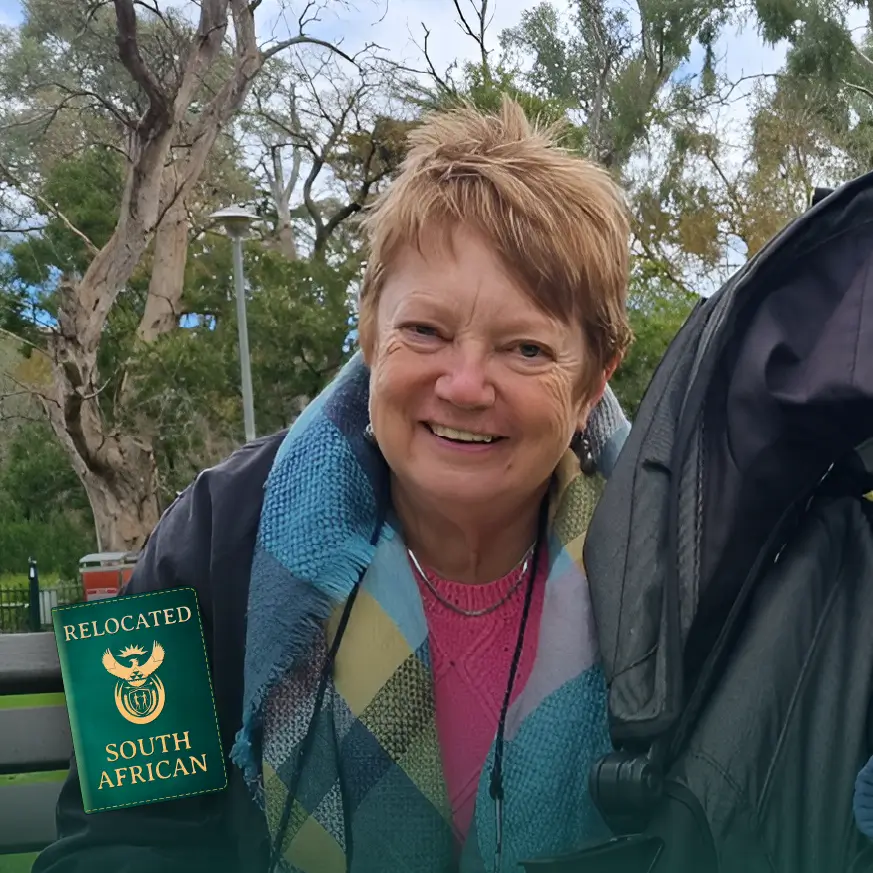
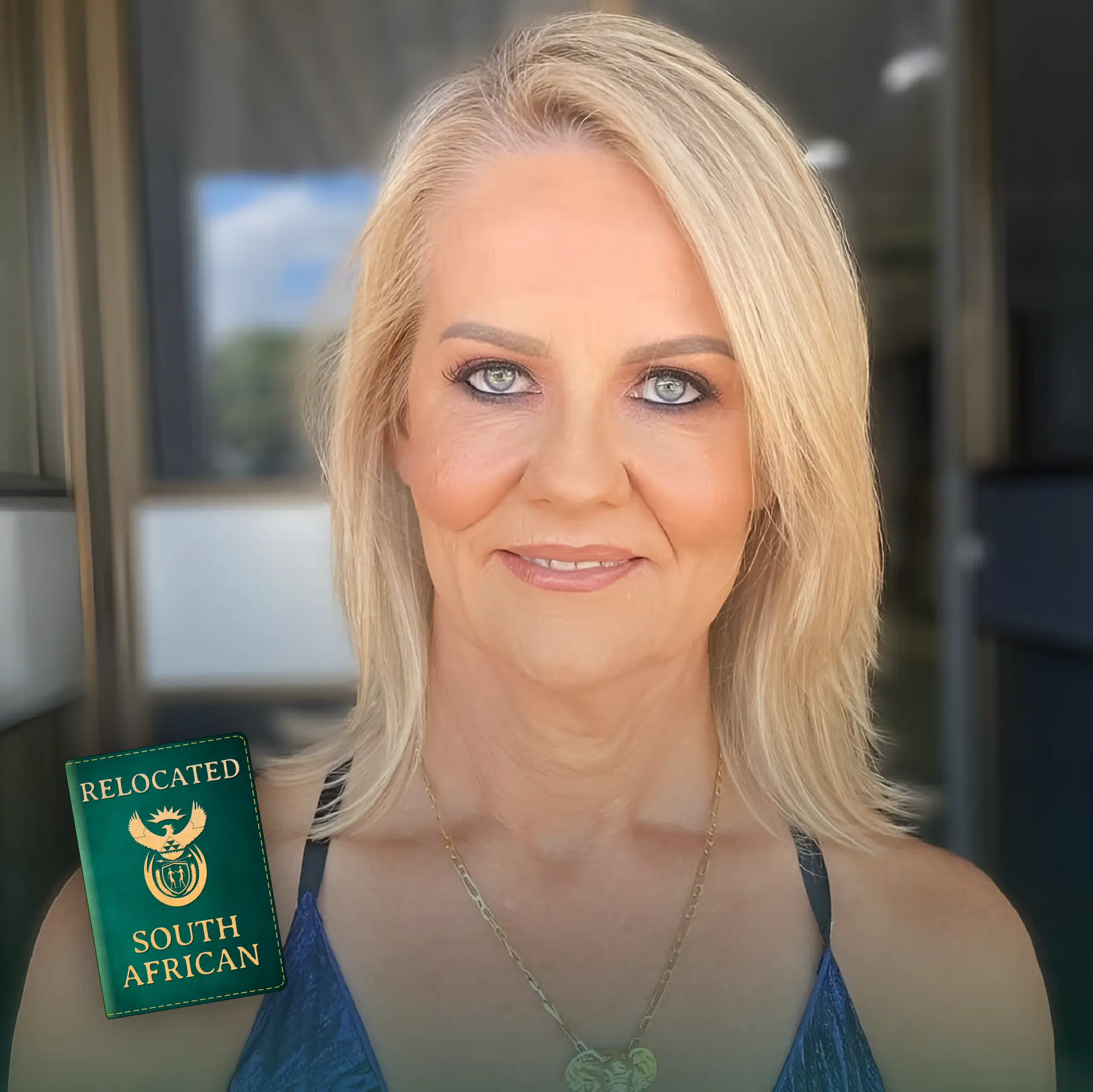
Today’s episode is a little different, and I think an important one. Many conversations around immigration focus on people in their 20s and 30s, those starting out, building careers, or looking for new opportunities. But far fewer stories explore what it is like to make a move later in life. My guest today is Wendy Williams, who immigrated from South Africa to Australia with her husband and two older children at a stage when many people are settling down, not starting again. In Wendy’s case, they started again. Welcome, Wendy.
Wendy Williams:
Thanks very much, Jan. Just listening to that makes me realise how long ago it was already that we made this move.
Jan Hugo:
Exactly. So, Wendy, I always ask my guests to give us a bit of background: where you are from originally, where you went to school, where you studied, and just a brief history.
Wendy Williams:
Yeah, sure. I was born in Rhodesia, Zimbabwe as it is now known, as was my husband. I was the only member of my family who was actually born there. My parents and my older brothers were all born in South Africa, but my parents had gone to Rhodesia to farm and I was born there. I went to primary school at the local country primary school, then on to high school in Harare, then to Bulawayo Teachers’ College, and finished at the University of Zimbabwe in 1980 with a teaching degree. And yeah, the same for my husband. He was also born in Zimbabwe, to a farming family, so locally educated. We met when I was just starting out at college and he was working on the family farm.
Jan Hugo:
Okay, and at that time when you went to college, was it already Zimbabwe? It was no longer Rhodesia?
Wendy Williams:
No, when I went to college it was Rhodesia. It was 1977, 1978, 1979, it was still Rhodesia. In 1980 it became Zimbabwe, and although I started at the university when it was still called the University of Rhodesia, it changed that year to the University of Zimbabwe.
Jan Hugo:
And then when did you move to South Africa?
Wendy Williams:
We moved to South Africa in 1984. We had got married, we were living on the family farm, and we had our first son. He was born in Zimbabwe, and then we left for South Africa in April 1984. Our daughter was then born in South Africa.
Jan Hugo:
Okay, and you went farming there as well?
Wendy Williams:
Yes, we did. My husband has been a farmer forever. We could see the writing on the wall in Zimbabwe and thought, well, we were young enough to give it a go. We left Zimbabwe with our Datsun 120Y, a baby, two dogs, and what we could fit into the boot. But at that age you are young and fearless and thought, yeah, we can do this. My husband got a job on a farm doing potatoes in Hoedspruit of all places, and I was teaching. I got a job teaching. And then later on we made the move to Nelspruit, where we spent the rest of our time in South Africa before leaving for Australia in 2005. So we were there for close on 20 years.
Jan Hugo:
And in Nelspruit, doing citrus or…?
Wendy Williams:
No, no, we were tobacco farmers. Very politically incorrect now, but my husband loved growing the stuff. It is a very testing crop to grow. So we were doing tobacco farming. He was a manager for only two fellows. The second fellow that we worked for was a wonderful man who really got us onto our feet, and then we bought the farm over the road. We were there for 13 years before we made the decision to leave for Australia. We were farming tobacco as well as vegetables, and I did ducks. But we could see that the future of tobacco was limited, so round about 1998 we started to slowly plant macadamias, so that once tobacco was no longer profitable, we would be able to turn to macadamias, which was a lot less labour intensive. We planted a good 15 to 20 hectares of macadamias, and as they came into full production, we left.
Jan Hugo:
That is amazing. Just thinking back to your time in Zimbabwe, did your family lose the farm to what happened there, or did you see the writing on the wall?
Wendy Williams:
We saw the writing on the wall, as did my husband’s brother. So we all left at about the same time. His parents then managed to sell the farm in Zimbabwe, but the catch was that you could not take your money out. You had to leave it in government bonds, and after seven years the government would start paying you four per cent. By then, of course, the Zimbabwe Dollar had devalued and devalued. Eventually my father-in-law actually owed the post office money because all the proceeds from his farm had been swallowed up by inflation. It left everybody, my parents and his parents, in quite dire financial straits.
Jan Hugo:
It is unbelievable.
Wendy Williams:
That was definitely one of the motivating factors behind us coming to Australia: we did not want to spend our old age concerned about how we were going to afford to live.
Jan Hugo:
And that was kind of my next question. If you think back 20 years ago to that feeling that you had, that you wanted to leave, was it a sudden thought or did it kind of build up to a point where you said, okay, it is time to go?
Wendy Williams:
You know, I think it was quite sudden. We had been on holiday to South Africa. My parents were living in South Africa. And I think just on a whim, we started making some general inquiries about whether there were jobs available, and it seemed like there were jobs for Zimbabwean farmers. We went back to Zimbabwe, broke the news, and left within a few months. Very hard for his family.
Jan Hugo:
And then in 2005, you went through the same thing again. Was that a longer process of deciding, or did you reach the same conclusion fairly quickly?
Wendy Williams:
We arrived at the same conclusion, but it took a very, very long time. I was the one really dragging my feet. My husband was very sceptical, I suppose is a good word, about how things were panning out in South Africa and kept saying to me, you know, we have seen this happen before. But I was very settled. We had bought our own farm, which we had worked towards. We were improving it. I had a wonderful job at an independent school as coordinator of a learning support unit. I had my friends, my family. I really did not think about immigrating at all. And whenever my husband brought up the subject, I changed the subject or hoped it would just go away.
Then, as fate often does, a very good friend of ours, who was also a Zimbabwean farmer, was murdered on his farm outside White River, not far from us. My husband came to me that night and said, that is it, I do not care where we go, but we are going to sell our farm and we are going to leave. I thought, goodness gracious, where do we go? We had watched other younger families up and leave the area. Everybody told us how difficult it was to get into Australia. Our other option was England, because his mother had been born in England and served there during the Second World War. But neither of us could see ourselves settling in England. Too many people, not enough space. It just did not gel at all.
Not long after our friend’s funeral, we happened to see an advert in the Sunday Times about a free assessment with an immigration agent. We were going up to Johannesburg anyway, so we said, it is free, what have we got to lose? We went and spoke to a gentleman by the name of Garry Loseby. He was actually an Australian, but based in Johannesburg, facilitating visas. He said we were in with a chance. So that was the beginning of the end of our South African sojourn. It took us almost four years to sell the farm, get the visas, pack up our lives, and make the move to Australia.
Jan Hugo:
Yeah. And the visa you got on the strength of your teaching qualification, because they like South African teachers?
Wendy Williams:
Well, yes, that is what we had originally applied for. But there is a story behind that, Jan. Our agent was quite clear that he felt we would get in on my teaching degree, so I would be the primary applicant. We were going to move to Perth, because I have a cousin south of Perth, and we had extra points because of that.
On the Friday afternoon, I remember it clearly, we had signed the papers to sell our farm. Then on the Monday morning, at quarter to eight, my phone rang and it was Garry. He said, Wendy, I do not want you to panic. And of course the first thing you do is panic. He said they had rejected my qualification.
I said, now what? We have just sold our farm on Friday, there is no going back. And he said, but I think with your qualifications and your experience, we can get you to Australia as a childcare director, which was on the skill shortage list. I had never done childcare in my life, but in my job I had had a lot to do with younger children, writing programmes and supporting their educational development. He said, let us go for this, because this is now August and I was turning 45 in November. My qualifications had to be assessed and we had to get the application in before my 45th birthday. Everything fell into place. I had my qualifications assessed, we completed the application, and paid our money. He was an agent who only asked for 50 per cent upfront, with the balance due on approval. I turned 45 on the Wednesday, but they had received our application on the Monday. We just squeaked through.
Jan Hugo:
Fantastic. It is always a good story. And just thinking about it, it must have been quite a tough time, those four years from deciding to leaving. You are kind of in limbo. How did you guys cope with that?
Wendy Williams:
Just day by day, I suppose. We had made our plans. We actually did not tell very many people at that stage, because we had no idea whether our visa would be accepted. We were still developing the farm, still educating our children. Life went on. My feeling at the time was that it was in the lap of the gods. I had done what I could do. If we got the visa and a buyer for the farm, then we were on our way. But if not, well, we would decide what to do next. But it never came to that. The visa came through, and although we ended up accepting a visa for South Australia rather than Western Australia, in the long run it turned out to be a wonderful decision. We love South Australia. And we got instant permanent residence, which meant we had Medicare immediately. Our daughter, who was going to university, qualified as a domestic student, which was huge, because the international fees are phenomenal, something like five times the domestic amount.
Jan Hugo:
Fantastic. And how old were the kids at that time?
Wendy Williams:
When we left, our daughter had just finished Year 12, and our son had just finished university in Pretoria. So when we left, she was 18 and he was 21.
Before we made the final decision, we brought them across to Australia for a look-see, because we said we either all go as a family or none of us go. We were not going to leave and then have the children stay. It was either all of us or the plan was off the table. And when we brought our children to Australia, they just loved the freedom. They could get on a bus, walk around the city at night, go window shopping, go to pubs and bars and catch a taxi home. They could not believe the freedom they had, especially after living on a farm where we were so insistent that they phone us on the way home. If they were 10 minutes late, it was panic stations. And suddenly here they were in a country they did not know at all, with this huge freedom to do things without us watching over them. I think they would have been on the first flight back to Australia if given the choice right then. They were very happy to make the move.
Jan Hugo:
Excellent. And when you arrived in Australia with permanent residence but not much of a support network, was that tough?
Wendy Williams:
Yes, it was quite tough. But we ended up knowing people from Zimbabwe who had gone farming in Mount Gambier, and they had pointed us in the direction of people who were looking to hire farm managers. Joe had an interview and started working almost straight away, which was great. We did not have a lot of support, but we had the family unit, which was good. Joe started working immediately. Our daughter had a job within a week of landing in Mount Gambier. Our son and I took a little bit longer, because it turned out that my qualification was recognised. Once I had spoken to the authorities and they had gone through all the checks, I could apply for my teacher’s registration to practise in Australia. And that is what I did for 15 years.
Jan Hugo:
And as a family unit, obviously you all had to be very close, supporting each other. Was that your experience, that there were ups and downs but someone was always up when another was down?
Wendy Williams:
Yes, lots of ups and downs. But there was always one of us who was positive when the others were struggling. We had said right from the beginning: it is not going to be easy. This is a big move, but heads down, we are going to find a way and we are going to do it well. The kids were great. Our daughter started working within a week and has never looked back. Our son took longer to find his footing, but eventually it all fell into place. It was actually Joe and I who took longer to settle. After three years, my husband decided that farming was not going to be a long-term option for him and did a complete 180-degree turn.
Jan Hugo:
Wow. That is brave. And it turned out to be a good decision?
Wendy Williams:
It was a wonderful decision, though it took us completely by surprise. A lot of the farmers, not all of them, but a lot, only take on older workers as casuals. So there is never any sick leave or holiday leave, and they pay the absolute basic salary with no recognition of experience. In this particular case, Joe at the age of 50 was considered old for farming. He came to me one night and said, this is not going to end well. I am not getting any younger, I am on absolute minimum wage, and I never know from one week to the next whether I am going to have a job, because I am casual. He said, we need to make a better plan. And I thought, what plan? He had been a farmer all his life. Then he said, you know, all of Australia runs on hydraulics. I had no idea. He gave me a very basic outline and pointed out that he had always been good at fixing implements on the farm, tractors, trucks, and the like. He said, I think I could do something in hydraulics. Find me a course.
In Australia, as in many other first-world countries, you need some sort of qualification before you do anything. So onto the internet I went, looking for TAFE courses on hydraulics. As the internet does, it threw up adverts, and one of them was for a company based in Adelaide looking for franchise owners. We were coming up to Adelaide to see our daughter, who was at university there, so I said, well, let us go and see what it entails. He met the owner of the service centre, who was very positive. He said, why do you not come and work for me for a couple of months, see how the whole franchise system works? If you like it, we can talk and make a plan for you to get your own route. If you do not, we shake hands and part as gentlemen.
So the door just opened. We moved up to Adelaide, rented a house. Joe was there for three months and said, yeah, I really enjoy this. He was happy for us to put down a deposit on the business. We flew off to Albury-Wodonga, which is on the New South Wales and Victoria border, to do the course. It was only a two-week course and he just never looked back. It was a complete 180 from everything he had done before.
Jan Hugo:
That is amazing. That is such a good story.
Wendy Williams:
It was. I am still amazed, more than anybody else, because I thought this was so far out of his comfort zone. And at the age of 54, do you really want to be starting a brand new career that is quite physical? And he said, yeah, let us give it a go. And here we are.
Jan Hugo:
Awesome. And through all these changes and difficulties, did you ever consider going back to South Africa?
Wendy Williams:
Never, not for one moment. Going back was never on our itinerary. We were going to make it work. And everybody else I have spoken to in the expat community who has made a success of their life here has come with that same attitude. We have to make it work. We are going to find a way. We are hardworking people, we are educated. We will find something and we will make it work. You have to come with that mentality, because the early years are not easy.
Jan Hugo:
Absolutely. You cannot look over your shoulder. If you say, if it does not work we will go back, you will go back. You must not have that attitude.
Wendy Williams:
No. You just have to stick with it and believe that things eventually will turn. And they do.
Jan Hugo:
Have you been back to South Africa in the 20 years?
Wendy Williams:
Yes, we have been back three or four times. My brother-in-law still lives in South Africa, in Gonubie, and my own brother still lives in Victoria Falls in Zimbabwe. So yes, we have been back, I think, four times. The last time was 2019.
Jan Hugo:
Never felt the urge to want to go back?
Wendy Williams:
No, quite the opposite, Jan. Every time I have been back, I have been more grateful for the decision we made. Especially when we went back to our old farm this last time. It was a beautiful 80-hectare property in a valley on the road between Lydenburg and Sabie, with beautiful farms on either side. When we drove down that road, both sides were lined with enormous electric fences. All the farmers had got together and funded it. It is something like 22 kilometres of continuous fencing on both sides of the road. I could not believe it. No, I have never wanted to go back. We have been able to travel while we are here. It is easy with an Australian passport. And neither of my children nor my husband has ever wanted to go back. We were fully committed, I think.
Jan Hugo:
And friends-wise, did you and your kids make South African friends or mostly Australian friends? How did that work for you?
Wendy Williams:
My children quickly made Australian friends, because they were in Adelaide meeting people at university, and my son was playing rugby at the rugby club. They met the odd South African, but basically their friendship group was Australian.
For us it was a little different. The first place we lived was way out of any town. I thought I had landed on Mars. My first friend in Australia was the wife of a South African doctor, and she and I are still great friends today. They had arrived a year earlier and she pulled me through that first really difficult stage of settling in. Now we have equal numbers of Australian and South African friends.
Jan Hugo:
And just looking at South Australia versus the more well-known places like Sydney, Perth, and Melbourne, what would you say is the biggest difference?
Wendy Williams:
Well, we are almost the forgotten state, us and Tasmania. We are a bit off the beaten track. South Australia is almost as big as South Africa, but there are only 1.6 million people in the whole state. We are a really insignificant part of Australia in terms of economic contribution. I think the South Australians would not be happy to hear me say that. Our bigger siblings in Melbourne, Sydney, and Brisbane all call Adelaide a country town. Very rude of them. But it is very quiet. Lots of big wide open spaces and not many people. It is a very, very easy place to live.
Jan Hugo:
And you mentioned you are buying a house on the coast. Is that close to Adelaide?
Wendy Williams:
Yes, we are an hour and a half south of Adelaide on the beautiful Fleurieu Peninsula, well known for its beautiful wines and beaches. We have bought down here. Our children are still in Adelaide, but it is only an hour and a half on a very nice freeway, so not difficult to get up to see our grandchildren. We have lovely young South African neighbours over the road who have settled here. They had their citizenship ceremony two weeks ago. It is just a fabulous part of the world to live, because we have such freedom and no safety concerns. I walk at night, I ride my electric bike by myself. It is not the Garden of Eden and things do happen, but so rarely that it catches everybody by surprise when it does, particularly in South Australia, because we are such a small community.
Jan Hugo:
I think that comes out in every conversation I have. The safety question, and for us as well in Portugal, we still think about it when you see a woman running on her own, or riding a bike on her own, or just walking around without thinking about any physical threat. It makes such a difference to your quality of life. So after 20 years, what do you miss about South Africa?
Wendy Williams:
I miss the thunderstorms, the sound of the lightning striking the granite kopjes. I think I miss the sound and the vibe of the people in South Africa. There was always that energy, always people chatting and making jokes. We used to sell a lot of our vegetables at the market and we met some truly wonderful people there. I miss that slice of African life. But I think that is about all. Every now and then I go up to Monarto Safari Park, which is the largest plains zoo in the southern hemisphere, and I go to get my hit of giraffe and rhino and zebra and eland. It kind of settles something in my soul, because there is nothing like African wildlife.
Jan Hugo:
That is very true. Just as we are getting towards the end: if you think back over your last 20 years and your decision to move, would you say that if you could do it over, you would have left earlier?
Wendy Williams:
People ask me that, Jan. From one aspect, maybe yes. But it is hard to know. It was actually a really good time for us to leave, because our children were just coming to the end of their education and their friends were all going off in different directions. They did not have that pull of the peer group, which I know from some of our family members is very strong for their children. They have hesitated about breaking their children away from that group when they are at such an impressionable age. Our daughter had finished high school, our son had finished university. They were both ready to spread their wings.
Would it have been easier if Joe had been a bit younger? Maybe. But then I wonder if we would have looked for a different opportunity the way we did, because we had realised that farming was not going to be something he could sustain going into his 60s. I kind of feel it was just the right time. We found a buyer for our farm, though it took a long time. At that stage, at least our money was only divided by four, where now it is divided by twelve, which made a real difference. It meant we had a bit of money to start with in Australia. We have helped more than a few couples who arrived with nothing but a suitcase and a tent. But they were much younger than us, and it has been wonderful watching them get up onto their feet and start making strides in their new country. Everybody has their own timing, I think. What works for one might not work for another.
Jan Hugo:
Absolutely. And maybe as a last thought: if you had to advise a young family who came to you and said, we have got the opportunity to go to Australia, should we stay in South Africa and make a life here or should we try somewhere else, what would you say?
Wendy Williams:
Without a shadow of a doubt, grab it with both hands. There are such opportunities in Australia. You cannot believe the freedom. Things work here. If you cannot find the answer from one person in a government department, they will find somebody else to help you. All our dealings with government departments have been wonderful. They really go out of their way to point you in the right direction and make sure you have the right information. Yes, the cost of living is expensive. But once you stop converting to rand and start earning dollars, it is all relative.
And there are lots of people who support those doing it tough. I love this story: one of our young South Africans had just arrived and was waiting on the side of the road for his wife, who was having a job interview. A student was offloading a whole lot of furniture because he was leaving university and would have to pay for it to go to the dump. This young fellow said, no, no, I am going to go and find a trailer and a ute. He told his wife to wait, rushed off, hired himself a trailer, and collected all the furniture. He told me about it the other day and said that kept them going for three years. They hardly had to spend anything on furniture at all.
Things like the food banks, where you can go and collect large food parcels: I know for many South Africans it is not what we want to be doing, but it exists in Australia. If you need the help, you go out and you ask for it, and it is out there. We had a huge fire recently on the Fleurieu Peninsula and the reaction of the community to supply the firies with food, snacks, water, and accommodation while they were here fighting the fires was just overwhelming for this tiny little pocket that we live in. To a large degree, Australia is a very, very generous country. If you need help, put your hand up and ask for it. You will be surprised how many people will lend you a hand to get you up and going.
Jan Hugo:
That is fantastic. It is so good to hear, and I am so glad things have worked out so well for you. Any last thoughts?
Wendy Williams:
The other thing we do now is, since Joe and I retired, we run a stall at a beachside market. We call it Saffa Bites and we sell biltong and boerewors. A good 20 per cent of our customers are ex-South African and Zimbabwean, and it is wonderful hearing their stories and seeing how well they are getting along. And swapping jokes and talking about the Springboks. We went to watch them in New Zealand last year when they gave the All Blacks a good hiding. We were all there in our Springbok colours and our flags and our biltong. It was great.
Jan Hugo:
That always makes you feel very South African, when we beat any other team. I think the idea of this podcast is that we meet and hear stories from everywhere. I find it so refreshing and really interesting to talk to so many different people. There are similar threads that run through a lot of stories, but each one is unique in its own way, like yours.
Wendy Williams:
Yes, they are. And yes, I have listened to lots of your episodes, Jan. I was fascinated by the fellow who lives in Norway now. At least here in Australia we have similar weather. Today is a beautiful summer’s day. The Australians love their cricket, and not so much rugby of course. South Australia is a very AFL state, so we have had to get to understand Aussie Rules as well. But it has been a really, really good move. I would say to anybody considering it: if you have got the opportunity, grab it now, because I do not know if things will be as easy in the years to come. Migration to Australia is getting tougher.
Jan Hugo:
I agree. I have spoken to a few migration agents who say it is getting tougher to get visas and to be considered, and for older people it is even more difficult. Wendy, thank you so much for sharing your story so openly and thoughtfully. What stood out for me is the reminder that it is about the courage to start again, even when it feels uncomfortable and uncertain. Thank you so much.
Wendy Williams:
You just have to keep moving uphill. Eventually you will get close to the top. But thanks, Jan, I have enjoyed chatting to you. And thank you from all of us for doing these podcasts. They are wonderful.
Jan Hugo:
My pleasure. If you are listening and you are considering a big change in life, or you have already made that move and are still finding your feet, I hope this conversation helped you feel a little less alone. As always, if this episode resonated with you, please share it with someone who might need to hear it. You can find more episodes on our website, therelocatedsouthafrican.com. Thanks again for listening, and until next time.
This transcript was generated with the assistance of AI and checked for accuracy.