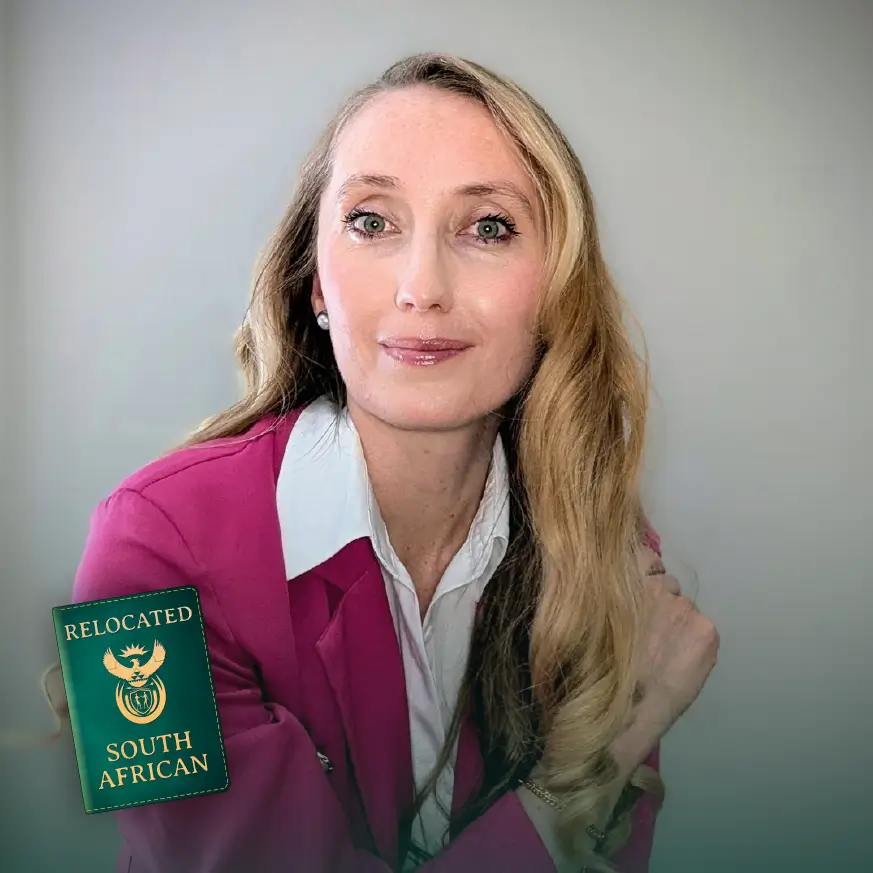
Jan Hugo:
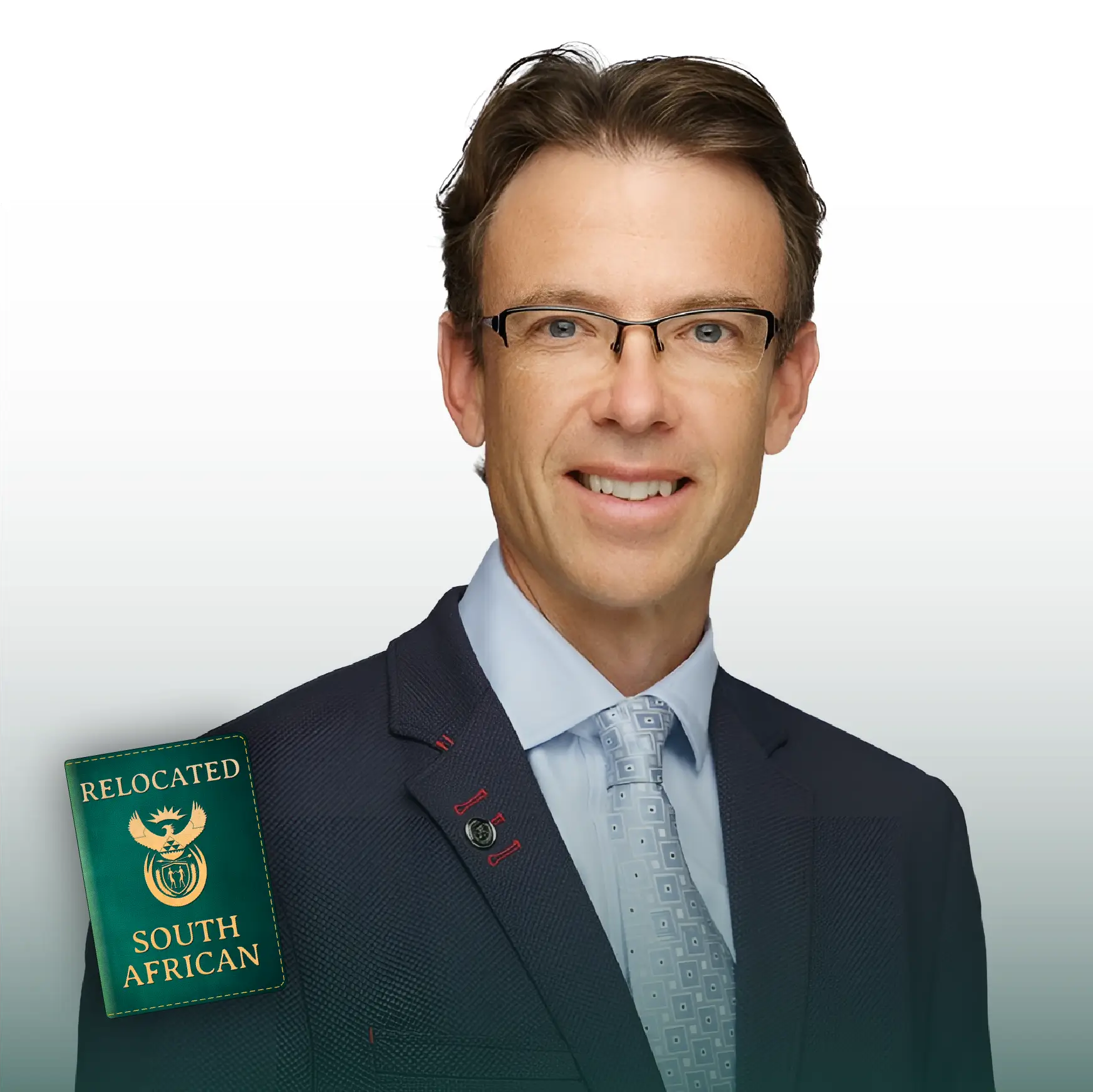
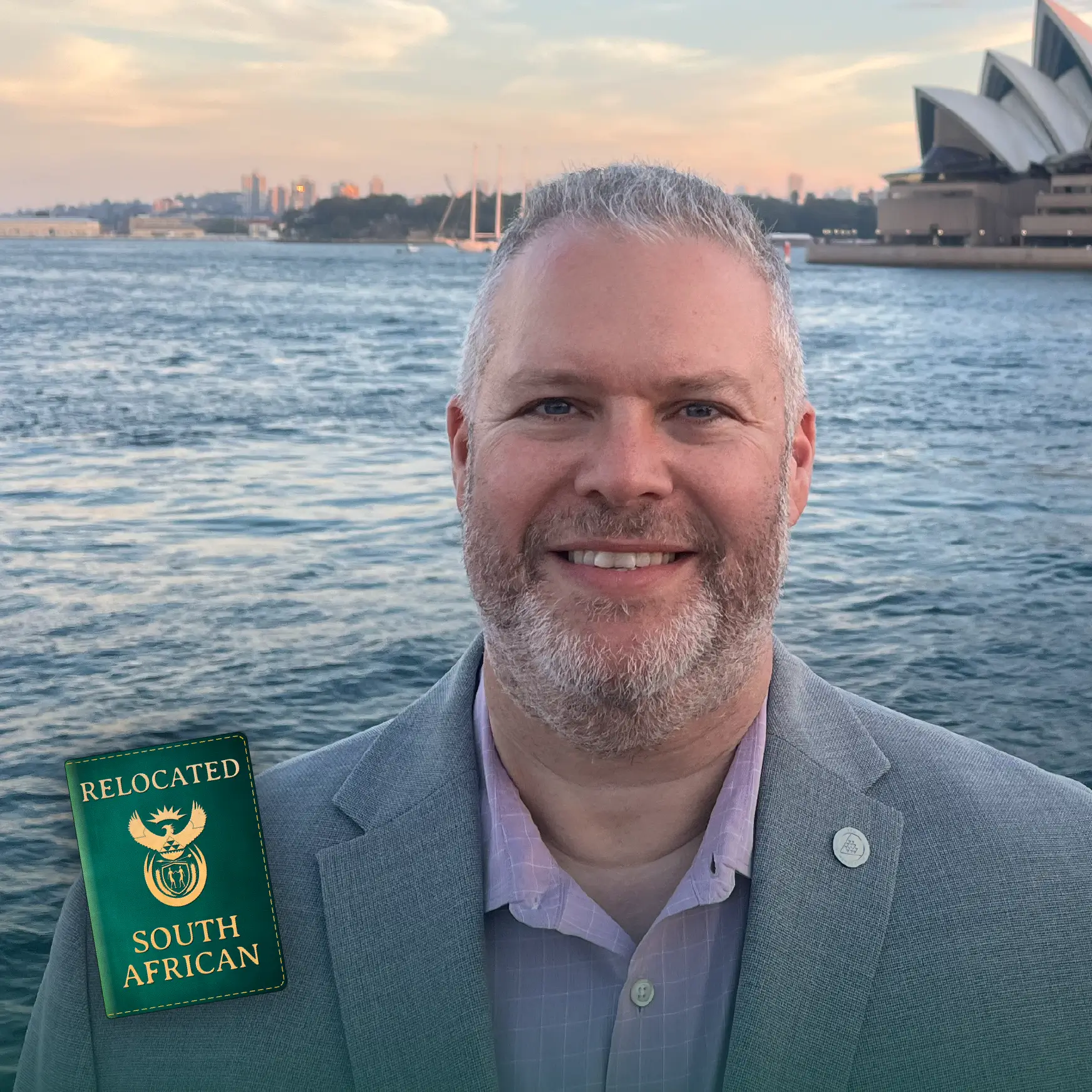
Welcome to The Relocated South African, the show for navigating immigration from South Africa for a better future. Check out our website at www.therelocatedsouthafrican.com and subscribe on your favourite platform. Today’s episode is about money, but not in the way that you might expect. It’s really about what happens when you leave South Africa and you have to rebuild a sense of security, confidence and stability in a new country. My guest from Toronto is Vincent Heys, the founder of WealthStack. And like many of us, his journey started in South Africa before relocating and figuring things out from scratch somewhere else. Welcome, Vincent.
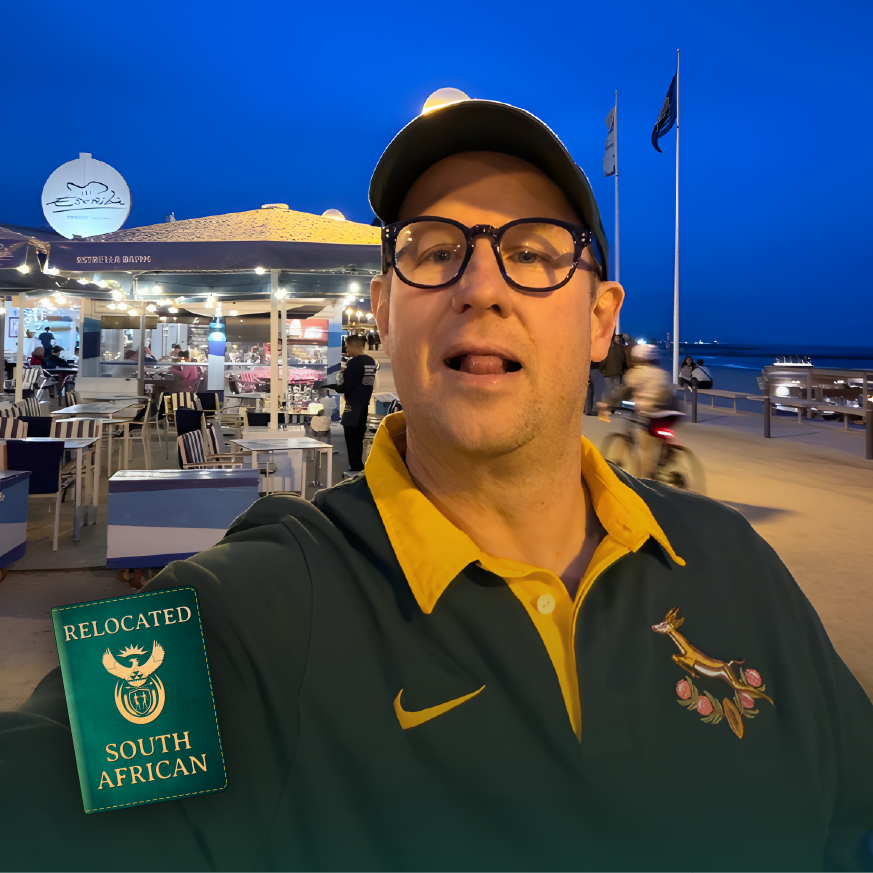
Vincent Heys:
Nice to meet you again. Thank you so much for your time.
Jan Hugo:
Thanks for being here. Before we started, we had a quick chat about the weather. Just tell us, what is the temperature in Toronto right now?
Vincent Heys:
They always quote two numbers: what the temperature actually is and what it feels like with the wind chill. So it’s minus 11, and with the wind chill it’s minus 18. You know, I think it’s a bit like people who do the Ironman. You can never imagine anyone swimming that far until you get to it yourself. It’s the same with the weather. You would never think, how can I survive at minus 20? But it’s doable.
Jan Hugo:
Yeah, that’s doable. Everybody says it’s just about the right clothing — you just have to have the right clothing and you can survive. But I guess from where we are in Portugal, I’m going to stop complaining immediately about the winter. All winter is doing to me is forcing me to cancel golf every now and then, but other than that it’s not so bad. Anyway, Vincent, I always ask my guests to give us a bit of background. Where did you grow up, go to school, study, and how did you eventually move to Canada?
Vincent Heys:
I grew up on a farm just outside Bloem and went to school in Bloem — probably the best school south of the Limpopo. You probably know which one that is. Let’s just leave it there. But anyway, I grew up in Bloem. Dad was always a farmer, and Mum was a small businesswoman — actually the Small Businesswoman of the Year in 1989 or 1990. That’s our claim to fame in that space.
She had a factory on the farm making bed linen for Edgars, up in Pretoria and Joburg. And she was actually one of the first people to import material from China or Taiwan back then. Really interesting. That’s where I got into farming and business — helping my parents as entrepreneurs on the farm.
Jan Hugo:
Yeah, that settles the entrepreneurial spirit, I would imagine.
Vincent Heys:
Yes. But anyway, after finishing school in Bloem, I wanted to study Actuarial Science. Bloemfontein didn’t have it at the time — that was Kovsie — so I had to go to Tukkies. Got a bursary from Sanlam. Spent a few years at Tukkies, a very good place, and then went overseas for a year in ’95. I was one of the first people to do the working-holiday stints in the UK.
Spent some time in the UK, did a school of ministry in British Columbia in Canada, and then went to Hong Kong. It was brilliant. Flew around the world just after university. Went back to South Africa, started working for Sanlam, got married, and then Caren and I moved to England for a couple of years. It was on the second summer of our stay there — I think it was 2000 — and the whole summer was one weekend long. So I said to Caren, no, this is not going to work. We waited the whole winter and got one weekend of summer. So we decided to move back to South Africa, and in 2001 we moved back and lived in Cape Town until we eventually moved to Canada.
Jan Hugo:
Okay, and you moved to Canada exactly when?
Vincent Heys:
We moved in 2017, but it took us a good ten years to get there. We’ll get to that.
Jan Hugo:
Okay, we’ll get to that. Just a question: did you live in res at Tukkies?
Vincent Heys:
Yes, I did. I told the people at Tukkies I wanted the most unknown res, and so they put me in Olienhout. I’ll tell you about that separately.
Jan Hugo:
I was in Taaibos — we were practically neighbours. My word, that’s amazing. And you worked in the actuarial department at Sanlam when you were there?
Vincent Heys:
Yes, exactly. In ’96 I started at Sanlam, working back the bursary. I worked in finance, then pension funds, and then medical — the old Sanlam health plan, what was it called? Selfmed. Yes, Selfmed was the old Sanlam health plan from back then.
Jan Hugo:
Sunmed, wasn’t it? Yeah, okay. And Vincent, do you have kids?
Vincent Heys:
We have three kids. The eldest, Jonathan, is 22. Then a middle son who went to university this year, and then our daughter who is still in high school. So all three immigrated with us.
Jan Hugo:
Born in South Africa, went to school there partly, and then immigrated. That’s a whole debate in itself. I don’t know if you’ve seen this, but I had an interview with a filmmaker in America — a South African from Stellenbosch, Desmond Denton — who made a film called The Journey Home, about immigration to America and how kids adapt. I think we sometimes underestimate it. We think they’re very adaptable and they are, but we sometimes underestimate how much they’re giving up in terms of friends and family.
Related episode: E40: Desmond Denton on USA Immigration
Vincent Heys:
Definitely. With our three kids, the eldest was 13 when we moved, the middle one was 10 and the youngest was six or seven. So the eldest probably had the most difficult time, being in his teenage years and moving into high school. It probably took him a good four years to settle in. Whereas for my daughter, she doesn’t have that many connections in South Africa anymore. When we go back and visit, she doesn’t really have a lot of ties there. Whereas the eldest still has connections, so it goes both ways. You get the disadvantage of leaving when they’re a little older, but they still have connections in South Africa.
Jan Hugo:
Yeah. The thread that runs through every discussion on this podcast is family and the sacrifices that parents sometimes have to make. It’s different in every single case because some parents can still travel and visit, and others can’t. This is not for sissies. But we’ll get to that. So, having been overseas and worked overseas and so on, what was the primary driver to make you leave South Africa? You obviously have great qualifications and you still had a great business in South Africa.
Vincent Heys:
I think for us personally it was more of a pull than a push. And I think it’s partly about being in Cape Town — it’s such a beautiful place and not many people actually leave Cape Town. If I think about all the South Africans I know in Oakville here in Toronto, I would say 90 to 95% are from Gauteng and maybe 5% from Cape Town. Obviously people’s reasons are different if they’re in Gauteng, especially around safety. I’m not sure if that’s still the biggest driver for people leaving Gauteng, but Cape Town is different because it’s such a beautiful place and fairly safe.
So for us it was more of a pull. In ’95 when I did that overseas trip, my brother moved here in the early 2000s — he’s a medical doctor. Maybe my mum planted the seed. I can remember being on the farm in the early ’80s, in the midst of the unrest and apartheid, and my mum just said, go and study something you can take overseas. And so that’s why we all went into professions you can easily transport across borders. For us it was more of an excitement to go overseas and try something, as opposed to a push. And it was Canada rather than Australia because we had family in Canada. Though I did joke with my brother the other day and said, why did you move to Canada? We could have been in sunny Australia.
Jan Hugo:
People are really happy in Canada. I’ve spoken to numerous people there, absolutely. And a big question that comes up in every conversation is whether the husband and wife are on the same page. In your case it sounds like you were, which is great, because especially in the early days I find that people sometimes battle. The husband is up and the wife is down, and they have to support each other because they haven’t yet embedded themselves in a community. In your case you were absolutely on the same page.
Vincent Heys:
Yeah, I think it’s so crucial that that is in place. If it’s not, the problem is just going to compound.
Jan Hugo:
Absolutely. One of the guests on my show, a psychologist, once said: don’t think that moving overseas will mend a broken relationship — it’s just going to make it worse. So, in a previous conversation when we first met, you mentioned that yours was a long decision-making process. That’s also really interesting to me, because in our case we said, let’s sell the house, the house sold within six weeks — oops, now what? So let’s go. But in your case it sounds like it was a much more involved and lengthy process. Can you tell us the story?
Vincent Heys:
Yes, Jan. It was 2007, a month before I joined Ian de Lange at Seed Investments. We put our application in for Canada and hoped it would come through within two or three years — permanent residence in Canada and then we’d move over. Then the 2007–2008 financial crisis happened and they essentially shut down immigration to Canada. We got a letter — it must have been 2009 or 2010 — saying, if you still want to stay in the queue, stay, or you can have your R10,000 back. That’s how much it cost to apply for permanent residence. We basically said, let’s stay in the queue — there’s nothing to lose.
In 2012 we started another company, Seed Analytics. And when the immigration process started coming through in 2013–2014, we said, listen, we need to get these companies into the best possible place before we move. So we continuously delayed the process. If they gave us five months to submit documents, we’d send them in the last two weeks, just to postpone as long as possible. Because we knew that if we wanted to start something in Canada, we had to first prove we could run a successful business in South Africa — where you know the industry, where you know the environment. Our footing had to be strong in South Africa before we’d have the confidence to start something new, because doing business in a new country is a completely different ball game. We wanted to see those companies into a good place before we left.
Jan Hugo:
But the decision to take the business overseas — was that more about diversification, or about earning money in a stronger currency? What drove that, given that you had a successful business in South Africa?
Vincent Heys:
Business goes through different stages, and there was an opportunity to see whether we could start something cross-border. We see it with big companies as well — some focus in southern Africa first, like Sanlam, and then branch out. Whereas Old Mutual went overseas right from the start. Two different strategies; one worked and one didn’t. Sometimes you’re opportunistic because you think things are always better across the water, which you only find out once you’re there. It’s never a given. You take calculated risks in terms of what you want to do.
Jan Hugo:
Yeah, absolutely. That’s very true. You mentioned — and hopefully we’ll get to it when we talk about the advisory business — what role did faith play in this decision? Because that sometimes becomes a rather emotional debate. How did you find that?
Vincent Heys:
For us we were really fortunate with the community we were involved in in South Africa. Looking back, I would say I have questioned whether we needed to come to Canada for maybe half a day in the last nine years. I think the process we went through simply gave us confidence that it was the right thing to do. The way we worked through it in our faith journey was to involve our mentors in South Africa to help us decide. We had our friends and family, we prayed a lot about this, and then took everything to our mentors and essentially said: this is what we feel we need to do, we feel strongly that God is moving us to Canada. But if any of you think it’s not the right thing to do, we won’t do it.
Interestingly, even mentors who are deeply involved in community work and the upliftment of communities in South Africa were all in favour of us going. I think if we’d tried to do this ten years earlier, in 2007, some of them would have said, stay, there’s still work to be done. But in 2017, everyone we consulted agreed unanimously that it was the right thing to do. We really value that kind of decision-making in community with others, because I can very easily convince Caren myself. But if I have to articulate it to two or three other people, it becomes far less clear-cut.
Jan Hugo:
No, I totally agree. Any move out of South Africa is significant — unless you go to Mauritius. People move across continents; it’s a big decision and it impacts a lot of people. I’ve often asked whether it is selfish to move overseas — not selfish for yourself, but selfish towards parents and grandparents who may not see their children as often. I experienced that myself. But I think it’s great that you went through such a thorough process. Once you have that kind of agreement and you know it’s the right thing, it’s easier not to look over your shoulder. As you say, you questioned it for half a day. Paul Harris mentioned in an interview that it takes five years out of your life if it doesn’t work. So it’s a big decision.
Vincent Heys:
Yes. I think what makes it easier is having a mission when you go. Obviously I have complete empathy with people who were in difficult situations from a security and violence perspective — family safety comes first. But beyond that, I think it just makes it a lot easier if you have a mission. And if you have family in the new country as well. We have family in Canada and a lot of good friends in South Africa, but just having some family here also helps with that sense of not missing out. If you’re not in South Africa, you feel like you’re missing out on the extended family around the Christmas table. For us it was easier because we had family here, the process helped us, and we didn’t have to leave because of safety. But it becomes very difficult for other people.
Jan Hugo:
You can never judge because you can’t put yourself in somebody else’s shoes. Some people are so badly affected — I’ve had people say they’d never go back no matter how hard it is, because of home invasions and violence. So I hear you. Let’s get to life in Canada. What’s life like and how difficult was it to adapt?
Vincent Heys:
I think Paul is off by two years — he says five, I think it’s seven. Moving across borders is like having your first child: you know trouble is coming, you just don’t know how much. And even if you’ve already had a midlife crisis, you’ll have another one. I would wish a soft landing for everyone who moves across borders. Most people don’t get one, unfortunately. I’ve seen it with clients and with ourselves. It took us a good seven years to properly readjust, reset, and then reset again. It’s difficult to convey to people, because it’s like telling someone who’s about to have a child that it’s going to be different. The person nods and says, yes, it’s going to be different. But they don’t know how different. And everyone’s experience is different. For us it took seven years to really settle in.
Jan Hugo:
And I think it also has a lot to do with expectations. When you go overseas and think you’re going to recreate little Cape Town, that just doesn’t happen. Everything is different — medical, schooling, everything. There’s no Discovery here. We all love Discovery, but there’s no Discovery here. So you have to find your way and find people you can trust to guide you. I’ve often said it: some friends say when things get really bad in South Africa they’ll leave because they have money. I say, it’s not that easy. Money doesn’t buy you comfort overseas when you don’t have an address, a bank account, anything — you’ve got to start over. So it’s tough. In terms of schooling and medical services, how have you found those?
Vincent Heys:
Maybe just before I get to that — Canada and North America are obviously very different from the UK, New Zealand, Australia, or even Europe, because everything is bigger and more extreme, from the weather to the sports. We play a lot of tennis, Caren and I, so that’s quite accessible here and there are more tournaments to watch and play. As for other sports, we’ve never really got into hockey — and you don’t say “ice hockey” here, just “hockey.” Baseball is big, the Toronto team did very well this year, and the NFL is big. We’ve started getting more involved in watching those. Cricket is not really available here, so we watch a lot of rugby.
As for medical, it hits you in the first six months just how different it is compared to the UK. When we moved to England it was very similar — same side of the road, same road signs, similar banking and investments. There’s a lot of commonality between Commonwealth countries. Canada is also Commonwealth but more aligned with the States, and very different in how they approach sports and the three to four months of summer holidays. University here is eight months long and most students work during the summer to earn income for the following year.
For schools, we put our kids in private schools, though I would say it’s more of a Curro-type school rather than a high-end private school — we wanted to align with a particular worldview. Fortunately we had the means to do that. But I would say public schools and medical care here, compared to South Africa, deserve a particular analogy: as South Africans coming from South Africa to Canada, most of us were on medical aid with Discovery or Sanlam or whoever, and we were in the top 5 to 10% of the country experiencing that level of care. So that level of medical care, and that level of schooling at places like Grey College or Bishops or Model C schools, are like UK grammar schools — really good. And you can’t compare that to a public school here, where the worst and the best public schools are very close to each other.
In South Africa, the best schools are up here and the worst are down there. What we normally do as South Africans is compare the best schools we attended to the public schools here, which are mostly average, and then say the public schools here are not good. But that’s actually not the case — they’re very good. It just depends on what you’re comparing them to. The same probably applies to healthcare: public healthcare here is much, much better than public healthcare in South Africa, but worse than private healthcare in South Africa.
Jan Hugo:
Okay. There are always pros and cons.
Vincent Heys:
Always. I would say it’s similar to the UK in that they have a dual system of public and private. Here we mostly have public healthcare. Getting into the system can be difficult, but once you’re really sick and in the system, the quality of care is top-notch. What I do recommend to private clients is to have enough of an emergency fund available so that if something hits and you’re facing a long wait, you can buy a ticket, go to South Africa or to the States and get the medical care. Anything where the wait is simply too long, you might want to finance yourself, because you don’t pay medical insurance premiums as you would in South Africa. It depends on who you’re comparing it to. But the great thing about the system here is that it covers almost everyone.
Jan Hugo:
Let’s just, before we get to your business — you mentioned going back to South Africa. Do you go back regularly? Is that part of your arrangement with the family?
Vincent Heys:
We don’t have a formal arrangement with the family, but we go every second year.
Jan Hugo:
And your parents — have they been across to see you?
Vincent Heys:
Yes, except my dad, but everyone else comes every second year or every year. So we see each other fairly often — at least every second year. It is a long trek, two flights. I have a client who lives up north in BC, and when he flew back after December he had to fly from Cape Town to Schiphol in Amsterdam, then Calgary to Vancouver, and then from Vancouver to his final destination. That’s a long trek.
Jan Hugo:
The older I get, the less I want to be in airports. Anyway, let’s turn to your business, WealthStack. Was it born out of your own experience with immigration, or how did it come about?
Vincent Heys:
I was reflecting on that question when you sent it to me. It was kind of born in South Africa, but I don’t think I would have built it there.
Jan Hugo:
Okay, that’s interesting. Maybe we should give a brief background of what the business does, because I think it’s really fascinating.
Vincent Heys:
The premise for WealthStack is to solve a problem for both the end client and the financial adviser. The problem for the end client is that they go to a financial adviser for advice, but most of the time that adviser is not the appointed adviser for all of their products. Most people have worked for several companies and will have multiple preservation funds, perhaps an existing pension fund, group benefits from an employer, private insurance, and private investments through retirement annuities or RRSPs in Canada, or tax-free savings accounts. What normally happens is that the client has these multiple products but no single place to tie them all together and understand why they have each product in the first place.
What we bring is, I would say, peace — because once you put everything in one place and understand why you have those products and how they contribute to a specific financial goal, you bring clarity. The typical feedback we get is: there’s now peace in the family. I might be a long way from reaching that goal, but at least I know where I am and I have a clear sense of what I need to do to get there.
For the end client, it’s about bringing everything into one place and articulating goals well. We know that you increase your probability of reaching your goals by 36% if you write them down. So we give clients a place to log in and view their financial dashboard.
For the financial adviser, it’s about scalability. I often listen to Guy Raz’s podcast where he interviews entrepreneurs, and what’s always interesting is a story like this: a woman builds a business making really good cookies and selling them in multiple stores. It’s easy to make 12 really delicious cookies, but it’s a very different ball game to make 12,000. That’s the premise of WealthStack for the financial adviser: it’s easy to give excellent advice to 12 families, but it becomes complicated to give that same quality of advice and service to 100 or 200 families. So that’s the scalability piece — helping the financial adviser maintain that level of service for all their clients, knowing the goals, the aspirations, the products, even the ones they don’t manage.
Jan Hugo:
That’s a huge issue, especially when you immigrate and you have investments in different jurisdictions. You mentioned a will — that’s on the platform as well, in the vault. That’s critical. In our case we have a will in Portugal, but I have retirement annuities in South Africa, so I have to have a will there as well — done by different people, kept in different locations. So I can see the benefit. Now, do you think that when people immigrate from South Africa, financial planning is generally not done properly?
Vincent Heys:
I think no matter how well you’re prepared, you’re always going to make some mistakes. You just want to make as few as possible. From what I see — and it’s biased because people who contact me are people who want advice — South Africans who come to me are more inclined to seek and value good advice than local Canadians. I think that speaks to the quality of financial advisers and the financial system in South Africa. I often say to financial advisers in South Africa: don’t for one moment think that what we do in South Africa is second-class or of lower quality. It’s either the same as or better than the financial system in Canada or Australia. Look at RMB, look at the hedge funds, the investment platforms. The financial industry in South Africa is very well set up, and I get that confirmed when clients arrive here and complain about the Canadian banks, the Canadian insurance companies, the investment accounts — simply because they’re so used to quality product providers in South Africa.
Where it gets murky for clients is understanding the concept of financial migration and tax emigration. Financial migration doesn’t exist any more, but tax emigration is actually fairly straightforward — it’s not a South African concept, it’s global. I think people sometimes bury their heads in the sand and say, I’m not going back to South Africa, I don’t need to deal with my tax returns there. But you do. Whether you decide to go back or not, if you don’t formally notify SARS that you’ve left, you’re still a tax resident. So that’s perhaps an area where people need to pay more attention. And then the second area is understanding how your existing products in South Africa fit into your total global plan — because even if you tax-emigrate, it doesn’t mean you have to cash in all your insurance policies and investment accounts.
Jan Hugo:
You touched on tax, insurance and so on. Do you advise on those things or are you purely providing the platform?
Vincent Heys:
We have two offerings. One is a B2B offering where we sell the platform to other financial advisers. But in Canada we also have a B2C offering, so we speak to private clients here — mostly South Africans, or employees of group retirement funds that we service, who are Canadians. On the private client side, it’s mostly South Africans.
Jan Hugo:
My sense is that people sometimes talk to a South African adviser about investing offshore, and those advisers aren’t always best qualified. There are lots of fees and it can get quite expensive. And moving money abroad, given the exchange control, people can get caught up in those processes as well. Every penny counts. What about people who just cash in everything and try to start afresh? How would you advise someone like that, given that not everyone who immigrates is extremely wealthy?
Vincent Heys:
We have a lot of empathy for people who are moving, because we know that you take your South African rands, divide by eight, nine, ten or twelve depending on where you’re moving, and those rands become small numbers in the other currency. What I normally say is: don’t make decisions too quickly. You normally have time to stop a policy or withdraw an investment after you move overseas. When you move to Canada, you basically have about a year before your assets become part of your tax filing here. So if you move to Canada, you have roughly a year to cash in a preservation fund in South Africa and bring it over without it forming part of your income tax return here. In the UK, I believe they passed legislation — from the 6th of April last year, I think — that makes it possible for people to move money into the UK without tax for the next five years, which is a significant tax advantage.
So the first thing is: don’t be too hasty about cashing things in, and make some of those decisions before your first year is up. The second thing is to make sure there’s enough cash available. You don’t want to be struggling to get money out of South Africa into your offshore bank account while you have to pay rent twelve months in advance, or buy a car in cash because you can’t yet get a bank loan. Silly things like that. Just make sure there’s peace at home. Whether people have a lot of money or not so much, the premise is: let’s make sure there’s peace at home, and the best way to start is to have cash available.
Jan Hugo:
Absolutely. That is critical. Vincent, let’s just touch on the advisory group you mentioned — the one in the US and in Canada, with a chapter in South Africa as well. Do you want to talk about that?
Vincent Heys:
Yes, that’s interesting. When I was giving advice at Seed Investments for private clients in South Africa, we specifically decided not to mention to people that we were Christians, because there was sometimes a strange connotation to that. We always just tried to let the values speak for themselves in terms of how we do business. I then got exposure to an organisation that’s in the US and Canada and also has a chapter in South Africa called Kingdom Advisors. It includes financial advisers and accountants — both deal with families’ finances — and it’s really about helping advisers understand, from a biblical perspective, how to advise clients about their money. But most of these principles are things your grandfather would have told you around the kitchen table. Common sense, although common sense isn’t so common anymore. We actively bring it into our practice with private clients when we feel it’s appropriate.
They’re very simple, straightforward principles: avoid debt as far as possible, because debt always mortgages the future; pay tax with a smile, because that’s an indication things are going well; save for the long term; build an emergency fund; make sure we give money away, because that breaks the power of money over us; and enjoy what’s left with the family. Really good, grounded principles. And something as simple as a mortgage — rather than aiming for a 25-year mortgage, aim for a 15-year mortgage, because you’re going to pay far less in interest. There’s some great content in this space. You’re always learning. I’ve been in the industry for a long time, but it’s always enjoyable to learn new things. It’s like what you do with the podcast. Who would have thought you’d be doing this ten years ago?
Jan Hugo:
Absolutely. Not even just over a year ago, I wouldn’t have thought about it yet.
Vincent Heys:
How many episodes have you run now?
Jan Hugo:
Well, I think this is probably episode 53 that we’re recording. It’s crazy.
Vincent Heys:
Look at that. It’s just about learning, doing new things, meeting people.
Jan Hugo:
And ultimately, for me, this is about adding value. If I help one person, I feel I’ve achieved something.
Vincent Heys:
Exactly. And I think the community needs to thank you for putting up this show. It’s episode 54 now, and what someone shares in episode 54 might be exactly what someone else needed from episode five. You’re always going to make mistakes when you move overseas, but as long as you learn one or two things and make fewer of them along the way.
Jan Hugo:
Thinking back to 2017 and the decision-making process, is there something you think you would have done differently, knowing what you know today?
Vincent Heys:
Maybe just not to take yourself too seriously, and to laugh at yourself. My daughter often comes to me and says, how did you embarrass yourself today? I think I’m five days behind — I embarrassed myself five days ago. What would have been most helpful is just not to take myself too seriously.
Jan Hugo:
I think that’s very valuable. We do take things too seriously. Don’t treat every little setback as a disaster, accept that there’s going to be red tape and people who are difficult to deal with, and move on. What I find, just living in a country where you don’t even speak the language, is that people in Portugal are just incredibly friendly. Just this afternoon we went for lunch and my wife tried to explain to the waiter that she wanted her salmon a bit rare. He comes back and goes, “go salmon.” I said, that’s exactly how she wanted it. We all laughed because he doesn’t speak great English and we don’t speak Portuguese. You’ve just got to embrace all the new and different things. I think if I consider my days in Stellenbosch with my friends who are still there — we’re the same age — in almost six years I’ve just lived, man. This has been an experience. You can’t put a value on it.
Vincent Heys:
Yeah. And maybe a fun thought: you learn about people from different cultures. We have great friends who are Canadian, South African, Pakistani, Indian, American. Those people enrich you. The things they tell us — stuff about Pakistan that I’d never known, because you sit with blinkers on, thinking this is just how people are. But when you get to know them, it’s like, these are fantastic people. The flavour they bring to the discussion, to the relationships.
Jan Hugo:
A couple of questions left. What do you miss most about South Africa, living in Canada?
Vincent Heys:
Family and friends. Both of them.
Jan Hugo:
Not koeksisters?
Vincent Heys:
[Laughs]
Jan Hugo:
I have to ask. I don’t miss those. But yeah, biltong — I’m sure in Toronto with so many South Africans there’s decent biltong available.
Vincent Heys:
I make my own, but it’s always nice to buy it.
Jan Hugo:
No, it’s very true. We all love biltong. Now this is a question I always ask: in that film about immigration to America, one person commented that he feels more South African living outside South Africa than when he was living there. Why do you think that is?
Vincent Heys:
I think most of us want to go back to our roots at some point. My son never played rugby in South Africa, but when he moved here he started playing rugby, because I think he missed the culture.
Jan Hugo:
Yeah. Maybe there’s just so much going on that we don’t have time to think about it when we’re there. But we’re simply South African — we don’t belong to a political party. And as long as the Springboks keep winning, it’s easy to feel South African. Excellent. And the last question: what would your advice be to a young Vincent thinking about immigrating? What would you say to him?
Vincent Heys:
Just do it, go and explore, go for it. When you’re in South Africa, moving to Canada or Portugal feels such a long way away. And it is a long way away, but it’s more the unknown than the distance. Then you find yourself a year or two into the journey and home is actually a new home, which is a phenomenal thing. For us, landing at Pearson Airport — that’s home. It’s not Cape Town anymore. It’s a strange thing. And that didn’t take us seven years; it took us a year or two.
Jan Hugo:
That is so true. Exactly the same for us. We were in Budapest for New Year, and when we landed back in Lisbon, I said to my wife exactly the same thing: this feels like home. It’s crazy, but this is home now. You’ve just got to embrace it and go for it. Awesome. Before we wrap up, where can listeners get hold of you? What’s the best place?
Vincent Heys:
The best place is just to go to wealthstack.ca. All the details are there — email address, phone number, et cetera.
Jan Hugo:
And that’s wealth — W-E-A-L-T-H-S-T-A-C-K dot C-A for Canada. Excellent. Thank you so much, Vincent. It was great to hear about your move and the business and everything. Thank you for sharing.
Vincent Heys:
Thank you so much for asking, and thank you again on behalf of the whole community for what you’re doing with this show. Appreciate it.
Jan Hugo:
Thanks, Vincent. As always, thank you for listening and for supporting The Relocated South African. If you want to interact, send me an email at jan@therelocatedsouthafrican.com or check out our website at therelocatedsouthafrican.com. Until next time.
This transcript was generated with the assistance of AI and checked for accuracy.