Jan Hugo:
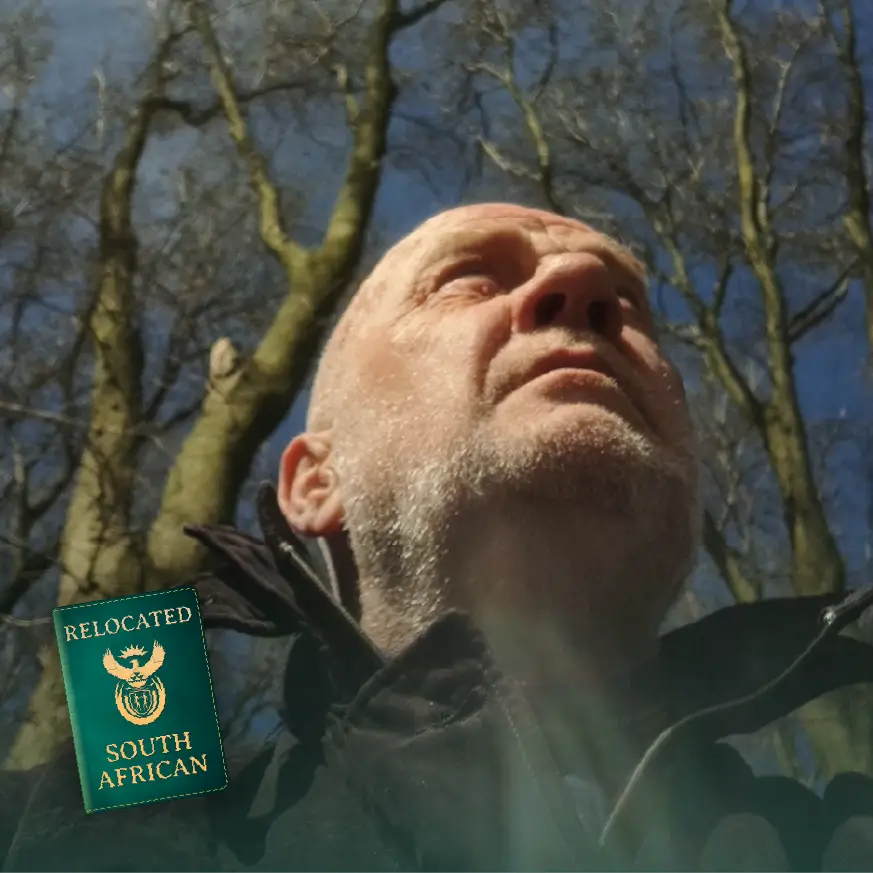
Welcome to The Relocated South African podcast. Today I’m joined by Justin Levitt, an entrepreneur and SEO specialist living in Amsterdam in the Netherlands. Welcome, Justin.
Justin Levitt:
Thank you very much, Jan. Happy to be here and looking forward to chatting.
Jan Hugo:
Happy to have you, and it’s nice to have another guest from Amsterdam. So Justin, where did you grow up, study, and how did you get to live in Amsterdam?
Justin Levitt:
Long story, I’m sure you get that all the time. I was born and lived until I was seven in a town called Welkom, in the Goldfields.
Jan Hugo:
Is it true that it’s the only town that, I don’t know if by now it has robots, but in the old days it never had a traffic light?
Justin Levitt:
Yeah, I think a few years after we left, when did we leave, 1999, 2000, around then the first robot was built. So it’s not a rumour, it’s true. It’s the town of circles. My dad always used to say in the car when we moved to Cape Town afterwards: no one knows how to use a bloody circle in this country, only the people from Welkom know how.
Jan Hugo:
That’s true, and I still think, well, I think the Portuguese are the same, they’re not so good around the traffic circles.
Justin Levitt:
Now we’ve got to do it on the other side of the road, which is a whole other situation. I basically lived the rest of my time in Cape Town: I went to school in Cape Town, went to university in Cape Town. I was in a bunch of bands, musical things were most of my life then. And then in around 2019, with my ex-girlfriend at the time, she got a job offer to move to the Netherlands. I was working for myself at the time, so I thought, why not? I was doing my work in SEO, and the Netherlands is known for being one of the most involved countries when it comes to SEO, and really tech driven as well. So I thought, I’ve got nothing to lose. Then I moved over, and literally two weeks after I arrived, COVID happened. Super unlucky timing.
Jan Hugo:
Wow, okay.
Justin Levitt:
I didn’t go straight to Amsterdam, I lived in a few different cities actually: Utrecht, and then went all the way up north of the country to an area called Friesland. Then I moved down to Rotterdam and eventually to Amsterdam. I had a couple of different jobs here, and I guess that was part of the struggle and part of my journey here as well, finding sponsorship for work and just trying to solidify myself in this country. So it was a bit of a battle, but now, six years down the line, I’ve been living in Amsterdam for the last three years, I think. Pretty happy, but it’s been a journey.
Jan Hugo:
Well, we’re looking forward to getting into that, a couple of questions. You just glossed over the band story, I’m very interested in that. You’re a guitarist, is that right?
Justin Levitt:
Yeah, correct, I’m a guitarist, electric primarily, but also acoustic. Music was just a big part of my life when I was growing up. I had to convince my parents to buy me my first guitar because they weren’t really sure if I had the musical ability, and after convincing them, on the first day they realised they’d made the right decision, because I picked it up quite naturally. It just sort of progressed. During high school, I met some buddies down the road who were jamming, one of them had a Wendy house, one of those old wooden garden sheds, and we took all the stuff out of there and put our band equipment in, and that became our little HQ for jamming when we were teens. From there it just spiralled. I finished school, went to Varsity College in Cape Town. At that time I got in touch with a solo artist, she’s gone by a few names now, but at the time she was called Taylor, now she’s called Anna Wolf, I think, she lives in London now. I joined her, started playing acoustic guitar with her. She got signed to quite a big label in South Africa, and then it just skyrocketed from there really. I got to travel the whole of South Africa regularly, playing all the different festivals: Oppikoppi, Rocking the Daisies, all of those things. It was just an incredible time. I was playing acoustic guitar in a sort of duo setup, and I always had the dream of being in a kind of rock band, playing electric guitar and stuff. So I found a bunch of guys in Cape Town, and that band was called Red Tape Riot. Some people might know it, some people might not, we certainly weren’t at the level of guys like the Parlotones and Prime Circle and whatnot, but we also toured a fair amount, we even went to the UK for a bit. Even to this day, they still play one of our songs on Algoa FM: some people still record snippets and send them through to me, which is quite heartwarming to hear.
Jan Hugo:
That’s very cool. And was it ever a possibility of making a career out of music?
Justin Levitt:
It would have been a very tough struggle. There’s a very small percentage, I think, of guys that really do make a living out of it. One thing I’m really glad about is my parents kind of drilled it into my head when they saw me going in the direction of music: my dad always said, and it never leaves my head, study first, and then I don’t care what you do with your life. I took his advice. So I don’t think it would have been possible to make a full-time career out of it. I think if I’d tried, it would have got me in a bad place, because it’s just a real uphill struggle. The type of music I play and like to play is also, there’s a very small percentage of South Africans that come to shows and come to support. So in that regard, it wasn’t really an option for me.
Jan Hugo:
It’s quite interesting. I have this theory about it, having lived in France a little bit, and I love French music, I listen to a lot of French music. Do you think the reason in South Africa why it’s such an uphill struggle for musicians is because of the diversity, so many languages, cultures and so on? Whereas in France, everybody speaks French, there’s 68 million people, so a guy, Claudio Capio, who’s not a well-known artist in the rest of the world, is huge in France, they make a lot of money and they make a career out of it. I always had the impression that South Africa lacked that just because of the diversity in different groups.
Justin Levitt:
I think there’s probably a lot of factors at play. When you think about the Afrikaans sort of music genre, that is very specific, but it’s catering to a certain market. And then you have Amapiano or whatever it’s called, which has more African roots, if you want to call it that. I think if you want to make English sort of rock music, you’ve really narrowed it down to a small percentage of people. But further than that, my experience was it was really the guys that got the platform to do it. If you were on 5FM and played regularly on rotation, or KFM, or Highveld, and you had a song that got pushed there, that could really skyrocket you, it just opens you up to a whole lot of things. I think we kind of missed that. When that era started to die out, let’s say around 2013, 2014, there was also that channel on DSTV called MK, the music channel, and that also gave guys a lot of that platform. I think without that it becomes harder, and it was the early days of social media as well, which we didn’t really tap into.
Jan Hugo:
I’m with you. And Justin, do you still play?
Justin Levitt:
Yeah, every day. I’ve got my guitar that sits next to me at my desk. I will never stop playing, it’s part of me and part of my life. So I have been reluctant, let’s say, to join anything here, because part of me doesn’t…
Jan Hugo:
Awesome, it’s therapeutic.
Justin Levitt:
It’s a snobbish place, but part of me doesn’t want to start from the bottom again and work my way up. But when I go to concerts and stuff, I get that feeling and that bug, and I kind of miss it.
Jan Hugo:
I know. My son’s exactly the same in America, he had a school band. They live in Dallas now, and the fortunate thing is his son is fourteen, plays the violin in the school orchestra, and now he’s started playing guitar and gotten completely bonkers about it. So the two of them play together, it’s great. I wish I could, I can’t even play the radio, so yeah.
Justin Levitt:
It’s all digital nowadays, so I think you should be good.
Jan Hugo:
No, exactly. Justin, just for the listeners, you talked about SEO, I think it means search engine optimisation, is that correct? So basically, in that field, you help people make their web pages more visible, their YouTube or whatever, okay.
Justin Levitt:
Yeah, correct, indeed. I started out helping small businesses in South Africa, and that actually tied into the music thing, because while I was playing music in a band and we were in the UK for a bit, I was thinking, I need to make some extra money on the side, I can’t just rely on this. It got me into the world of SEO. I’ve always been the kind of person who’s been behind a laptop and always has a computer in front of me, so it came naturally to me. I never had the thought that I would ever work for a company, I always wanted to freelance and do my own thing, which is maybe the free-spirited musician still in me. That was a bit challenging to accept while I was here in the Netherlands, working for myself. At some point, if I wanted to stay here, I needed to be sponsored by a company, and that came with its own whole box of challenges.
Jan Hugo:
Well, let’s just talk about your journey in getting to Amsterdam, you said it was tough initially. What were you expecting before you left, and did it meet your expectations in the first period?
Justin Levitt:
Great question. To be honest, I never thought that I was ever going to emigrate. I was always the kind of person who saw other people emigrate and thought, why would you? I know we have our problems in South Africa, but why would you do this? It was never something I thought about. Then I went to the UK with my band, and that was the first time I had the experience of actually living for a while somewhere else other than South Africa, and that set the scene, let’s say, to open my eyes to potentially doing that. Then I came back, and my partner at the time got a job, and really I had no expectations at that point. I just thought, I’ve got nothing to lose at this point, I can take everything with me, let’s go. So I had very little expectations, and I guess the expectations I did have were that the Netherlands was just going to be a Dutch version of the UK, which is not the case.
Justin Levitt:
Not the case at all. So I guess that was the expectation I had about the country. I think also, and maybe some of your guests have said this before, but I had some expectations that everything was going to be better than back in South Africa: better food, better service, and to some extent that is the case. But in other areas it’s not, the service if you go to restaurants here is just shocking compared to what you get in SA.
Jan Hugo:
Really?
Justin Levitt:
Of course, when it comes to governmental things, they’re on another level here. In South Africa you have to deal with Home Affairs and all of that kind of stuff, but here it’s exactly, precisely different.
Justin Levitt:
I know, that’s also something, my level of Afrikaans at school, I went to an English school and come from an English family, and thought, what am I going to need Afrikaans for? Now I regret not paying more attention. That was also something, the Afrikaans doesn’t get you very far here, you think it will, but some words mean very different things than what we’re used to.
Jan Hugo:
We spent very little time there, but my impression was that the Dutch weren’t really open to talking to you if you responded in Afrikaans, they…
Justin Levitt:
No, not at all. Even if I try to speak Dutch, which is also very limited, if they hear just the slightest bit of an accent, they’ll switch to English immediately, thinking they’re doing you a favour and being kind. But then they also don’t really give you much of an opportunity to learn the language, because their level of English is so high.
Justin Levitt:
But interestingly, when you said that just now, something that did shock me was, we learn a lot in South Africa about the Dutch coming to the country and Jan van Riebeeck, and from what I understand, our beloved ANC still talks about it to this day.
Jan Hugo:
He caused it all.
Justin Levitt:
Yeah, he’s the guy. But they don’t really know that much about it, if I say I’m from South Africa, they say, then you must understand some Dutch, and that’s about as far as it really goes, which is a bit shocking to me, to be fair.
Jan Hugo:
No, absolutely, absolutely. And you said you arrived just before COVID, when exactly, which month? Because COVID was about March.
Justin Levitt:
March, yes, I arrived on the 28th of February 2020. I think it was two weeks, maybe two and a half, three weeks, and then it was locked down. We were living in a really small town outside of Utrecht, so it was in the middle of nowhere.
Jan Hugo:
Okay, whoa.
Justin Levitt:
It wasn’t the greatest start to moving overseas, you don’t have the comforts of a big city, even though everything was shut down. Coming from Cape Town, it was a bit of a shock to the system, I suppose. But again, I didn’t really have that many expectations.
Jan Hugo:
I mean, obviously, we know what happened, COVID in South Africa wasn’t fun, they just didn’t, the stupid things they did. But anyway, that’s as it is. In terms of arriving with a partner, getting straight into a lockdown, that must have put huge strain on the relationship.
Justin Levitt:
Yeah, absolutely, it’s hard to say that was the specific cause or catalyst to eventually splitting up, but to say it didn’t have any impact would be incorrect really. I mean, it definitely had an effect, because now you’re every day, twenty-four seven, with this person, and you’re in a new country, and you have no family, you have no friends, so this person becomes your comfort. But then they also become someone that, well, every person needs alone time, every person needs a break of some kind. So it definitely did put some strain on things.
Jan Hugo:
Yeah, I can imagine that, finding your feet, and even just thinking about the red tape, getting stuff done with the government, with lockdowns, was it possible to get around and do stuff like that, or not really?
Justin Levitt:
The level of organisation that they have here within the government is really unbelievable, to be honest. Let’s say you go to Home Affairs and you forget a document, well, you’re absolutely screwed, you have to take another day off work, get that document, come back, wait in the line again, and do the whole thing. But here everything is done online, you book the appointment, you go, and if you don’t have a document, they’ll say, here’s our email address, send it to us when you get it. So I didn’t really have that much of a hard time, I guess. Bureaucracy-wise, let’s say. It was actually quite a long time ago now, I’m trying to get the memories back, even though it doesn’t feel that long.
Jan Hugo:
And obviously, getting settled during that time, I think it’s just so damn difficult when you arrive. Were you able to work on the stuff you were busy with?
Justin Levitt:
Yeah, luckily I was able to work, and both me and my partner at the time were able to work. She obviously moved to the country for a job, but both of our jobs were such that we could work from anywhere really. So I was able to work. But that was another challenge at that point, what I was earning was really decent for a life in Cape Town, but then you move to euros and suddenly it becomes a lot less. So I think that was also another catalyst to get me employed by a company, actually.
Jan Hugo:
And how long did it take you to start feeling settled?
Justin Levitt:
That’s a great question. I’ve lived in quite a few cities in the Netherlands, I think I never really had time to feel settled. It was moving to one area, then moving all the way up north, and then I split with my partner in 2022. Then it was either go back to South Africa or find someone who would sponsor me and employ me here in the Netherlands. I moved all the way down to Rotterdam, had a one year contract, and that was where the tough part of this journey started, because then my existence in the Netherlands was tied to a company sponsoring me. With a one year contract, you kind of feel like, well, is it going to be renewed, is it not? Then the company went bankrupt in that time, so I had to rush and find another company who was able to hire me. I never really had the feeling of settling down until, I’d say, maybe last year, because then I got my permanent residency, and I don’t need to be sponsored anymore. So I think now I’m starting to lay the foundation for a life here, but it was quite an unsettled five years. Really living with uncertainty like that is not fun.
Jan Hugo:
I was going to say, what would you say was the biggest sacrifice, is it that uncertainty, is it missing family?
Justin Levitt:
It’s the uncertainty for sure. I discovered quite quickly after moving here, despite all of the struggles, that I wanted to live here indefinitely. So that became my main focus: okay, what do I need to do to stay here? Anything that kind of rattled or rocked that ship would really stress me out. Just having that uncertainty, and having my existence in a place being at the hands of someone else, that lack of control over my own destiny, I think that was really one of the toughest things.
Jan Hugo:
Yeah, I can just imagine. And I guess until that uncertainty is settled, you can’t really plan, you can’t buy a house because you don’t know if…
Justin Levitt:
Exactly, no, absolutely. One of my friends still laughs at me now because he saw that I didn’t have a couch in my apartment for quite a while. I thought, well, a couch is quite expensive, I don’t know if I’m going to have my contract renewed, so I’ll just live with the bare minimum until I really know. I got one shortly after that, but it was just that mindset of, am I staying here, am I not. You can’t really, like you said, you can’t plan long term, and it’s tough not to be able to at least have a rough idea of where you’re going to go.
Jan Hugo:
Knowing what you know six years down the road, what could you have done differently?
Justin Levitt:
That’s a really good question. What would I have done differently? I’m going to say now, I don’t know if I would have done anything differently, although I know when I’m in the shower or about to fall asleep, I’ll think of it and think, I should have said that. But I don’t think there would have been another way to approach it really. I just had to stick it out, and I think I did the best that I could under those circumstances, let’s say. So I don’t have any regrets about the way in which I did anything.
Jan Hugo:
I think that’s the way to look at it. And I suppose the other side of it is, it was tough, but it was an adventure as well, it’s something you can’t buy with money in a way. We say it’s these experiences that make us what we are, and for me, that’s critical.
Justin Levitt:
Absolutely, yeah, I think you’ve hit the nail on the head there really. It’s a lot of struggling and a lot of uncertainty, but in that time it teaches you a lot about yourself and a lot about the world, and all of these things. So, like you said, you can’t buy that experience with money, you just really can’t.
Jan Hugo:
Absolutely. And just talk to us a little bit about life in Amsterdam, is it all stroopwafels, and what do they eat? Don’t they eat fish as well, what’s it, herring?
Justin Levitt:
Yeah, they have raw herring with onions on it. The food culture here, let me tell you, you go to a supermarket here and the meat section is like one, maybe two metres wide, two metres if you’re lucky, if you go to a big one. In South Africa, you go to any Pick n Pay or whatever it is, and the meat section is a whole section on its own. They don’t know food culture here. But life in Amsterdam is a good life, I must say, things are bloody expensive, they are, the cost of living is expensive everywhere really. But you can take your bicycle everywhere, there’s not a single place where you can’t ride a bike, so that kind of freedom is really great. Public transport works, you have a metro system and all of that. I live a little bit outside of Amsterdam, close to the forest, I have that literally right here, so I’m lucky enough to have nature and the city as well. But I don’t venture too often into the centre of Amsterdam, because it’s really just a tourist destination, so there is life outside of that kind of thing.
Jan Hugo:
And just in friendships, do you have a lot of South African friends, have you made Dutch friends, what’s that been like?
Justin Levitt:
Yeah, I have some South African friends from my time in Rotterdam, and most of the friendships I’ve made have been with colleagues from previous companies, mostly international. I think that’s probably one of the hardest things about living in the Netherlands, while the Dutch are friendly people, they keep their friend groups separated, but they also have the same friends from primary school to high school to university, and if you aren’t a native Dutch speaker, it becomes really difficult to get into that. So you do have some Dutch people who are more international minded and curious about having international friends, but making friends is a very hard thing. Luckily I have some South African friends, we get to go watch rugby and have a couple of beers every now and again, maybe a braai. But I must say, there are a lot of South Africans in Amsterdam and in the Netherlands in general, I feel like it’s growing every single day.
Jan Hugo:
I believe so, I hear from my kids, the CAs and engineers and IT people, they’re just welcomed with open arms. Your opinion, South Africans are hardworking, I think, and they’re loved by their employers, is that your experience as well?
Justin Levitt:
Absolutely, yeah. I see a very clear difference, South Africans are generally more hardworking and just more grateful, in a way, to have the opportunity to be working for whatever company it is, and to be able to live here as well. So I definitely do see that, for sure.
Jan Hugo:
And Justin, working in a company, a corporate environment, how different is that to what you would have had in South Africa?
Justin Levitt:
Completely different. I must say, I don’t have corporate experience in South Africa, my whole plan when I was in my twenties was to work for myself. I did some work here and there for some companies, but I think overall the corporate culture here is quite relaxed. When it’s five o’clock, the Dutch have this mentality of, I’m not paid for a minute after five o’clock, so why should I be here, I’m going to head home. They have a really good work-life balance, and I think South Africa is a bit more like the UK in that we want to really please our employers, and here employers aren’t really used to that. If you show a bit more commitment and drive, they really appreciate that. So it’s tough to compare, but I know for sure the culture within corporations is certainly a bit different.
Jan Hugo:
And obviously it’s a question that comes in every conversation, safety and security, do you feel completely safe, do you never feel threatened?
Justin Levitt:
No, never. I have quite a few funny stories of when we first moved, we had dogs and cats and we would leave the door open, which is not something we’d necessarily do back home, but it was the safest area I could ever imagine, honestly, no crime happened in that area. We had a really grumpy old man ring our bell and say, you left your door open, and we said, yeah. So there’s really no, I don’t walk around the street with my hands in my pockets or anything like that, I kind of forget about that, so I feel completely safe. Europeans don’t really know what overt crime is, everything is kind of hidden and underground, of course you might see a drug dealer here or there, but when I’m talking about hijacking or breaking into your house, for example, that kind of stuff just doesn’t really happen.
Jan Hugo:
Yeah, and even if it hasn’t happened to you, it’s my sense, in six years I’ve never once felt threatened in any way, other than a bad driver making me nervous on my bike. Other than that, you never feel physically threatened, I don’t know, maybe it’s just the European, obviously coming from South Africa we have a different perspective on it.
Justin Levitt:
Yeah.
Jan Hugo:
We still talk about it every day, when I see a lady on a bike on her own, or a woman running on her own, it’s still strange for us. But I think that’s part of the benefit of living here, living in Europe, so it’s amazing.
Justin Levitt:
No, absolutely.
Jan Hugo:
And a question, you’re a relatively young guy, do you think the six years living in Holland has changed you professionally and personally?
Justin Levitt:
Yeah, absolutely, it’s given me opportunities and a view of the world that I don’t think I would have ever gotten if I’d stayed in South Africa. It’s more about the opportunities, once you can settle here, the world becomes your oyster, honestly, and I see more possibilities for a future here. Sadly, I’ll say, but it’s definitely changed me. One thing it hasn’t done is change my proudly South African side, that will never die. I think I annoy some people because I’ll hear an accent, and it sticks out a lot more the longer you’ve been away, so when I hear it, or I see someone wearing a K-WAY jacket, I’ll go up to them and start speaking to them, and sometimes they appreciate it and other times they don’t. I just have that, as a South African, deep connection to our country, and even though I want to live here and have a future here, I don’t think that’s ever going to change.
Jan Hugo:
Yeah, I think we’re all the same, I get quite annoyed when people slag off South Africa when they live abroad, I think that’s wrong, because it’s still a country, people may have pushed you off, but ultimately it’s about the country that’s there and gave you what you have today. You talked about what living here does for you, but in terms of culture and seeing different cultures, you’re close to Belgium and France and all the other places, have you been able to travel around a bit?
Justin Levitt:
I have, yeah, I’ll be honest, I don’t have that travel bug, some people really get antsy and want to go for a weekend to Spain or wherever. I’m still curious, I want to see those places, but I don’t, maybe it’s just been the situation of the uncertainty over the time. I’m not sure what it is, but I don’t really have that kind of urge, every time I think of going somewhere, I think I’d rather save this money and go see my family in SA. Some people would be horrified to hear me say that, because they’re like, you’re in the centre of Europe, you have everything around you, but I’ve been to Italy, I’ve been to Germany, I’ve been to Belgium, I’ve been to France, and I haven’t been to Portugal yet.
Jan Hugo:
It was good, like where we are, like Cape Town. But again, it’s a personal choice, the more I deal with this podcast, the more I say, I can’t judge anybody for the decisions that they make, please don’t judge me. But I think it’s a personal thing, so for me, I think you’re doing the right thing. I’m getting towards the end, two questions. The one is, who would you say, a youngster in their twenties, is Holland good for? Would it typically be someone professional, what does Holland suit from a personal perspective, do you think?
Justin Levitt:
I definitely think it suits a more professional kind of person. If you want to come here for music or the creative things, I think it’s still possible, but you’ll have a hard time getting a head start. This kind of place is suited for, like you mentioned, the CAs and IT professionals and whatnot, someone who’s willing to work hard, and once you have that safety net of a really good job, you can really make a good life for yourself. So if you have some sort of drive to be a professional of any kind, even if it’s a plumber for that matter, they’re really short on those kinds of jobs too, not just office jobs. Someone who’s entrepreneurial minded and willing to put in the effort, I think that’s the kind of person. And it’s of any race and any skin colour, that’s not the thing really, because I think that’s also something that struck me, everywhere has some kind of racism, but when I went back to South Africa a couple of times, it strikes you a bit more than when you’re living there, you’re kind of desensitised to it. And then when you have Dutch people or Europeans who tell me about their trips to South Africa, they say, we go to restaurants and all the people eating are white, but all the people serving and in the kitchen aren’t.
Justin Levitt:
If you want to get away from that kind of stereotype, I think that’s also quite a good place to come to.
Jan Hugo:
Awesome. And if you had to advise a young guy or young girl who’s just finished varsity, what would you say, take a chance and go, or rather stay in South Africa?
Justin Levitt:
I would say get some experience first in South Africa, see what it’s like, then you have something to compare it to. And after a couple of years’ experience in SA, I’d say take a chance, you have nothing to lose. Sure, you might have some financial things, but, like we discussed just now, it’s kind of one of those things where it will teach you so much about who you are and what you want from life. It will teach you if you really want to go back to South Africa, or if you want to stay abroad. So the experience part is maybe not mandatory, but take a chance and see, because I used to judge people, I guess, for immigrating, and say, how could you do that, we should rather build South Africa up instead of moving elsewhere. But that’s changed dramatically.
Jan Hugo:
Okay, so you don’t see yourself going back.
Justin Levitt:
I don’t, unfortunately, I just don’t see it moving in the direction where everyone can have a really good life. The things like safety, and the things that really used to get me down, were the amount of times you just go out and people are begging. I carried that burden quite a lot, and I didn’t realise how much until I got here. So unfortunately, I don’t see it, but you never know where the world will take you.
Jan Hugo:
Absolutely. But last question, what do you miss most about South Africa?
Justin Levitt:
Oh, my family for sure, I think that’s the hardest thing. And listening to a few of the chats you’ve had with some of the guests on your podcast, I think that seems to be the big thing. Besides that, I miss braai, one of the world’s greatest pleasures that I don’t get to experience as often as I did. But crazy times. I don’t know why I have the urge to just tell you one of my best experiences in Europe, which was 2023, I went with a few of my mates two days before the semi-final of the World Cup.
Jan Hugo:
That was some, please do.
Justin Levitt:
We took a drive down to France, we got tickets to the semi-final, and that was one of the greatest experiences of my life, one of the best nights I’ve ever had, because firstly, to be in Paris and have all these South Africans around you was a feeling I just can’t describe. Then, winning the game, sitting amongst, of course there were some British supporters around us giving us a bit of a go as well, there were some South Africans in our area we’d never met before, probably will never meet them again, but in that moment when we won, you just have this moment together. Afterwards, outside the stadium, everyone stays, and it wasn’t the final, but it felt like it. That was just one of the greatest experiences.
Jan Hugo:
There’s a bunch there, unbelievable, what a night to finish on. I don’t know if you’ve listened to the Winning the Away Game podcast with Justinas and Flip van der Merwe, my word, they talk to rugby players and businessmen in South Africa, and those guys are rugby mad, so worth a listen?
Justin Levitt:
No, I haven’t, I’ll take a listen, now we will do.
Jan Hugo:
Thank you so much, Justin, wow, what a lekker chat, I really, really enjoyed that. Thank you for being open and sharing, and I’m going to look for your songs on Spotify. Well done, and thank you very much, and good luck in the Netherlands.
Justin Levitt:
Great, thanks so much. I will let you know for sure when I come to Portugal, and maybe we can have a braai or something like that. Thanks a lot, Jan, appreciate it.
Jan Hugo:
Absolutely, we braai a lot. Thanks, Justin. And to our listeners, if the episode resonated with you, please consider sharing it with someone who might enjoy the conversation. You can find more episodes of The Relocated South African on your favourite podcast platform or visit our website, therelocatedsouthafrican.com. Thank you for listening, and see you next time.
This transcript was generated with the assistance of AI and checked for accuracy.