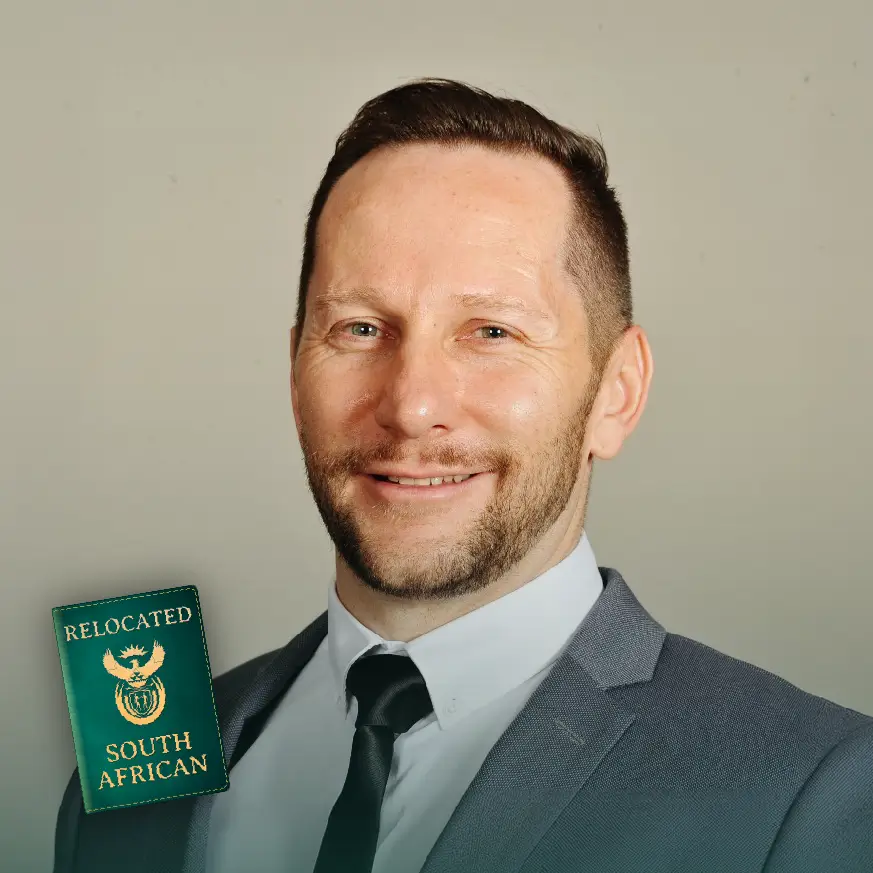
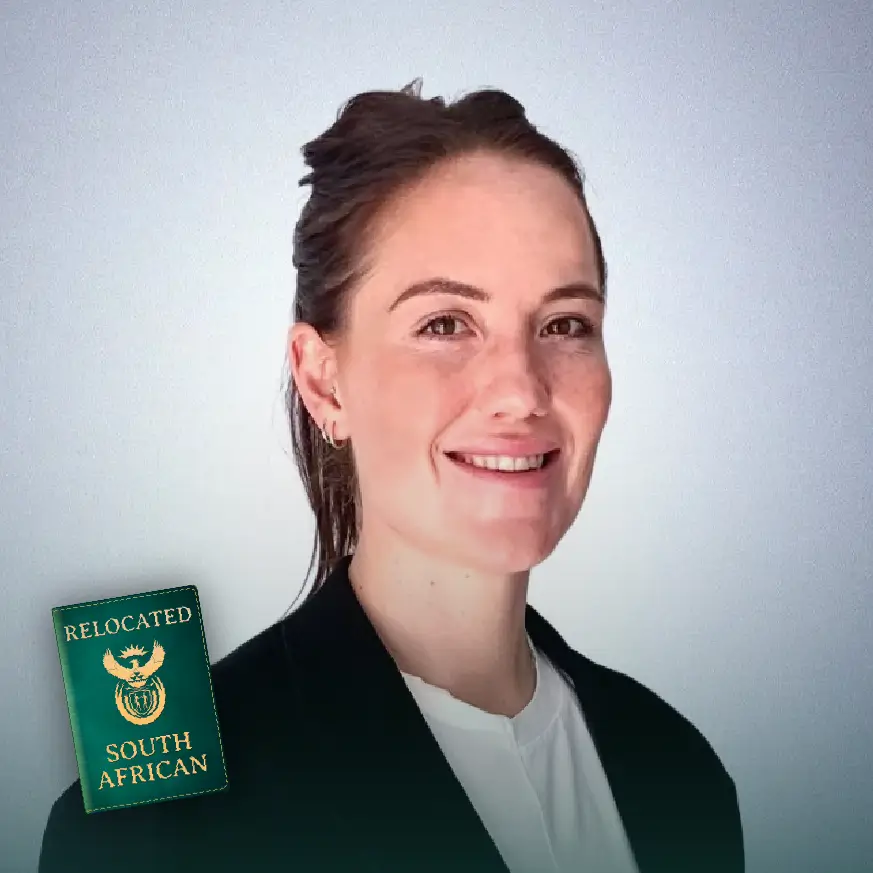
Jan Hugo: Welcome to the Relocated South African, the show for navigating immigration from South Africa for a better future. I’m your host, Jan Hugo, from Lagos in Portugal. Just note, we’ve recently launched our brand new website, www.therelocatedsouthafrican.com. If you want to interact with us or comment on our discussions or even participate in an interview, please contact me on jan@therelocatedsouthafrican.com or the new email address Jan at the relocatedsouthafrican.com. Also, if you like our content, why not subscribe on your favourite platform? So today I welcome from Otago in New Zealand, Kobus Du Plooy, should I say Dr. Kobus Du Plooy. I will let Kobus tell us more about himself, but he’s a clinical psychologist and works at the University of Otago.
Kobus Du Plooy: Welcome Kobus. Thanks Jan, it’s great to be here. I really appreciate you being here today and I know it’s an awkward time to do the interview before the kids wake up. But the most important question, Saturday, are you still a Bok supporter?
Jan Hugo: Of course. Yes, that will never change. Yeah, I have a lot of respect for New Zealand, but yeah, now I’m still a Bok supporter. Okay, I think we’re in for a bit of a hard job, but I’m sure the Russi and the guys can do it. Anyway, maybe just to start off with, if you can just give us a short background where you’re from, where you studied and your career to date and family, etc.
Kobus Du Plooy: Sure, yeah. So I was born and raised in Pretoria, grew up there. And after finishing high school, joined the military with the aim of studying through the military. So I applied during my year at Army Gymnasium to study at the military academy, which is a satellite campus of Stellenbosch University. So that’s based in Saldanha.
Jan Hugo: OK, so you get that BMil degree? Yes, that’s correct. Yeah. OK. I’m glad you know about it. There’s a lot of people who don’t know about it. I have a cousin who’s a doctor who did that as well.
Kobus Du Plooy: Okay, wonderful. Yeah, so I went through that course and then after that returned to Pretoria to continue with my work there and because you have to work back for the time that you studied and I continued my studies after hours in psychology. through the University of Pretoria. And then at one stage I resigned, I worked in a private company, security firm, and then I got accepted into the master’s program at what was then called Medunsa, what today I think is Sefako Machato Health Sciences University. So it’s just outside of Pretoria. Yeah, yeah, I remember old Medunsa, yeah. Yeah, so just out of that way. So yeah, I started master’s there, went into practice after that. And for a few years at the hospital, it was called Arwa Medical Center. It’s actually very close to the airport at Oatombo Airport, the Kempton Park. I worked there and then continued with my studies part-time to Northwest University and then I was I’ve started working at University of Pretoria so I started working for them as first in the student counselling division and then started to lecture but at the psychology department and then from there I got a position at Northwest University that was at the end of 2014 and I worked there until we made the move my wife and I here to New Zealand in early 2020. So that’s it a brief just over the in terms of studies, but from a family point of view, my wife and I actually met when we sat next to each other on a flight. So yeah, between Durban and Johannesburg. And our paths, then after that, we exchanged details and there was some interest, but then, yeah, she was then in Potchefstroom and I was in Pretoria. So we both assumed that was the end of that, but when I moved to Potchefstroom, our paths crossed again.
Jan Hugo: Oh wow, that sounds like a beautiful story here.
Kobus Du Plooy: And then in 2017, we got married. She’s also a psychologist. We decided we wanted to make a move before we started our own family. But prior to that, I was married and also had a son from a previous marriage.
Jan Hugo: Oh wow, okay. And when you came across, was it with a job opportunity for yourself and your wife or yourself or your wife?
Kobus Du Plooy: Yeah so we started talking about making a move around 2019 and we initially explored an opportunity that I looked at in Dubai but we wanted to settle because we wanted to find a place where we can start raising a family and most people they sort of transition almost a sort of period that they spend in the UAE. Not all but a lot of people I know go there for a while and then move somewhere else. And we said, okay, let’s look further. And then her former manager had moved to New Zealand. He’s in Auckland, my wife’s former manager. And he actually advised us to look at that in more depth. And we started talking to a few recruiters and I started looking online for positions here. And I was fortunate enough to find something at the University of Otago. And I applied and we did all the interviews, everything via Zoom. And they offered me a role, which was the other one in which we applied for all the visas. And once that was in place, then my wife started looking for her role. And yeah, it sort of was like a domino effect, you could say, from the day.
Jan Hugo: Oh, wow, that is amazing. And you said early 2020, was it just before or was COVID already happening?
Kobus Du Plooy: Literally just before, so when we booked our flights to come over, COVID wasn’t even I would say on the radar yet. It was sort of about a month or two before our flights we started hearing okay this is more serious than what a lot of people thought and then when I flew in in February because I had to start work but earlier and my wife still had to attend a wedding of one of her best friends. So she actually scheduled her flight three weeks later. And her flight was one of the last two or three flights that was allowed into New Zealand before they shut the borders. That’s literally how glassy it was. So it was purely coincidental. It was not by design. It was purely by chance that it worked out that way. So we had literally arrived and went into lockdown.
Jan Hugo: That’s amazing because I mean, my daughter, same story, I took her to Ireland in January. And she got a job. When she came back to South Africa to pack, they said, well, you can stay until after COVID. And she said, no, I want to be there. So she worked from her apartment in Ireland, but, and they’re still there. But I mean, and we, on the other hand, we left on one October, 2020 on the first non-repatriation flight out of South Africa. So we could go straight to the airport and not crazy, crazy, crazy. Yeah. bizarre. So I think you mentioned when we talked before your wife works for the prison service in New Zealand.
Kobus Du Plooy: Yes, the Department of Corrections. So she’s very happy there. That was the first role she got when she arrived here. And she’s been doing that over the last, of course, the last five years or so. And she’s actually on training this week. No, she loves it. She’s got a very good team and she just enjoys the role a lot.
Jan Hugo: I was just quickly looking at when that article appeared about the South African woman who kill the children. It’s amazing. It was 23, it looks like. I mean, it feels like it was a long time ago. And maybe we’ll get to that about the trauma of moving. I don’t know if that had something to do, but we’ll chat to that. Very interesting. I also read last week that there’s 95,000 South Africans in New Zealand. That’s quite a big number and apparently some more that are kind of waiting to settle.
Kobus Du Plooy: So the numbers definitely picked up. especially Dunedin because a lot of South Africans almost about a quarter of the country live in Auckland because it’s got the biggest population and most people are there or on the North Island so here on the South Island where we basically fairly South in Dunedin there’s actually when we arrived there were quite a few well let’s say very few people but now there’s quite a few like we can’t just speak up at the store anymore without considering. They’re walking through the aisles and someone walks up to you and says, are you also from South Africa?
Jan Hugo: Yeah, that’s my word. That happens everywhere. But so the South Island, just for people who don’t know, is a lot colder than north.
Kobus Du Plooy: yeah it is a lot colder so it’s a few latitudes if you look at where Cape Town is lower you look at the globe where it is a bit colder so it’s similar weather to Cape Town but just a bit colder so it’s also the winter rainfall seasons are the same because southern hemisphere is South Africa but the winters get pretty cold so we do have at least one or two days where it will snow but it’s also mostly as soon as you drive out it’s a coastal city so as soon as you drive inland and you’re about 100 meters up from you know from sea level then there’s usually some snow over the winter months so yeah it gets pretty cold yeah yeah it’s I guess kind of similar to where we also are very similar weather to Cape Town hot summers and cold winters and cold wet winters so it’s also there’s a lot of wine that’s grown here. vines with wine producers.
Jan Hugo: A question that comes up in every conversation that we have is the whole safety issue. Has that been an issue for you guys in your decision to leave?
Kobus Du Plooy: Yes, I would say it was a big factor, especially when we’re considering for our own family. You know, it’s one thing if it affects you individually, but when you have children, you know, we were very conscious of that and we want to raise them in a space where they can feel comfortable. That makes sense. And I’m not saying there aren’t places like that in South Africa still and I’m not saying that it’s not a good country. It just, we felt that we wanted to bring our kids here where we know there’s that peace of mind. And I personally went through a pretty bad experience in 2011 where I was hijacked. And that was really hard for me personally. Luckily, I had a lot of good support around me and moved past that. So I wouldn’t say when we made the decision that that was front and center in my mind, but it’s definitely always there to consider, to say I don’t want to place my kids in a position where I’ve you know, if they would have been in the car, I think that would have been so much harder. So for me, personally, that was a big factor for my wife as well. And yes, it is. I know it sounds a bit like, you know, to say, but it is really safe here. You know, it is really the door. You can sleep with the door unlocked. And the car, I like this. I can’t tell you how many mornings I’ve opened the door because we’re in a rush and the kids come into the house and especially um and I won’t single my wife out because I’ve done it myself. The key and the key like in that’s still in the door so I open I look for my keys and open the door and it’s hard was there the whole even just it’s one of those situations but it it took me a while to get used to that.
Jan Hugo: I must say we cycle and for us to go out in the country and see a woman on a bike on her own or a woman running out there, it boggles the mind and it’s the same, you never have that sense of being threatened. And the one thing I’ve come to realise in doing these interviews is that You cannot judge anybody because everybody’s circumstances are different. And I’ve spoken to so many people like you who have had traumatic experiences in South Africa. A lady in Spain said to me, we’ve had a house invasion. I can never go back. My daughter doesn’t matter how hard it is. They live in Spain. Doesn’t matter how hard it is. I’m not going back. Finish and fly. And that’s, I guess, and same for me. We had them in the house, fortunately. I know obviously from your work we had a very good trauma counselor in Johannesburg who helped us through the process because I think we would have had a lot of You know, a lot of bad things afterwards. If we didn’t have that, you may have heard of him. His name is Eddie Wolf. He was quite a well-known guy in Stanton, but anyway, he helped us a lot. So yeah, it’s an interesting thing. So if you have to compare life in New Zealand and in South Africa, what would you say is the biggest different?
Kobus Du Plooy: The cost of living here is definitely higher. So you will pay more, especially for food and accommodation. So I think that’s something people should be mindful of if they consider moving here. Because I think sometimes the messages that I’ve heard from South Africans is, I just tell them, just get here. When you get here, you’ll figure it out. But it’s not always that simple. I think people should do their homework, because it is like any country in the world with the impact of the pandemic, inflation, all of that. It’s also hit the economy here. selected in New Zealand isn’t immune to that. So it’s a cost of living is definitely higher, but then obviously wages are higher as well. but especially for a move that initial phase can be pretty tricky. So that was something to get used to. Obviously doing a lot more yourself. This is a place where it’s a call it a country of DIY. You have to roll up your sleeves and do it yourself here. You can get support, but I mean, if you any kind of labor or any kind of external support is really costly. So a lot of people try and do as much as they can themselves. So I’ve learned quite a few new skills, which I enjoy. But yeah, so that’s a big difference, I would say. For us down here in Dunedin, the weather was quite an adjustment. We came from Potchefstroom, so that was quite a shock to the system. But we used to it now, and we really enjoy that. I would say those were some of the biggest changes. But then you’ve already touched on the safety. It’s really safe. I mean, kids walk. like young kids would walk to school and I even now still my wife and I would say we’ll probably find it difficult to allow our kids to do that but people do it, yeah it’s just it’s just a norm and like you spoke about people running or walking, yeah it gets pretty dark early on in winters and it stays pretty dark quite late in the mornings and I can’t tell you how many times I’ve driven home maybe around five or six and then there’s also females jogging on their own No concerns, no issues, or people walking around with their laptops. So that’s a big plus. It’s a really beautiful country. So the countryside and the nature is just incredible. So that’s something that I must say we’ve really enjoyed in this. I mean, the total population is around 5 million. And I think in Dunedin we’re talking around 150,000 people. So very often you go to beaches or so it just feels like there’s more space. It’s not as densely populated. There’s more room, that makes sense. So that’s something we really enjoy. So the quality of living, despite the higher cost of living, the quality of life we feel is better for us. And even though we have, there’s more expenses and it’s more expensive here, I believe our disposable income at the end of the month is still more than what we had in South Africa. So we can still do more. We can still go more, let’s say go away or do other things. So I would say that in a nutshell, if I had to try and give it a bit of a balanced view of life.
Jan Hugo: I think that’s really useful because you know a lot of people I think in the discussions that come up is people try and recreate what they’ve had in South Africa and I think it’s a natural thing to do we have a lot of English experts and they still love even though they live in Portugal they love going to English pubs and I’m saying living here what do you want to do in an English pub you know let’s just think. But I think that’s very important. Everybody talks about the safety, I think, from positive stuff. I think financially, we’re saying, obviously, if you get a good job, you start immediately earning a good salary, but people who don’t have that, it takes time to settle and people, I guess, the advice is be sure that you have some reserves to tide you over. Because the one thing that I’ve also seen in a lot of these discussions is the concept of looking over your shoulder. And maybe you have a better view of that as a psychologist. But if people say, if it doesn’t work, I’m going back, then they will go back. That’s my feeling. Would you agree with that?
Kobus Du Plooy: Yeah, I think it’s natural to maybe have those thoughts as part of the process of making the decision to go. I think people go through that, so, oh, if it doesn’t work out, we can always come back. But once you’ve made the decision, I fully agree with you. That’s about sticking it out because there’s going to be a loss. There’s going to be a process of adjustment. And I think in one of your former podcasts, I would have put it very clearly, like you walk away from everything, you start again, you start from scratch. And that is a massive adjustment. So I’m fully with you there. It’s going to be hard. If people expect it’s going to be just smooth sailing, then they will probably, and they keep that proverbial door open in the back of their minds. I think it’s easy at some point to think, yeah, let’s just pick up and go back. But then that has its own set of implications. So I think it’s a very, very big decision to make. But if you make it, I also say to people, Yeah, close that door and just say we’re going to make it here. We’re going to get through. And the thing about South Africans is we’re resilient. You know, we’ve got far more resilience than I think a lot of people I’ve come across here who haven’t grown up and haven’t gone through everything we see as normal just go through life every day. So I think tap into that and just sort of say, well, this is just a different challenge. But I think that people have the expectation, I’m going to this developed country, there’s a new place, so it’s going to be easy. And then when it’s not, then it’s like, oh, now I miss those things so much that I just want to go back. I think that’s the risk you spot on. Make the decision and close the door mentally.
Jan Hugo: I think you’ve touched on it, but I mean, it’s almost a given the fact that you’ve got to be on the same page as a couple, because, you know, having been through it as well, and we are trauma my wife broke her back and it’s a nightmare when you’re on your own all of a sudden, it’s just you, you know, and you really, really are reliant on each other. And if one of you would say, no, I didn’t really want to come, then you’re going to end up getting divorced, I think. And so for me, that’s a critical thing, especially in the early phases, people underestimate how lonely it can be. Was that your experience over there as well?
Kobus Du Plooy: Definitely, I think because we had a bit of a bizarre situation with going into lockdown. So it was the two of us basically sitting in this space. We were one of the people who made the decision to bring our stuff over with a container, which is something I’ll still talk about. But we were waiting for that. So you don’t want to buy new stuff because everything’s coming. And we had interesting nights where we had to sleep on air mattresses in the place that we were renting because we didn’t have furniture. And then the air mattress got a puncture. We woke up in the morning and we lied on the carpet. But luckily we didn’t have to be like early somewhere the next day or whatever. But anyway, so yeah, that was quite lonely at first. But in a strange way, it gave us a bit of time, I would say, just to settle. But once we started to engage with people, I must say, that’s when I really missed friendships and family especially. And they organized a SOKI. They organized this one year. And my wife and I was like, should we go there? And I said, well, we need to stop. It’s not just going to happen spontaneously. People aren’t going to come knocking on our door and say, hey, are you New South Africans living here? And we’ll reach out to you. I said to her, let’s go. And if you knew me better, you’d know that it’s not the type of thing I just normally would do. But I just said to my wife, let’s do this. Let’s go. And I remember we were just about to walk in and she was like, no, let’s come back. This is too strange. I said, no, we’re going through this. And with the first table, we sat down and we started to introduce ourselves. We still friends with everyone that was there. Isn’t that amazing? So you have to make an effort. It’s not just going to happen. But yeah, we were lonely and we just decided, let’s make a plan. Let’s reach out and build those connections and build those relationships.
Jan Hugo: I must say that is so critical is that you’ve got to be out there. I cannot agree with you more. And I’ve often said, you’re not always going to like everybody that you meet simply because they’re also expats. But you can sift through them and find people who share your values and that you can be friends with them. I totally endorse that. And you made a very, very important point. Get out there, go put yourself out there, even though it’s not what how you are. I’m also very, I’m very scared. So this is already doing this podcast already tough for me. But, but honestly, you’ve, you’ve really got to, got to get out there. And obviously with so many South Africans, there’s lots of support groups and that kind of thing.
Kobus Du Plooy: Yes, and online, they’ve got a lot of that. So if you go on Facebook and so forth, there’s a lot of places there. And then, but also I also want to encourage people to reach out and get to know people outside of South African circles as well. Because I think we also tend to find a lot of South Africans just want to sort of stick to that. And it’s natural because it’s the comfort of the known. It’s familiar. You know, we can stand around the braais, pick off the cards, and it’s lovely. You know, it is, it is great. And I’m never, not endorse that, but I just think it’s also part of a process to make that shift that about living in a new country. So let’s get to know the people as well. And we’ve made an effort, especially with our kids, with being at kindergarten with some of their parents. And we started to organize play dates and gotten to know people here. Yes, there’s cultural differences, but ultimately there’s, you know, making an effort and working harder to sort of get to know them. You see, there’s more similarities than there are differences. So it’s all about trying to make that effort to get to know people outside of just the South African circles, but that’s a good place to start I would say. That familiarity, that sense of safety and comfort that creates is I think a good spot to begin with.
Jan Hugo: Yeah that’s so true and you’re fortunate that you’ve got kids who go to kindergarten and you’re able to meet with other people so I think that’s great but I guess the big issue is get out there and just like you know the night logo just do it you’ve got to just do it.
Kobus Du Plooy: If it’s outside of your comfort zone you know very often we fear the unknown but when you get there you see it’s not as nearly as scary or threatening as you thought it would be. What’s the worst that can happen? It’s a bit uncomfortable where you don’t like someone and then you move on. It’s not gonna kill you. It’s gonna be a bit uncomfortable for a while. That’s it.
Jan Hugo: You mentioned fear. I wrote it down the other day because I heard it on a golf podcast of all things. But the guy said, you know what fear stands for? I don’t know if you’ve seen it before, but it says false evidence appearing real. And that is absolutely. Absolutely. I love that. And Kobus family wise in South Africa is still a lot of family.
Kobus Du Plooy: Yeah, yeah. So my, my parents live in Pretoria. They live in a, they retired. So they live in a, in a, is there a curriculum nowadays? So their lifestyle is state. So they lived there and my brother, I’ve got an older brother who lives there as well. He’s also in Pretoria. So it’s not too far from them. And then on my wife’s side, her mom lives in a man’s entirety with her sister and three kids.
Jan Hugo: No way, they will know my brother is a doctor and a man’s in 30, can you believe it?
Kobus Du Plooy: Well, my wife’s dad is in Johannesburg. So yeah, we still have family there and also a lot of good friends that are still spread throughout the country, Cape Town, Pretoria, everywhere else. So yeah, we still have quite a lot of connections with them. And every Sunday is video call night. It’s like a standard event where we make the calls and it’s also especially for my parents connecting with our kids because we visited South Africa the first time in December.
Jan Hugo: Okay, so I was going to ask you have been back.
Kobus Du Plooy: Yeah, so we had our first visit in December and it was really special to see how they connected with our kids. We’re basically growing up as Kiwis, right? So they know they are from South Africa and they, like my son would often talk about, I’ve been to South Africa and I saw a real lion and that kind of thing. But they pretty much grow up here as Kiwi kids. But we want to make sure that they have that connection and that knowledge that this is grandmother, this grandfather, this is my my cousins. So we make sure that every Sunday we talk on the phone.
Jan Hugo: So we make sure that every Sunday we talk on the phone. That’s very good to have that routine. I’ve spoken about this so many times. I don’t know if you’ve had chance to listen to my podcast last Monday when I talked about my sense of grief for families that are destroyed, you know, my kids live all over the world. It breaks my heart and we’ve just been to Ireland and, you know, even though we see our little grandson almost every day on video and he chats to us, but he gets bored and then he moves on. It’s just so different to be there, to put him to bed, to help him to have a bath. And, you know, I think people underestimate the impact of that. But we’re doing it, our kids did it for them. And we are fortunate that we are relatively close. We can fly to Dublin in three hours, and we close my sons in America. But I get really the mooring when I think about it, that we kind of forced into this. And I had a woman today comment on my podcast on Facebook who said, oh, it’s all apartheid’s fault. And I just thought, oh my word. In fact, I challenged her to. to a debate I don’t think she’ll respond but I did challenge her I said come let’s chat about it but there was one where I spoke to a psychologist in the Netherlands a lady earned about a few weeks ago but she’s a South African psychologist who’s practicing in Holland but anyway just about the trauma of of moving and again people underestimate the impact the psychological impact on marriages on you guys are fortunate both of you are working and you know very often you find that a husband has a career and the wife sits at home and it causes a huge amount of stress because as you say you miss family you miss friends and so and then when something goes wrong and you know you don’t have that family support so yeah it’s
Kobus Du Plooy: That’s something actually made up with a person I studied with way back at the academy and he lives in Christchurch and we had the same he also said when we just this is why it’s so great to have this discussion on a podcast because hopefully it will be of value for others because we have these discussions informally. in cafes and standing around a bar or whatever, but it’s actually really useful I think for others to hear it. But he also said it’s not for sissies and the story is so similar. But you touched on something there as well that had me thinking around people’s process of actually that sense of that anger and almost a sense of resentment for feeling forced almost into a situation where our families are torn apart like this. and it is really painful and difficult and I think that’s a sad thing when I speak to a lot of South Africans here they said had these circumstances been different they wouldn’t have wanted to make this move and I think that is what is also difficult for us as well and for most people it’s not like we just wanted to up and go but I think it comes back to those push and pull factors right the push factors just it felt like at some point you just you can take it to a point and then it’s like well you have to stop thinking what what are my options here and then I don’t want to talk about politics but I think South Africa’s basically over the last few years politically it’s been really unstable and it’s not been yeah it’s just been a really difficult place I think especially if you’re in a minority group it makes it really hard for you.
Jan Hugo: And it’s not safe. The safety aspect is massive. But I’m very much of the opinion that you cannot judge because everybody lives his life to the best of his ability. People get affected by so many different things. But there’s a lot of people that I think that are judging on the one hand, saying, this or that. And then it’s also fueled by mainstream media that’s under the influence of the politicians. But then there’s also people that use the bad news to justify their decision. And it comes back to, I want to ask you, if you have to advise somebody, I’m probably one of them, we are the mooting, but how do you deal with that Anger, what would you say to somebody? Because you talked about push and pull. Good job, easy pull. But when you have had issues and you pushed, so how does one cope with that kind of anger?
Kobus Du Plooy: It’s a really unique process, I think that for me, having gone through it personally now, also looking at it more in a professional lens. So it’s first and foremost, it starts with acknowledging that it’s okay to be angry or pissed off about the situation. Because I sometimes get a sense that some people feel You know, I made this decision, so now I can’t feel that way, you know, I have to, and then you can’t, your emotions are just, they’re just feelings, you just acknowledge it, it’s okay, it’s okay to be the mood and to express it, because once you name it and you acknowledge it, then you can start, I think, to to move beyond that and sort of reflecting on, but where does the anger sit for me? I think for a lot of us, you touched on the sense that our families are divided. I felt that same feeling well up in me when we were walking to check in for our flights at Oatombo to come back. And my parents came to see us off at the airport and my son had really connected with my dad over that month. and my dad was standing there putting his hand on the glass and my little son put his hand on the glass and you can just imagine that scene and I was for a moment there that anger really welled up on me again and thinking why you know this is so unnecessary, things could have been so different but I think it’s understanding that it’s that fallacy of fairness, life is not always going to be fair. and we can only influence the certain things that we can. So it’s about, I think, putting it in perspective and reframing it and going back to why did we make this decision in the first instance. It is for our kids and even our parents support us for that. They say it’s painful as it is for us not to see you every day. We are happy with the knowledge that you are in a space where you can give your kids that opportunity. And they still will remain in contact with us as far as they can, but they actually support us as well. So I think reminding ourselves of that. But also, I think it’s ultimately about also coming to a point where forgiveness might not be, you can’t forgive a whole country, but I think it’s about forgiving people or instances or situations where you felt you were wronged. Because if you don’t, if you hold on to that, it actually becomes more stressful for you. Because the other party often is unaware of it. So you, the person sitting with the effect. But to do that is not a simple process. But it starts with choosing to say, I want to do that. I want peace for me. I want peace internally. There’s a colleague of mine who’s also South African who lives in Auckland. The other day, I had a conversation about that as well. And she also said, she took a lot of time to come to peace. with everything that happened and for her to have to come here but you you acknowledge it you sort of speak about it I think try not to keep it personally just for yourself but also instead of just expressing it so how do I move forward from here let me forgive the people that I feel are specifically still in my mind or upsetting me and let’s focus on the positives and the reasons why we made this decision. But even if you do all that, Jan, it’s not easy. I’m not going to sit here and say, hey, just do this and you’ll be fine. It’s a journey and a process. But I think it is something worth investing in. And I think it’s something people don’t often talk about around these moves, because it’s almost like you’ve made this decision, now you almost have to vindicate it. You must almost show to everyone, hey, it’s great and I’m making, but people then almost are like, they can’t really talk about this. But a lot of people live with that sense of you know anger and disappointment for the way things turn out that they feel they had to move and then get judged for it as well that you see the judgment is a big factor and I think let’s let’s take everything I mean one of my best friends pretty much told me when we went over and visited he was angry with me and I felt that effect of like he’s literally distanced himself from me which is a big loss for me personally because it’s a really close friend but you know ultimately we all have to make decisions that we feel are the best interests of ourselves and our families especially and I mean if it’s really a friend if it’s someone who really care about let’s acknowledge that let’s let’s not judge each other let’s support each other that’s what I would suggest.
Jan Hugo: And I think, you know, you can’t replace friendships, you can’t replace a good friendship, but you can make new ones. And that’s what you’ve got to, you just got to work on. But just on this family thing, my brother’s daughter, lives in on the Gold Coast in Australia and they’re extremely happy there and him and his wife are very supportive of them having moved but also knowing she made a very valid point she said you know it’s really hard for us for the children not to see their grandparents on a regular basis. But you know what? I’m going to see my grandkids every day because they’ll be living in the same country that I am. And that’s it. Somebody had to make that sacrifice.
Kobus Du Plooy: Exactly. And it’s like I always see that I like to use metaphors. It’s like an icebreaker. You literally go through that so that you make life for them following you. You give them better opportunities. You make this big decision. And yes, it’s a big one, but you create a pathway. and you quite right over time that settles and I mean if I just think my my son is going to study in engineering next year at Canterbury University and if I think about the opportunity that he’s had coming here he came here made way through COVID to join us and you know the changes that I’ve seen in him since he’s been here and he’s just had less pressure because the school system in South Africa is extremely stressful and competitive and he came here and I could literally see just over time he sort of started to find his feet and he sorted himself out and he’s working this year and putting some money away next he’s going to study and then if I look at those situations and my wife and I we talk about we say we’re grateful and we’re thankful and you know what as hard as it is and we’re not going to tell people it’s all just lovely it is hard but it’s worth it for us it’s worth it for us it’s about what is it that matters to you our kids are front and center, the most important things for us in our lives, our priority, and we want to make sure that we give them the best opportunity we can. And like you said, at the time, that will pay dividends again because then they will have their families and we will see our grandkids every day and so forth.
And something we asked our parents to do recently that people can also consider, especially if they’re worried about that connections that they lose, we asked them to share personal stories and what are their values and what are the things they want to share. And we’re going to document that and keep that somewhere so that when our kids grow older, then we’re going to share that with them. So this is what your grandparents wrote about what they want to convey to you. So it almost keeps other forms of capture elements of who they are so that when our kids grow older and they ask us about grandfather and grandmother. So this is some of the things that they also wanted to share with you, even if they might not be here now. So those are things that we can all think about to do to hopefully make it a bit more manageable.
Jan Hugo: I heard this weekend there’s these little animals, you know, my little grandson’s almost three that turn around and they play a sound or play music when they go to sleep. So I didn’t know that we can read them a story and load it on that app on that little man. So that’s what we’re going to do now is to read nursery stories so he can hear our voice. And just those little things that you have to do to make it work. And it’s not, obviously you’ve answered the question, you’re never not going to go back. You’re not looking at going back.
Kobus Du Plooy: No, we’ve settled here now. We will be Kiwis. Hopefully at the end of next year, our citizenship will come through. But I’ll still wear a Springbok jersey. And it’s so interesting, my little boy. He loves his Springbok jersey. I very often tell me he calls it his Springbok. He’ll say, where’s my Springbok? He wants to wear it. So I’m saying, you know, we’re going to go have a variety of things to watch the game there. And then I’m sure they’re weird again. So there’s, I want to say to people as well, there’s a part of you that you’ll always be, a part of you always be South African, that will never change. Even if you are similar, even if you adjust, bring what are the, I want to say the strengths and the beauty and the good from that and look after that and nurture it because it’s so easy to focus on the bad stuff. Yes, it’s there. Acknowledge it. But let’s focus on the positives. We teach our kids values and manners and things that I’ve found sometimes here is not so common. And people notice that. Like, could I notice that my son, his teachers all comment on how well-mannered he is? And he would just say, well, I’m just a normal kid. But it’s actually, we take these things for granted that we do in South Africa. That’s not so common everywhere in the world. and people do appreciate it. So I think bring focus on those things and don’t just look at the say the negatives because it’s easy to get stuck in that. It’s so easy to get into a loop.
Jan Hugo: I mean, I can talk to you all night on my side all day in your side. But just a couple of quick questions. I always wonder about the food. I know New Zealand lamb is very, very good. Is that right?
Kobus Du Plooy: That’s true, so they’ve got really lovely, that’s actually less expensive here than beef, so it’s easier to get some nice lamb chops sometimes is actually pretty good. They’ve also got here in the target big wine country as well so lovely wineries. So very good wine. And they love to make pies here. Because it’s a strong English influence. Because it was a British colony as well, similar to Australia. So a strong English culture here as well. So they love their beers and they love their pub foods and their pies and that sort of thing.
Jan Hugo: OK, so it’s kind of similar food. A trick question. If you could tomorrow ship something from South Africa, what would it be?
Kobus Du Plooy: I might find this amusing because I love future life. I get proper breakfast cereals here and I get so fed up with wheat pigs and I know it’s good for me and I eat it but I get to a point where I love that, right? And I love our South African wines. That’s something I forgot to mention. We brought our container over and I sold most of the stuff. I won’t go into that too much. That was a mistake. But something that we did do that I did take good advice on is I bought of South African wine and stuck it in there as well. So luckily we had wine from South Africa for quite a while. So if you are going to bring a container, buy some wine as well. But yeah, the South African wines is just, it’s got so, it’s so good. If you, if you start comparing it to other parts of the world, yes, they also have exceptional wines, but there’s just something unique. So I bring future life up. My wife probably laughed at me. She’ll say something like knickknacks or some other foods that she misses.
Jan Hugo: For cycling, we found that future life was the best porridge pup we could eat in the morning because it’s healthy and it was high in carb and it was very good. I haven’t seen it yet. That’s very true. I know the whole advice thing about taking furniture, we made the same mistake. We took a 40-foot container to France, which was eventually donated. Everything in there, most of it was donated because the houses are not the same. Even the mattresses are not the same size. The linen that you could buy was not the same. It’s a big mistake. People say from a psychological perspective, take valuables, things that you treasure, sentimental things. But don’t try and take your everything.
Kobus Du Plooy: No. I think if we did it again, I would think we would have sold more furniture. Obviously, bring your clothing and sentimental things like you say. But I think it was great to have those African wines for a while, especially during COVID. But the point is that I think if I had to go back, I wouldn’t have done that again. probably not invested and we almost lost everything. The company that we used actually got placed under administration. Just after we got our container delivered, we were very fortunate because a lot of other people, their containers were stuck all over the world in ports and they had to pay a lot of money to release it for themselves because the company went. So we were really lucky. So it’s a big rescue tank. I mean, we were naive about these things. We didn’t do so much homework. We sort of got three quotes and went for the middle one. But you have to do a lot of due diligence, actually. We were very lucky that we still got our stuff before that company went under. So it’s just not worth the risk in my view.
Jan Hugo: I don’t think it’s useful. But yeah, I mean, you said what would you have done differently? Is there anything else you would have done differently?
Kobus Du Plooy: Not really anything that stands out, Jan. I think that was the biggest factor that I would have probably done differently, maybe, right in the time when there isn’t a global pandemic. Yeah, of course. Outside of that, yeah, I think mostly the container.
Jan Hugo: Okay, excellent. Thank you so much. As I say, I always say that the difference between the podcast and Facebook is This is the real story. Facebook gives you the good story and I really appreciate your openness and just sharing your journey with us. Maybe in the future we can have another chat because there’s so much ground to cover. I just really, really appreciate your time and for reaching out and I’d love to stay in touch. So thank you so much for sharing your journey. Sorry, I couldn’t meet your wife because I would have enjoyed listening to her side as well. Two sides of the coin. Maybe next time we can get on the call. But thank you so much. I really, really appreciate it.
Kobus Du Plooy: It’s a big pleasure. And thank you for this. I think I was at home doing some work and listening and across your podcast and really enjoyed it. So I thought that I think it’s great that you’re doing this to give people a real genuine perspective. I think there’s so much out there when it comes to this kind of. you know, the change and the knowledge that people think they have. But I think these podcasts, I think if people just listen to that, that they’ll get everything they need if they want to make these decisions. Whether you come or you don’t or whether you stay, it’s all up to you. But I think listening to your podcast is really useful. And I wish we had done that before we make a move. So yeah, thank you for doing this, but also for the opportunity to speak to you. It’s been great. And I hope we stay in touch.
Jan Hugo: So if you enjoyed my discussion with Kobus and would like to hear more about experiences of South Africans who have left South Africa for a better future, why not subscribe on your favorite platform. If you would like to share your own story, contact us on jan@therelocatedsouthafrican.com. Until next time.